

AI CERTs
2 months ago
Apple’s Bold Siri Replacement: What Pros Must Know Now
Apple is reportedly preparing its biggest pivot since the App Store launched.
According to Bloomberg's Mark Gurman, Apple plans to replace Siri with a ChatGPT-style chatbot code-named Campos.
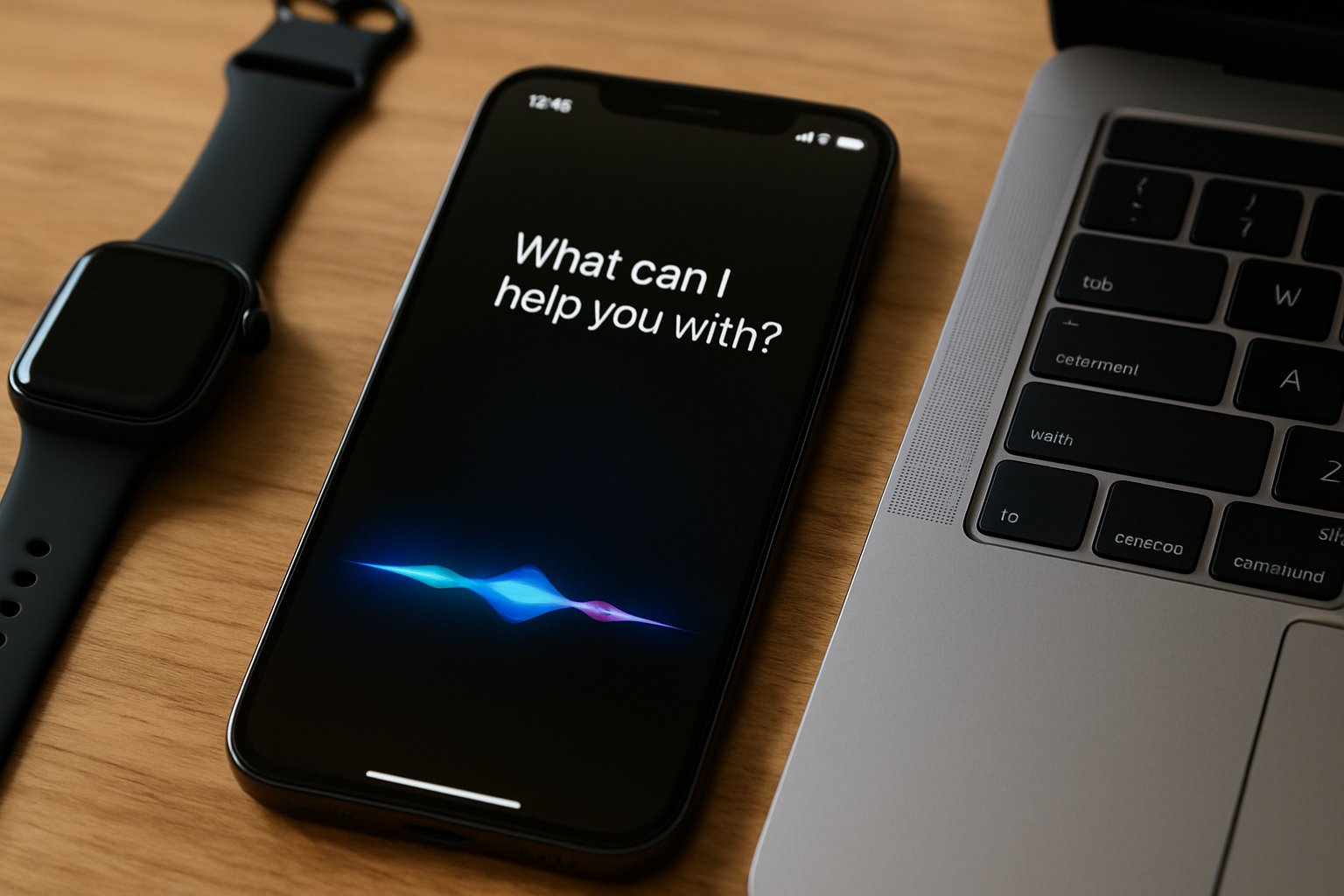
Consequently, the move would embed large language models deeply across iPhone, iPad, and Mac experiences.
Analysts see the strategy as critical for maintaining competitive parity with Google and OpenAI.
Meanwhile, questions swirl around privacy, cost, and technical readiness.
For stakeholders, understanding the potential Siri Replacement is essential for planning around user experience and platform investments.
Moreover, the shift aligns with Apple's broader Apple AI Roadmap, which emphasizes integrated, privacy-centric intelligence.
Early reports suggest the chatbot will support voice and typed interactions with contextual memory.
Additionally, a rumored deal to license Google's Gemini model could accelerate advanced reasoning features.
Nevertheless, Apple has not officially confirmed the replacement timeline, keeping speculation high before WWDC 2026.
This article unpacks the facts, risks, and opportunities behind the emerging assistant paradigm.
Therefore, professionals can position products and skills ahead of the expected platform shift.
Why Apple Shifts Gears
Historically, Siri relied on narrow intent matching and cloud requests tethered to predefined domains.
In contrast, modern chatbots generate flexible answers and sustain multi-turn context across tasks.
Consequently, user expectations now demand conversational versatility equal to ChatGPT or Gemini.
Apple risks brand erosion if Siri lags behind competitors' assistants embedded in Android and Windows.
Therefore, executives view the upcoming Siri Replacement as a defensive and offensive maneuver simultaneously.
The assistant gap threatens ecosystem stickiness and services revenue.
However, a generative upgrade could reverse perception and unlock new monetization paths.
Inside The Campos Project
Bloomberg reports identify Campos as Apple's internal codename for the next assistant architecture.
Furthermore, the project integrates large language models trained on billions of sentences and device telemetry.
Engineers prototype voice and text chat that holds context and controls system features such as mail.
Meanwhile, Private Cloud Compute offloads heavyweight inference while keeping sensitive data encrypted.
Apple reportedly tests Gemini, Claude, and internal models to identify an optimal blend.
Analysts believe the mix will evolve along the broader Apple AI Roadmap over multiple releases.
Subsequently, developers may gain retrieval APIs and tool invocation hooks similar to OpenAI's function calling.
Campos represents a full-stack rethink beyond incremental Siri Replacement patches.
Consequently, strategic market forces shape Apple's next moves, examined in the following section.
Strategic Conversational Market Drivers
Global conversational AI spending is surging toward tens of billions of dollars annually.
Gartner forecasts double-digit compound growth through 2030 across consumer and enterprise categories.
Moreover, McKinsey surveys indicate executives rank conversational interfaces among top three transformative technologies.
Consequently, platform owners that control default assistants capture data, commerce, and developer mindshare.
Apple aims to leverage distribution to over one billion devices.
Investors also reward companies demonstrating defensible AI leadership.
In contrast, falling behind invites valuation pressure, as evidenced by recent hardware slowdowns.
Therefore, the rumored Siri Replacement is central to sustaining Apple's premium narrative.
These market forces clarify why privacy and cost negotiations matter, discussed next.
Privacy And Cost Tensions
Apple champions privacy as a core differentiator against data-hungry rivals.
However, licensing an external model like Gemini introduces supply chain and perception risks.
Reporters estimate payments could exceed one billion dollars annually for cloud inference capacity.
Additionally, serving billions of queries may impose operating costs that dwarf Apple Music streaming expenses.
Nevertheless, Private Cloud Compute promises encryption, policy enforcement, and hardware attestation for every request.
Apple AI Roadmap materials highlight on-device fallback to reduce both latency and vendor dependence.
Moreover, the company could restrict advanced features to paid tiers, offsetting external fees.
Balancing privacy assurances against rising costs remains a delicate dance.
Subsequently, any decision will ripple through developers, examined in the next section.
Impact On Developer Ecosystem
Developers currently access SiriKit intents with limited conversational flexibility.
Consequently, many apps implement separate chatbots rather than rely on Siri.
A full Siri Replacement would unify assistant invocation and grant richer APIs for extensions.
Furthermore, Apple may expose retrieval-augmented generation endpoints that let apps ground answers in proprietary data.
Meanwhile, security reviews will tighten because LLM actions could modify user content without explicit confirmation.
Professionals can enhance readiness through the AI Learning Development™ certification, gaining applied conversational design skills.
Additionally, Apple AI Roadmap briefings suggest early developer betas will launch soon after WWDC.
New APIs could stimulate innovative workflows across productivity, health, and entertainment.
Therefore, attention now shifts to the release calendar.
Timeline And iOS Updates
Bloomberg reports point to a WWDC 2026 unveiling alongside developer previews of iOS Updates version 27.
Subsequently, public betas should arrive in July, mirroring prior release cadences.
In September, production iOS Updates will likely ship with new iPhone hardware.
Moreover, macOS and iPadOS timelines usually align within the same window.
Apple has signaled extended support for older devices through optimized on-device models.
Industry watchers expect feature freezes by late August to stabilize the Siri Replacement experience.
Consequently, enterprises should budget testing resources across at least two beta cycles.
The roadmap clarifies immediate action items for planners.
Nevertheless, preparing people and processes remains critical, explored in the next section.
Preparing For Siri Replacement
Product owners should audit voice workflows and map dependencies before the upcoming Siri Replacement arrives.
Additionally, teams must update privacy disclosures to reflect expanded model routing.
In contrast, security leaders need guardrails to prevent hallucinated commands from executing destructive actions.
Moreover, mobile strategies should consider staggered adoption across consumer segments waiting for stable iOS Updates.
Professionals can upskill with the previously mentioned certification, gaining fast credibility in conversational AI governance.
- Audit current SiriKit intents for redundancy.
- Define LLM safety filters and rollback plans.
- Schedule two-phase user testing during iOS Updates betas.
- Allocate budget for potential cloud query costs.
- Prepare migration plan after Siri Replacement launch.
These preparations mitigate launch turbulence and accelerate feature parity.
Therefore, companies remain adaptable as Apple finalizes details.
Conclusion And Next Steps
Apple appears poised to transform its assistant strategy within the next product cycle.
Bloomberg reporting, analyst forecasts, and code leaks collectively support a chatbot transition.
However, official confirmation will likely arrive at WWDC 2026.
Moreover, cost, privacy, and developer readiness remain open variables.
Organizations should monitor iOS Updates milestones and join early betas.
Additionally, learning pathways such as the earlier certification build critical generative design competence.
The forthcoming Siri Replacement could redefine daily workflows across hardware, services, and content creation.
Therefore, proactive leaders should act now and secure a competitive advantage before the rollout completes.


