

AI CERTS
2 hours ago
Apple Crackdown on Vibe Coding Apps Sparks Review Bottlenecks
Meanwhile, submission numbers keep climbing, flooding reviewers with AI-generated experiments. This article unpacks the enforcement timeline, the disputed rule, and the broader submission boom. Moreover, we examine security risks, workaround strategies, and the strategic outlook for developers working on iOS. Read on to understand compliance options and certification resources that can turn turbulence into opportunity.
Enforcement Shocks Vibe Coders
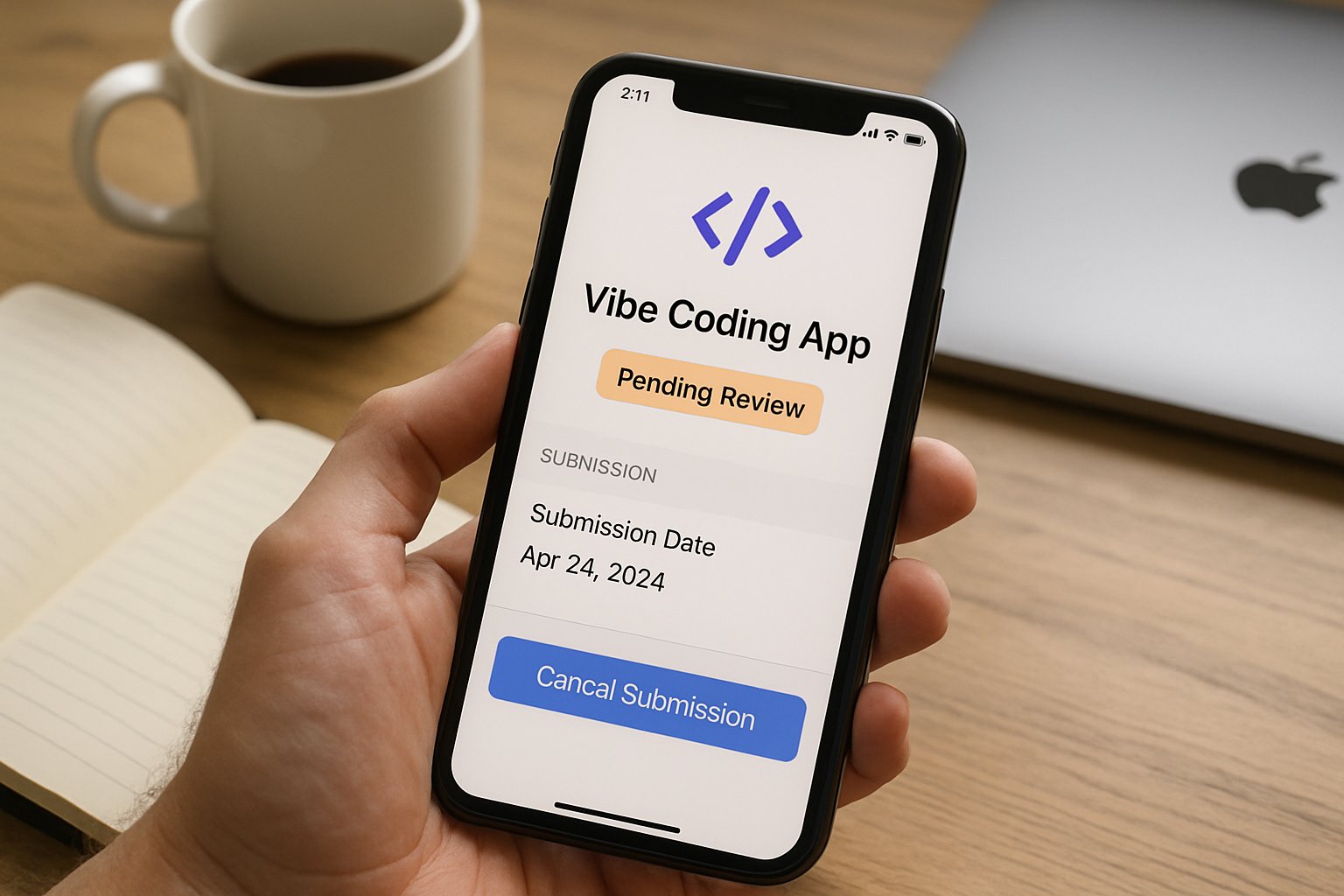
Reporters first noticed approval delay patterns around 15 March 2026. In contrast, most routine updates still cleared review within a day, according to Apple. The divergence highlighted how Vibe Coding Apps triggered deeper checks. Subsequently, Apple cited Guideline 2.5.2, banning downloads or execution of new code inside an approved bundle. Developers received remediation suggestions, such as opening previews in external browsers, yet frustration grew.
Nevertheless, Sensor Tower data showed weekly submissions passing 200,000, outpacing reviewer capacity. The timeline confirms Apple acted under existing language, not a fresh policy. However, understanding Guideline 2.5.2 is essential to gauge future moves.
App Guideline 2.5.2 Explained
Guideline 2.5.2 states that apps must remain self-contained. Therefore, any feature that downloads or runs code altering core functionality violates review policy. Educational sandboxes may load interpreted snippets, yet Apple limits that exception to transparent teaching contexts. Furthermore, Vibe Coding Apps often embed webviews that preview fully generated applications, effectively sidestepping review. Apple classifies such previews as unreviewed software, equating them with side-loading.
Consequently, the company enforces removal or redesign unless execution moves to secure servers. These nuances clarify why certain updates stalled. Meanwhile, the submission boom adds another pressure layer. Let us explore the numbers behind that acceleration.
Drivers Behind Submission Boom
Low-code agents and template engines lowered creation costs dramatically during 2025. Moreover, Sensor Tower reported a 56 percent year-over-year rise in U.S. iOS submissions last December. January kept pace with a 54.8 percent surge, continuing the boom. Analysts attribute much of that growth to Vibe Coding Apps that let entrepreneurs push prototypes daily. However, this volume forces reviewers to sift through AI slop, extending approval delay for legitimate releases. Apple counters that median review time remains under 24 hours despite the flood. Consequently, tensions rise between speed-hungry developers and risk-averse platform stewards. Submission metrics show undeniable momentum. Yet that momentum surfaces serious security questions.
Risks Apple Publicly Cites
Apple positions the crackdown as a defense of users and the platform. Firstly, dynamically generated code could include malicious libraries invisible to reviewers. Secondly, low-quality generators often ignore accessibility, privacy, and energy guidelines required on iOS. Moreover, internal data suggests marketplace saturation with unpolished clones hurts discoverability. In contrast, developers argue that server-side builds meet security needs while preserving creativity. Meanwhile, academic teams propose “VibeGuard” gateways that statically analyze AI outputs before release. Apple has not endorsed external gatekeepers yet. Security, quality, and discovery remain Apple's stated priorities. Developers therefore seek compliant workarounds to stay live.
Developer Workaround Playbook Evolving
Many teams now shift code execution to cloud servers. Consequently, mobile clients merely fetch compiled assets, satisfying 2.5.2 requirements. Others launch generated previews in Safari, removing in-app execution entirely. Additionally, Vibecode documents an Expo-based pathway that packages iOS binaries for standard submission. Replit staff advise stripping interpreter modules before shipping to the store. Nevertheless, approval delay persists for some submissions flagged for manual inspection.
- Move previews to external browser
- Shift builds to cloud servers
- Limit interpreted code to education
- Add static security scanning gates
These tactics help developers reduce rejection risk. However, compliance work eats into rapid iteration promises of Vibe Coding Apps. Workarounds illustrate a fragile balance between speed and safety. Next, we evaluate strategic consequences for every stakeholder.
Strategic Outlook For Stakeholders
Investors still funnel capital toward agentic platforms. Moreover, Replit's recent funding round, reportedly $400 million, underscores market boom expectations. Yet Apple signals it will not relax enforcement, even as European regulators scrutinize gatekeeper behavior. Consequently, startups must design architectures portable across web, Android, and iOS to mitigate platform risk. Enterprises adopting Vibe Coding Apps for internal tools face fewer hurdles because distribution remains private. Meanwhile, career-minded professionals can refine expertise via the AI Government™ certification. Such credentials reassure clients amid fast-moving compliance debates. Market dynamics therefore reward adaptable architectures and documented skills. We conclude with actionable takeaways.
Key Takeaways
Apple enforced an existing rule, halting updates from several Vibe Coding Apps. However, the broader submission boom shows that low-code creation remains unstoppable. Security, quality, and review load underpin Apple's position, resulting in noticeable approval delay. Nevertheless, compliant redesigns and cloud builds keep many Vibe Coding Apps alive. Consequently, strategic planning should pair rapid generation with robust compliance processes. Individuals can stand out by holding certifications that demonstrate governance fluency.
Finally, Vibe Coding Apps will evolve, and Apple's stance will likely shift alongside. Stay informed, iterate responsibly, and seize the innovation moment. Moreover, successful Vibe Coding Apps emphasize server safety and transparent user permissions. Therefore, any future Vibe Coding Apps must integrate policy checks from day one.


