

AI CERTs
6 hours ago
Apple AI Wearable Pin Rumors Reshape Enterprise Strategy
Rumors about a tiny Apple AI Wearable pin are rippling through the enterprise device community. Accordingly, executives are asking how the device might shift mobile workflows and investments. The Information reports a circular, camera-equipped badge roughly matching AirTag dimensions. Unlike earlier concepts, this design embeds two cameras, three microphones, a speaker, and wireless charging. Apple has not confirmed the project, yet supply chain sources whisper about 20 million launch units. Consequently, strategists must examine potential benefits, risks, and market timing before budgets lock. Early failures, such as Humane’s Wearable AI Pin shutdown, underline the stakes for ambitious entrants. Industry veterans also remember privacy backlash against head-worn recorders. Meanwhile, growing AI capability on devices and cloud platforms makes a fresh attempt plausible.
Apple AI Wearable Rumors
January 2026 brought the most detailed leak to date. The Information claimed engineers are targeting AirTag size with slightly increased thickness. Moreover, two front cameras, standard and wide, would enable multimodal scene understanding. Such capability would distinguish the Apple AI Wearable from passive trackers.
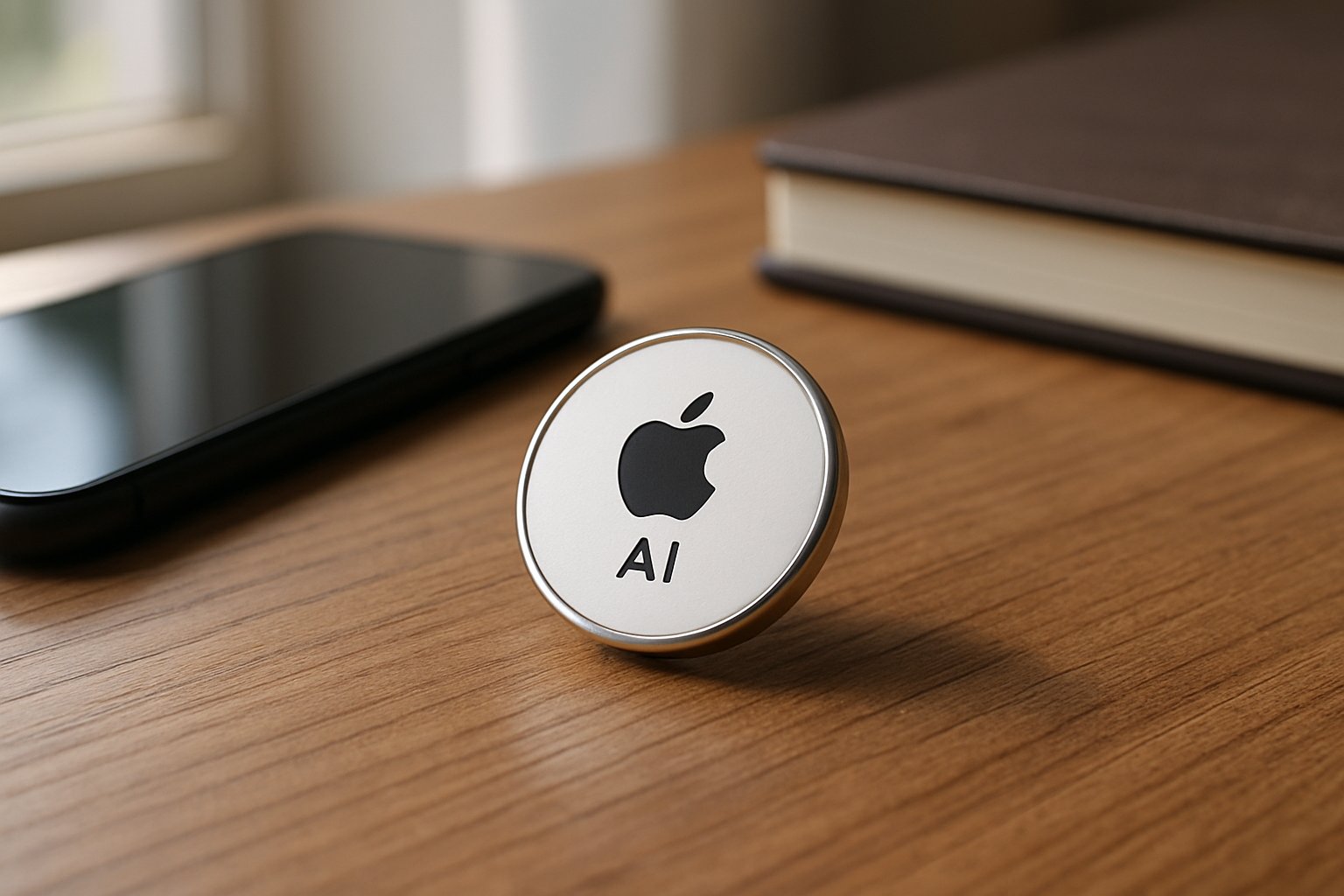
Sources say the prototype includes a physical side button for quick activation. Additionally, three microphones should capture spatial audio for noise-robust commands. Bloomberg adds that a custom Google Gemini model may handle heavy server inference. Therefore, Apple could offload large language tasks while keeping latency acceptable.
Volume expectations also impress analysts. Reportedly, Apple plans initial production reaching 20 million units, a sizable commitment for new Apple Hardware. Nevertheless, launch could slip until 2027 or be canceled altogether. Investors will watch upcoming WWDC sessions for clearer signals.
These rumors outline ambitious hardware and scale. However, engineering realities may still derail plans, leading us into design challenges.
Hardware Design Challenges Ahead
Packing cameras, microphones, battery, and radios into coin-sized aluminium raises severe trade-offs. Furthermore, heat dissipation limits continuous camera use without uncomfortable skin temperature spikes. Engineers must also protect lenses from scratches during shirt-level wear. In contrast, traditional wrist wearables enjoy larger surface area for cooling.
Power remains the second constraint. Consequently, Apple may integrate an ultra-low-power Neural Engine optimized for on-device summarization. Yet heavier perception tasks will probably travel to the cloud, draining bandwidth. Apple Hardware teams must balance battery life against always-available assistant expectations.
Attachment method is another open question. Moreover, magnets, clips, or adhesive badges each present durability and user-comfort issues. Design iterations could mirror Apple Watch band experimentation before settling. Subsequently, final ergonomics will influence manufacturing cost and regulatory classification.
Design constraints threaten Apple AI Wearable margins and user satisfaction. Therefore, market context deserves review before assumptions about adoption.
Competitive Wearables Market Landscape
IDC estimates show 49.2 million wrist devices shipped in Q2 2025, up 12.3 percent year-over-year. Meanwhile, Apple kept leadership yet faced aggressive pricing from Xiaomi and Huawei. Smart glasses, rings, and the Humane Wearable AI Pin attempted differentiation with mixed success. Consequently, any newcomer must justify space in an already saturated accessories lineup.
Humane’s collapse stresses execution risk for sensor-rich badges. HP acquired assets for $116 million after cloud servers shut down. In contrast, Apple controls silicon, operating systems, and retail channels, conferring strategic insulation. However, the company still faces consumer skepticism after previous privacy controversies.
Key figures underscore the stakes:
- 20 million projected first-run Apple AI Wearable units
- 49.2 million wrist shipments in Q2 2025
- $116 million Humane asset sale to HP
- 12.3% year-over-year wearable growth
These numbers highlight both opportunity and unforgiving competition.
The market offers scale yet punishes missteps. Accordingly, backend infrastructure becomes decisive, which we examine next.
AI Infrastructure Backbone Needed
Small silicon alone cannot deliver conversational intelligence users now expect. Therefore, Apple negotiated access to a custom Google Gemini instance reportedly holding 1.2 trillion parameters. Cloud reliance introduces latency, data routing, and uptime dependencies unfamiliar to classic Apple Hardware accessories. Nevertheless, Private Cloud Compute promises encryption and geographic data isolation for regulated industries.
On-device models will still handle wake words, basic transcription, and simple commands. Additionally, such distribution reduces server load and ensures partial functionality offline. Multimodal fusion will likely occur server-side once images upload. Consequently, bandwidth efficiency and smart caching become architectural priorities.
Professionals can enhance their expertise with the AI Ethics™ certification. Moreover, such accreditation aids risk assessments when deploying sensor-laden assistants. Enterprises evaluating the Apple AI Wearable will need multidisciplinary compliance oversight. Subsequently, IT leaders must model server costs under various request volumes.
Infrastructure choices will decide experience quality and margins. However, privacy remains equally pivotal, as examined next.
Privacy And Trust Hurdles
Camera-bearing wearables trigger immediate concerns about consent in public and corporate spaces. Consequently, Apple will likely integrate a bright trust light indicating active recording. Regulators may still demand explicit opt-in for bystanders in some jurisdictions. Meanwhile, enterprises handling sensitive environments could ban the Apple AI Wearable outright.
Data retention policies must also address images containing confidential documents or personal identifiers. Moreover, edge filtering can discard bystander faces before cloud upload. Legal scholars recommend transparent audit logs accessible to third-party watchdogs. Nevertheless, history shows privacy optics can overshadow technical safeguards if messaging falters.
Humane's downfall illustrated the reputational toll of battery swelling, overheating, and erratic responses. In contrast, Apple Hardware reliability expectations remain higher, amplifying scrutiny. Therefore, Apple must deliver flawless onboarding, clear permissions, and continuous patching. Compliance teams should plan training before pilot rollouts.
Trust makes or breaks pervasive cameras. Accordingly, financial exposure warrants closer evaluation of business risk.
Business Stakes And Risks
Launching a first-generation category involves large fixed tooling and marketing expenses. Additionally, Apple will face cannibalization fears with iPhones, Watches, and AirPods. Analysts expect premium pricing, yet subscriptions could offset hardware margins. Consequently, the Apple AI Wearable success metric will hinge on retention rather than unit sales alone.
Supply chain partners must reserve capacity years in advance to meet 20 million target volumes. Moreover, unforeseen component shortages could delay shipments and erode customer excitement. Investors will recall Vision Pro’s constrained rollout as a cautionary tale. Therefore, Apple Hardware decisions around sensors and memory lock the company into cost curves early.
Mitigation strategies include phased regional launches and aggressive trade-in programs. Subsequently, Apple could bundle services like iCloud+, boosting recurring revenue. Executives evaluating deployments should build models incorporating depreciation, support, and resale. Furthermore, scenario testing can reveal breakeven timelines under optimistic and pessimistic adoption curves.
Financial modeling exposes tight margins despite Apple’s scale advantages. Next, we consolidate insights and recommend action steps.
Key Takeaways And Outlook
Across rumors, design hurdles, market pressures, and privacy demands, a complex product picture emerges. Nevertheless, Apple’s vertical integration offers unique leverage absent from earlier Wearable AI Pin attempts. Success will require flawless hardware reliability, trusted data governance, and cloud efficiency. Additionally, robust enterprise frameworks must support onboarding, policy, and integration.
Decision makers should monitor WWDC 2026, FCC filings, and supply chain analyst notes for confirmation. Consequently, procurement teams can align budgets with more realistic timelines. Companies already piloting computer vision should start evaluating policy templates now. Moreover, pursuing vendor-neutral ethics education provides a competitive compliance head start.
Ultimately, the Apple AI Wearable represents both innovation beacon and execution gauntlet. In contrast, failure could chill investor enthusiasm for sensor-rich badges. Therefore, informed planning today decides tomorrow’s mobility experience. Meanwhile, strategic upskilling keeps teams agile amid rapid platform shifts.
The opportunity is real yet fragile. Consequently, professionals should act before final specifications appear.
In summary, the Apple AI Wearable could redefine contextual computing if Apple solves design, privacy, and business puzzles. Nevertheless, unresolved thermal and regulatory variables warrant close monitoring. Consequently, technology leaders should draft pilot frameworks, budget contingencies, and communication plans now. Additionally, investing in staff training ensures organizations adopt responsible data practices from day one. Professionals can start with the linked AI Ethics Certification to build robust governance skills. Moreover, subscribing for future coverage keeps teams informed as specifications emerge. Take action today and transform tomorrow’s mobile workflows with clarity and confidence.


