

AI CERTs
5 hours ago
Apple acquires Q.ai to power silent-speech wearables
As Wall Street awaited Apple's fiscal results, news of a bold acquisition stole the spotlight. Reports confirmed the company had bought Israeli startup Q.ai for almost two billion dollars. Industry observers immediately linked the move to emerging battles around AI-powered wearables. However, the price tag alone does not capture the strategic depth behind the deal. Moreover, silent-speech technology could redefine how users interact with devices in crowded cities or quiet offices. Consequently, investors, developers, and policymakers all want clarity on potential benefits and risks. This article dissects the acquisition, explains the underlying science, and maps possible impacts across hardware, software, and regulation. Furthermore, we outline next steps enterprises should monitor over the coming quarters. Readers will finish with actionable insights and certified learning paths to stay competitive.
Deal Signals Strategic Shift
Reuters sources place the price between 1.6 and 2.0 billion dollars, edging past several earlier bets. Apple rarely spends that much, therefore analysts see the move as a directional statement. In contrast, the company bought Beats for roughly three billion dollars twelve years ago. Johny Srouji, senior vice president for hardware technologies, praised Q.ai’s "remarkable" work on imaging and machine learning. Moreover, founder Aviad Maizels highlighted the chance to push boundaries within Apple's integrated silicon stack. These endorsements suggest immediate absorption of talent into the corporate R&D engine.
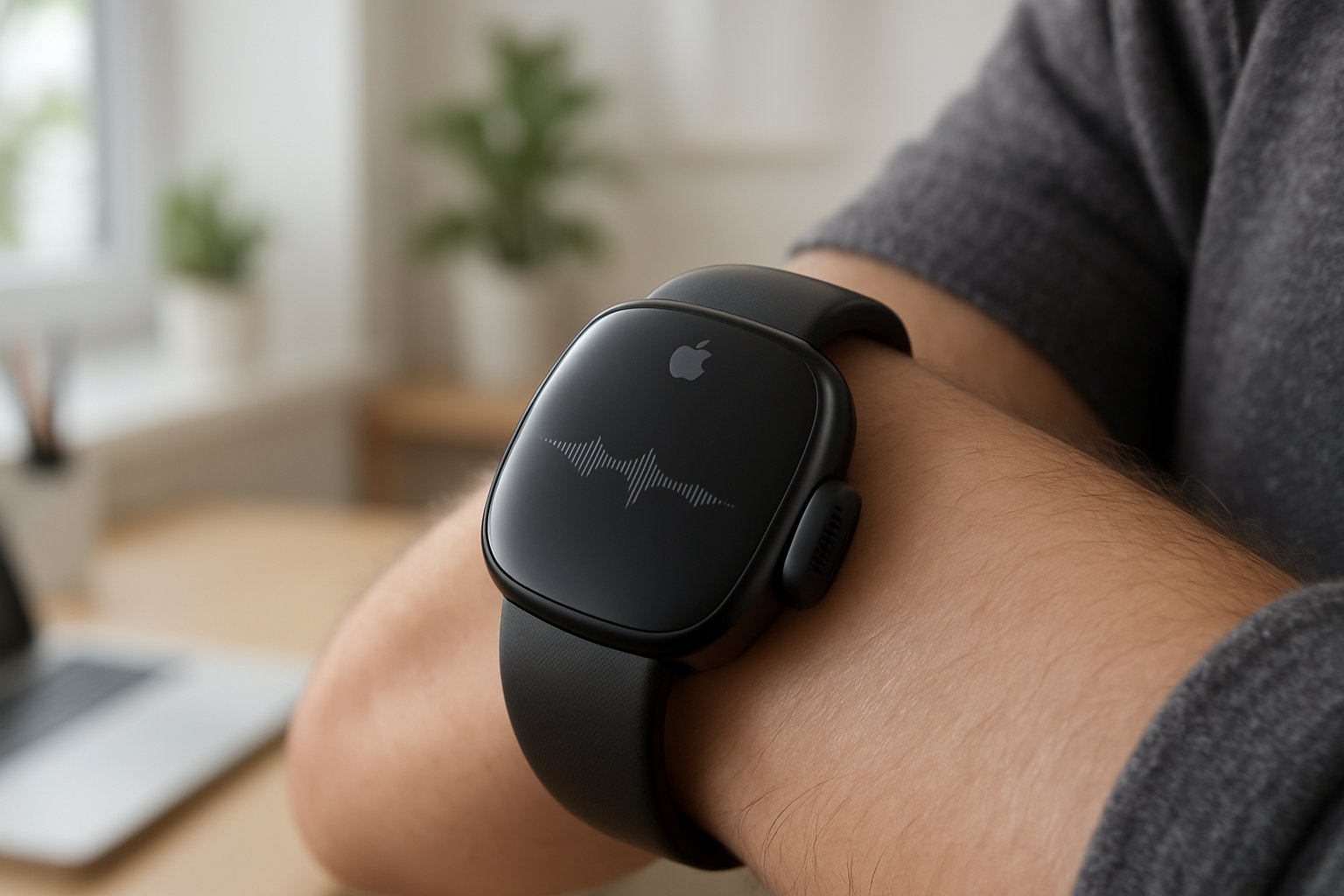
The price and praise underscore a broader strategic reorientation. Consequently, decoding the underlying technology becomes essential before judging future products.
How Silent Speech Works
At the core lies sensing of micro-movements on facial skin around the mouth. Patent filings describe machine-learning models that map these tiny shifts to phonemes, words, and even identities. Meanwhile, complementary microphones provide redundant acoustic data for higher accuracy in noisy conditions.
Q.ai integrates photodiode arrays and inertial sensors inside earbuds or glasses to capture light reflections caused by muscle tension. Algorithms then run either on device or in the cloud, depending on latency, power, and privacy budgets. Apple champions on-device processing, yet it may still lean on cloud resources for heavy language models.
Moreover, combining modalities can reduce error rates dramatically, according to several biometric scholars. Nevertheless, significant hurdles remain, including variations in skin tone, facial hair, and ambient lighting.
Silent-speech sensing thus merges optics, audio, and neural networks into a compact package. Therefore, commercial success hinges on reliable performance across diverse real-world scenarios.
Market Forces Driving Move
Smart-glasses shipments could exceed ten million units in 2026, Omdia projects. Additionally, ABI Research expects sustained double-digit growth through 2030 across broader wearable categories. Consequently, device makers scramble to secure differentiated interaction methods beyond voice alone.
- Omdia: >10M AI-glasses shipments forecast for 2026
- Nearly $2B spent by Apple on Q.ai deal
- Q.ai founded 2022 with ~100 employees
- Beats remains buyer's largest acquisition at ~$3B
In contrast, traditional voice interfaces struggle in crowded streets, motivating investment in silent alternatives. Moreover, regulators worldwide push for stronger privacy guarantees, giving on-device AI a commercial edge. These converging drivers clarified why executives moved quickly before announcing quarterly earnings.
Demand indicators and privacy pressures together created acquisition urgency. Subsequently, attention shifts toward how integration unfolds inside the corporation.
Integration Challenges Still Ahead
Merging a 100-person startup into a global organization brings cultural and logistical friction. However, the buyer navigated similar tasks after purchases of PrimeSense and AuthenTec. Those teams delivered Face ID and Touch ID, proving integration can succeed under tight timelines.
Technical hurdles appear tougher this round because silent-speech systems must function across billions of faces. Moreover, sensor placement inside earbuds or glasses complicates manufacturing tolerances and battery budgets. Apple will likely fold Q.ai engineers into its silicon, audio, and vision groups to accelerate prototyping.
Talent absorption seems feasible, yet productization remains uncertain. Therefore, stakeholders should watch hiring patterns and patent activity for progress clues.
Competitive Landscape Overview Today
Meta already sells Ray-Ban smart glasses with camera and multimodal assistant features. Google, Snap, and Xiaomi pursue comparable experiments, while OpenAI collaborates with hardware partners. Nevertheless, differentiation often rests on proprietary silicon and privacy promises.
Apple holds those advantages, yet critics claim its voice assistant lags behind ChatGPT and Gemini. Consequently, buying Q.ai signals intent to leapfrog rivals by blending hardware, software, and new interaction data. In contrast, Meta relies heavily on cloud compute, leaving vulnerability around latency and battery life.
Investors also recall the company’s earlier Israeli acquisitions that produced depth-sensing breakthroughs. Moreover, synergies between AirPods, Vision Pro, and future glasses could reinforce the buyer's ecosystem moats.
Competitive dynamics are intensifying across hardware, software, and cloud layers. Subsequently, policy issues take center stage.
Policy And Privacy Implications
Silent-speech sensors gather intimate biometric data that many jurisdictions treat as highly sensitive. Therefore, Apple must navigate GDPR, CCPA, and forthcoming EU AI Act provisions with extreme care. Moreover, regulators could demand opt-in consent and local processing guarantees.
Misuse scenarios include covert surveillance or emotional analytics without user awareness. Nevertheless, robust encryption and on-device inference can mitigate several threats. Professionals can enhance their expertise with the AI Policy Maker™ certification.
Compliance obligations will shape product timelines and feature scope. Consequently, corporate policy teams will influence technical architecture more than before.
What May Happen Next
Short term, expect silence while internal experiments validate sensor accuracy on diverse demographics. Meanwhile, supply-chain signals such as specialized photodiodes could emerge within twelve months. Apple might pilot whispered-command detection in a future AirPods firmware update.
Mid term, Vision Pro revisions and rumored glasses could integrate the full multimodal stack. Additionally, Siri upgrades may leverage combined facial and acoustic cues for lower false rejects. Analysts predict announcements aligning with the 2027 developer conference, providing developers fresh APIs.
Longer term, the acquisition could reshape industry norms around private, always-available input methods. Therefore, firms that ignore silent-speech research risk consumer attrition and regulatory backlash.
Apple’s ongoing hardware-software co-design philosophy positions it to capitalize on these trends. Integration milestones will surface gradually, yet market perception can shift overnight. Consequently, staying informed enables strategic planning.
The Q.ai purchase marks a pivotal moment in the race to deliver quieter, safer wearable interactions. Silent-speech sensing fuses optics, audio, and AI to craft a versatile interface for bustling modern life. However, scaling that science demands flawless integration, strict privacy controls, and transparent governance. Moreover, competitive rivals are unlikely to remain idle while these systems evolve. Professionals tracking pipelines, compliance rules, and talent moves will secure an early advantage. Explore the linked certification to deepen policy expertise before the next wave of multimodal devices ships. Consequently, organizations should allocate research budgets toward human-centric sensing, not only larger language models. Stay vigilant, make informed bets, and position teams for the silent future now taking shape.


