

AI CERTS
4 weeks ago
Anthropic’s Enterprise AI Software Marketplace Debuts
Those organizations can reallocate part of their budgets toward partner solutions without extra procurement hurdles. Industry analysts already view the move as a pivotal step toward an integrated AI Software Marketplace for enterprises. Moreover, launch partners include GitLab, Harvey, Lovable, Replit, Rogo, and Snowflake. Each vendor embeds the underlying intelligence while retaining domain expertise.
Therefore, buyers gain specialized functionality under one billing relationship. This article examines launch details, commercial mechanics, partner strategies, and competitive implications surrounding the Claude initiative.
Claude Marketplace Launch Overview
Anthropic unveiled the storefront through a quiet website update and coordinated press briefings. Bloomberg confirmed the date as March 6, 2026. Subsequently, VentureBeat highlighted the limited-preview status and the absence of public customer numbers. The company stated that only organizations with existing annual spend commitments may join the preview. Consequently, the early user base skews toward large B2B clients already familiar with Claude APIs. Meanwhile, six launch partners appear on the Marketplace landing page. GitLab targets developers, Harvey assists legal teams, and Snowflake integrates data workloads.
Replit, Rogo, and Lovable address coding, financial analysis, and no-code building respectively. Therefore, the catalog spans diverse enterprise functions from day one. Analysts described the approach as an "Amazon-inspired" AI Software Marketplace focused on enterprise trust. Nevertheless, Anthropic emphasizes that Claude remains the intelligence layer while partners provide application depth. That positioning shapes every commercial decision surrounding the launch.
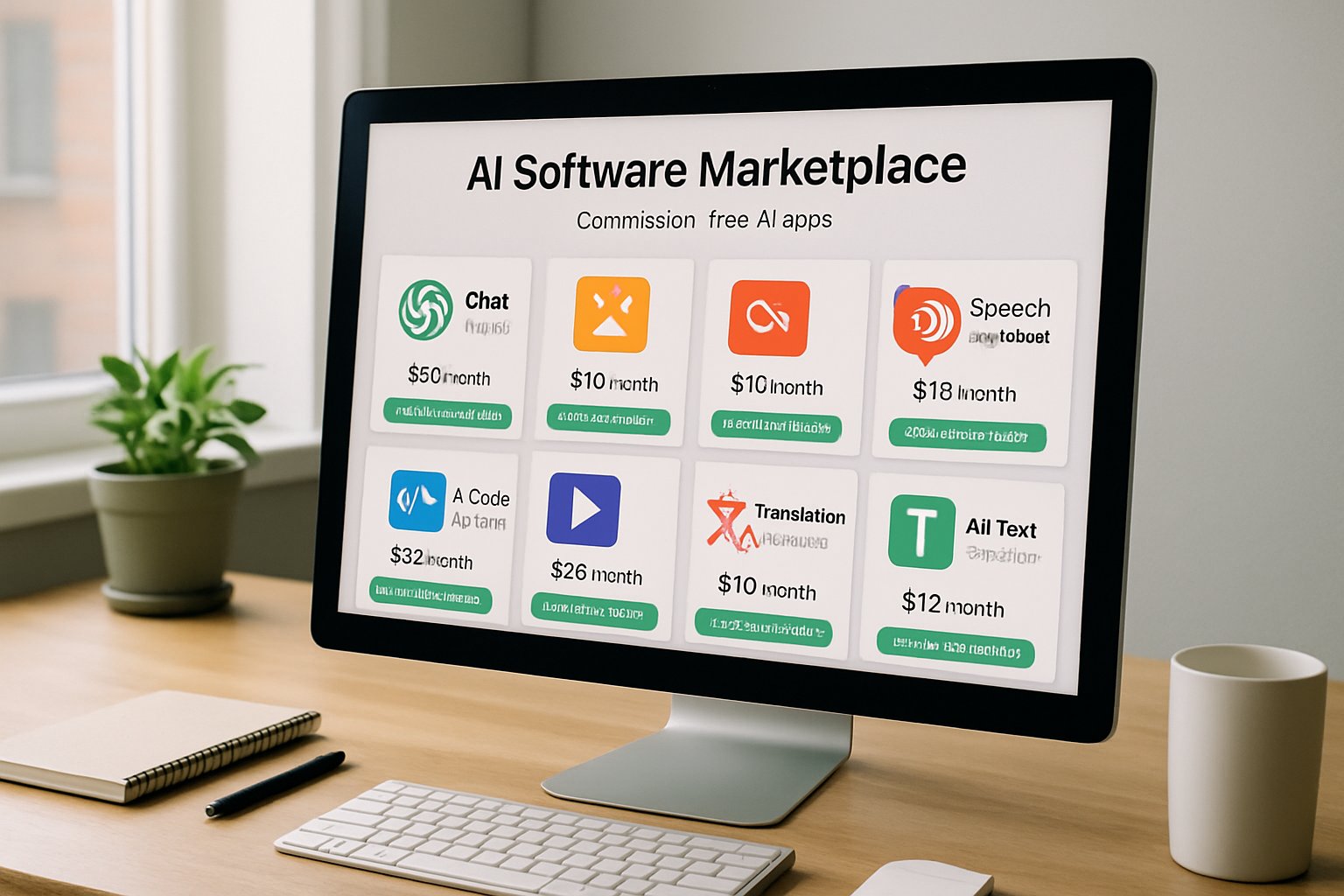
Launch details reveal a carefully controlled rollout with six partners and enterprise-only eligibility. However, the next section explores how billing and commissions reinforce that strategy.
Claude Commercial Model Explained
Billing mechanics represent the clearest differentiation from cloud marketplaces. Customers apply unused Claude commitments toward partner subscriptions rather than issuing separate purchase orders. Consequently, finance teams see one consolidated invoice prepared by Anthropic. Anthropic confirmed it will take no commission during the initial phase. Bloomberg quoted executives saying the zero-cut policy lowers friction for Third-Party Tools onboarding. In contrast, AWS and Azure typically charge sellers up to 20 percent.
Moreover, partners set pricing freely, preserving direct control over margins. Analysts believe this generosity intends to accelerate catalogue growth before eventual monetization. Some commentators label the storefront an enterprise AI Software Marketplace in embryonic form. However, the company has not promised the policy will remain permanent.
- Single vendor contract simplifies enterprise procurement.
- No commission encourages diverse Third-Party Tools participation.
- Committed spend conversion maximizes budget predictability for B2B buyers.
Therefore, both buyers and sellers gain immediate economic incentives. Nevertheless, questions linger about future fee structures and service-level agreements. The company urges prospects to contact account teams for specific thresholds and activation steps.
The commission-free design positions Claude Marketplace as a cost-efficient AI Software Marketplace alternative. Next, we examine which partners stand to benefit most.
Strategic Partner Landscape Today
Launch partners cover software development, data, legal, and finance verticals. GitLab integrates Claude into code review and merge request suggestions within enterprise pipelines. Furthermore, Replit presents model-powered coding agents inside its collaborative IDE. Snowflake extends Cortex AI, reaching more than 12,000 corporate data warehouses. Consequently, Anthropic gains indirect distribution into massive regulated environments.
Harvey targets law firms that demand strict confidentiality guarantees. Meanwhile, Rogo sells financial research tools, while Lovable offers no-code web creation. These offerings share a dependency on reliable, low-latency language model responses. Therefore, the marketplace amplifies Anthropic’s role as infrastructure while partners deliver specialized workflows.
- Developer productivity: GitLab, Replit
- Data intelligence: Snowflake
- Professional services: Harvey, Rogo
- No-code creation: Lovable Labs
Early testers told VentureBeat that discovering relevant AI Software Marketplace listings felt intuitive. Industry watchers predict additional analytics and security vendors will join once the preview broadens. Nevertheless, each newcomer must clear enterprise compliance reviews before listing. That gating preserves trust but may slow catalogue expansion versus OpenAI’s consumer directory.
The current partner slate highlights breadth across core B2B functions. However, competitive forces demand rapid portfolio growth, explored next.
Enterprise Procurement Benefits Detailed
Centralized purchasing remains the dominant benefit mentioned by early testers. Additionally, security teams appreciate that Anthropic vets each listing for SOC 2 and ISO attestations. Consequently, risk questionnaires shorten, reducing sales cycles for Third-Party Tools. IT leads gain unified usage analytics across native model workloads and partner apps.
Moreover, budget owners can shift unconsumed commitments toward urgent departmental projects without approvals. That flexibility matters during volatile planning cycles experienced by many B2B enterprises. Meanwhile, partners avoid lengthy vendor onboarding because Anthropic already holds master service agreements. Therefore, time to revenue drops for smaller vendors that previously lacked enterprise sales reach.
Collectively, these factors strengthen the AI Software Marketplace value proposition for both sides. Next, we assess the associated pitfalls.
Marketplace Risks And Challenges
Analysts caution that no commission today could shift later, straining partner margins. Furthermore, some customers favor direct contracts with vendors instead of shopping for Third-Party Tools inside the marketplace. In contrast, marketplace contracts may rely on standard terms unsuitable for regulated sectors. Additionally, U.S. government scrutiny of Anthropic’s supply-chain status may block federal adoption.
Consequently, agencies might delay procurement until legal verdicts clarify vendor risk. Security professionals also demand clear data residency and retention controls within every partner integration. Nevertheless, the launch FAQ does not specify encryption scopes or regional failover commitments. These uncertainties could hamper AI Software Marketplace growth if not resolved quickly.
Challenges underscore the need for transparent governance and forward pricing clarity. The following section compares competitive responses.
Broader Competitive Market Context
OpenAI introduced its ChatGPT App Directory in December 2025 for consumer and developer audiences. However, that directory focuses on self-serve sign-ups rather than committed enterprise spending. Anthropic instead targets heavy B2B buyers needing consolidated billing and compliance. Consequently, analysts consider the two ecosystems complementary more than directly overlapping. Meanwhile, cloud hyperscalers operate large marketplaces that collect commissions yet provide infrastructure reach.
Anthropic partners with those very clouds for compute while refusing to mimic their fee model. Therefore, the company positions its AI Software Marketplace as an economic alternative layered atop existing clouds. Nevertheless, scale will depend on faster partner onboarding and aggressive marketing. Subsequently, Microsoft, Google, and NVIDIA alliances may supply the capacity required for peak workloads. These dynamics create an evolving landscape that enterprises must track closely.
Competitive analysis shows Anthropic carving a trusted, low-cost niche. However, future uncertainties warrant careful monitoring, detailed next.
Key Future Outlook Questions
Will Anthropic eventually charge commissions or introduce premium placement fees? Additionally, how quickly can the catalogue expand beyond the initial six vendors? What adoption metrics will signal that the AI Software Marketplace has reached product-market fit? Furthermore, will enterprise customers migrate spend from clouds toward marketplace subscriptions? Analysts also want clarity on data isolation models for highly sensitive workloads.
Moreover, partner satisfaction remains untested until renewal cycles appear. Consequently, the next twelve months will reveal whether the strategy scales sustainably. Professionals can deepen expertise and influence roadmap planning through the AI Product Manager™ certification. Such credentials equip teams to evaluate vendor economics and governance rigor.
Open questions emphasize the importance of skilled talent and transparent metrics. Next, the conclusion synthesizes actionable insights.
Claude Marketplace arrives at a pivotal moment for enterprise generative AI adoption. It consolidates procurement, slashes commissions, and extends model intelligence into multiple vertical workflows. However, regulatory scrutiny, pricing unknowns, and data governance gaps remain unresolved. Consequently, enterprises should monitor commission policies, compliance documentation, and early customer case studies.
Partners must prepare differentiated value propositions and robust security postures to stand out. Meanwhile, skilled product leaders can leverage the linked certification to guide informed marketplace strategies. Explore the programme today and position your team for success within the evolving AI Software Marketplace.


