

AI CERTS
3 weeks ago
Anthropic’s AI Coding Assistant Reinvents Code Review
Enterprise Review Bottleneck Pain
Code generation tools accelerate commits. However, reviewer capacity remains fixed. TechCrunch notes Anthropic engineers pushed 200% more code last year. Before automated help, only 16% of pull requests received substantial comments. After rollout, 54% gained actionable insights. Moreover, large changes exceeding 1,000 lines yielded findings 84% of the time. These numbers illustrate a widening gap that humans alone cannot bridge. The AI Coding Assistant therefore arrives at a critical juncture.
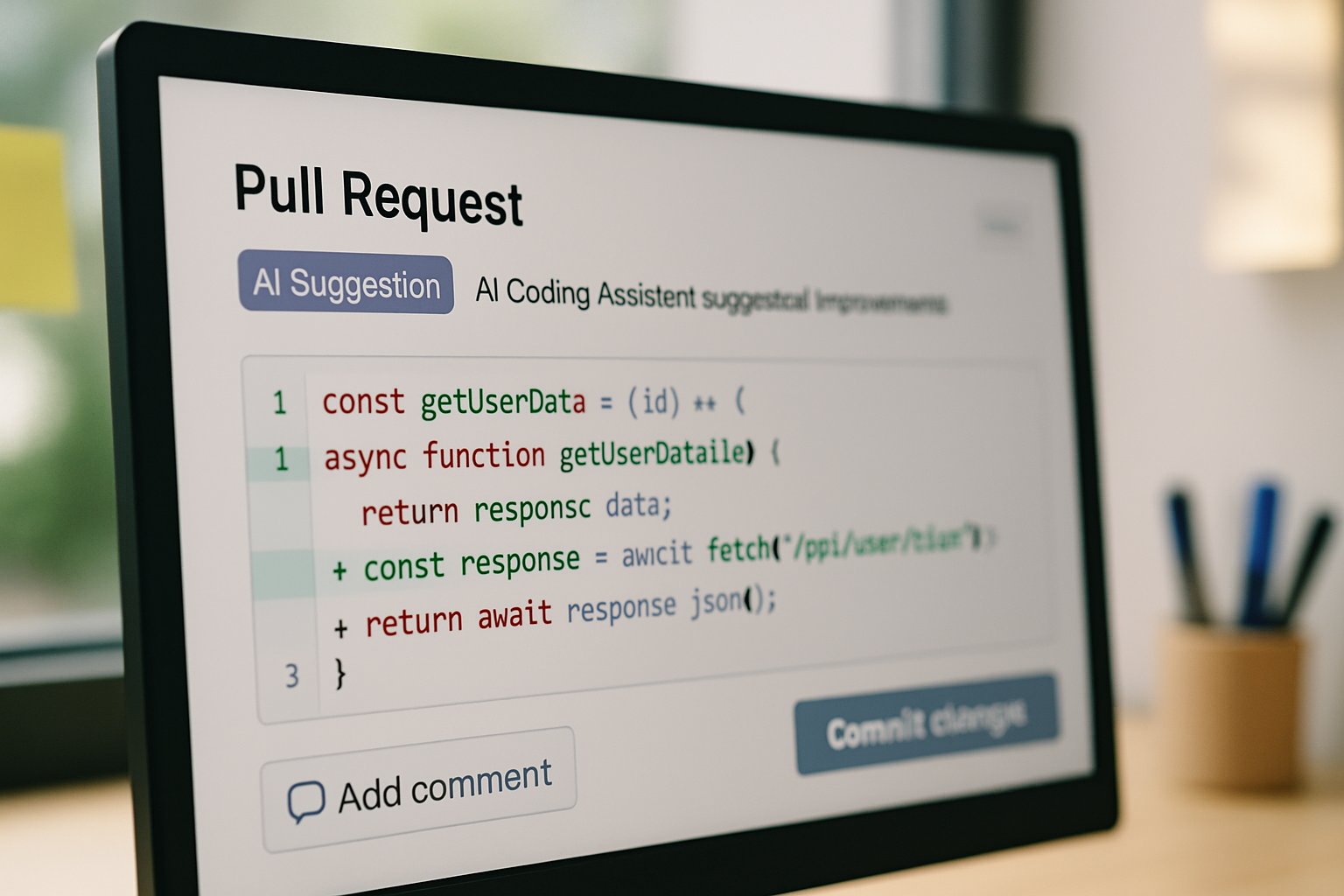
Anthropic frames the feature as an answer to overloaded staff. Meanwhile, named customers such as Uber and Netflix already test the service at scale. In contrast, smaller teams appreciate governance controls that throttle spend. These benefits underscore why demand keeps rising. However, deeper mechanics clarify where the advantage truly lies.
Inside The Agentic Engine
When a developer opens a pull request, a multi-agent swarm activates. Each agent inspects logic, history, documentation, and security patterns in parallel. Subsequently, an aggregator deduplicates overlapping notes and assigns confidence scores. Only issues scoring above 80 post back to GitHub. Therefore, developers see high-signal comments without sifting through noise.
Average turnaround equals 20 minutes, even on hefty diffs. Furthermore, reviews scale automatically with complexity. Anthropic estimates token costs between $15 and $25 per run. Administrators can limit repositories, set spend ceilings, and audit review analytics from a central console.
Professionals can enhance their expertise with the AI Engineer™ certification. That credential deepens understanding of multi-agent workflows and governance best practices. The AI Coding Assistant builds directly on such concepts, making formal training valuable.
These architectural decisions emphasize scalability. Consequently, teams trust the tool for daily work. The next concern involves integrity and risk.
Security Risks Surface Today
Automated analysis promises quality, yet vulnerabilities persist. Independent researchers at Check Point and Redguard uncovered severe flaws enabling remote code execution. They exploited repository configs that unsuspecting agents processed. Anthropic patched the issues, nevertheless the episode highlights new supply-chain threats.
Furthermore, false positives remain possible. Although Anthropic reports less than 1% error rate, experts advise local validation. Mitch Ashley from Futurum Group suggests shifting security “left” into developer loops. The AI Coding Assistant helps, but security teams must still monitor outputs.
- Check Point disclosed CVEs on Feb 25, 2026.
- Redguard revealed earlier execution flaws on Dec 19, 2025.
- Anthropic claims fixes landed within coordinated timelines.
- Ongoing penetration tests continue across enterprise clients.
These insights caution implementers. However, cost considerations also matter.
Cost Control Levers Explained
High-quality analysis demands compute. Consequently, expenses accumulate quickly when every commit triggers reviews. Anthropic therefore offers granular toggles. Teams may enable reviews on critical repositories only. Additionally, administrators set monthly token budgets that suspend jobs once exhausted. Dashboards visualize consumption across projects.
Pricing transparency remains vital. Analysts encourage prospective buyers to estimate average pull request sizes, language mix, and branching frequency. Running pilot projects helps refine forecasts before organization-wide rollout. The AI Coding Assistant includes detailed logs for such metrics.
These levers mitigate budget shocks. The broader competitive landscape offers further context.
Market Positioning Context Now
Anthropic enters a crowded arena. OpenAI, Google, and startups like Cursor all market agentic coding tools. Nevertheless, Claude Code Review pursues enterprise depth rather than lightweight convenience. Its multi-agent design, confidence filtering, and security focus differentiate the offering.
TechCrunch cites a $2.5 billion run-rate tied to Claude Code products. Moreover, more than 79,000 plugin installs signal strong grassroots traction. Stakeholders therefore watch adoption curves closely. The AI Coding Assistant must maintain accuracy to defend this lead.
Competitive dynamics push rapid iteration. Subsequently, user feedback shapes the roadmap. Real-world accounts reveal on-the-ground value.
Practitioner Adoption Insights Shared
Early customers describe meaningful productivity gains. Engineers at a streaming giant reported a 30% drop in post-merge bugs. Meanwhile, a fintech firm reduced review backlogs by two days. In contrast, teams lacking strict branch policies observed unexpected cost spikes. Lessons indicate the need for clear rollout playbooks.
Developers also praise contextual inline comments and quick links to code ranges. However, some voice concern when the tool flags stylistic rather than logical issues. Anthropic continues tuning confidence thresholds to reduce chatter.
Overall sentiment remains positive. The AI Coding Assistant now feels like a silent partner rather than an intrusive critic.
Preparing Your Organization Today
Successful deployment begins with stakeholder alignment. Security leads, platform engineers, and finance managers must agree on scope. Subsequently, run a staged pilot on low-risk repositories. Measure metrics such as average findings, false positive rate, and resolved bugs.
Next, calibrate spend ceilings. Furthermore, train reviewers on interpreting confidence scores. Consider sandboxing agent operations to limit exposure. Finally, integrate feedback loops so Anthropic can refine models against your unique codebase.
These steps foster sustainable adoption. The AI Coding Assistant then operates as a trusted extension of your team.
Comprehensive preparation reduces friction. Consequently, organizations gain continuous assurance while maintaining velocity.
Conclusion And Next Steps
Anthropic’s launch underscores a shift toward autonomous quality gates. Moreover, rigorous controls keep expenses and risks in check. Independent audits still matter, yet empirical data shows notable gains in review coverage and reduced bugs. Meanwhile, parallel multi-agent workflows accelerate feedback without overwhelming engineers. The AI Coding Assistant stands ready to help teams scale safely.
Therefore, explore a small-scale pilot and pursue deeper knowledge. Professionals should consider the linked certification to sharpen skills and lead adoption efforts. Ultimately, proactive action today positions your organization for tomorrow’s developer landscape.


