

AI CERTS
2 hours ago
Anthropic Showdown Reshapes AI Space Defense Policy
Meanwhile, Golden Dome veterans warn that fragmented command chains create lethal delays. Anthropic’s guardrails forbidding mass domestic surveillance and fully autonomous strikes triggered official ire.
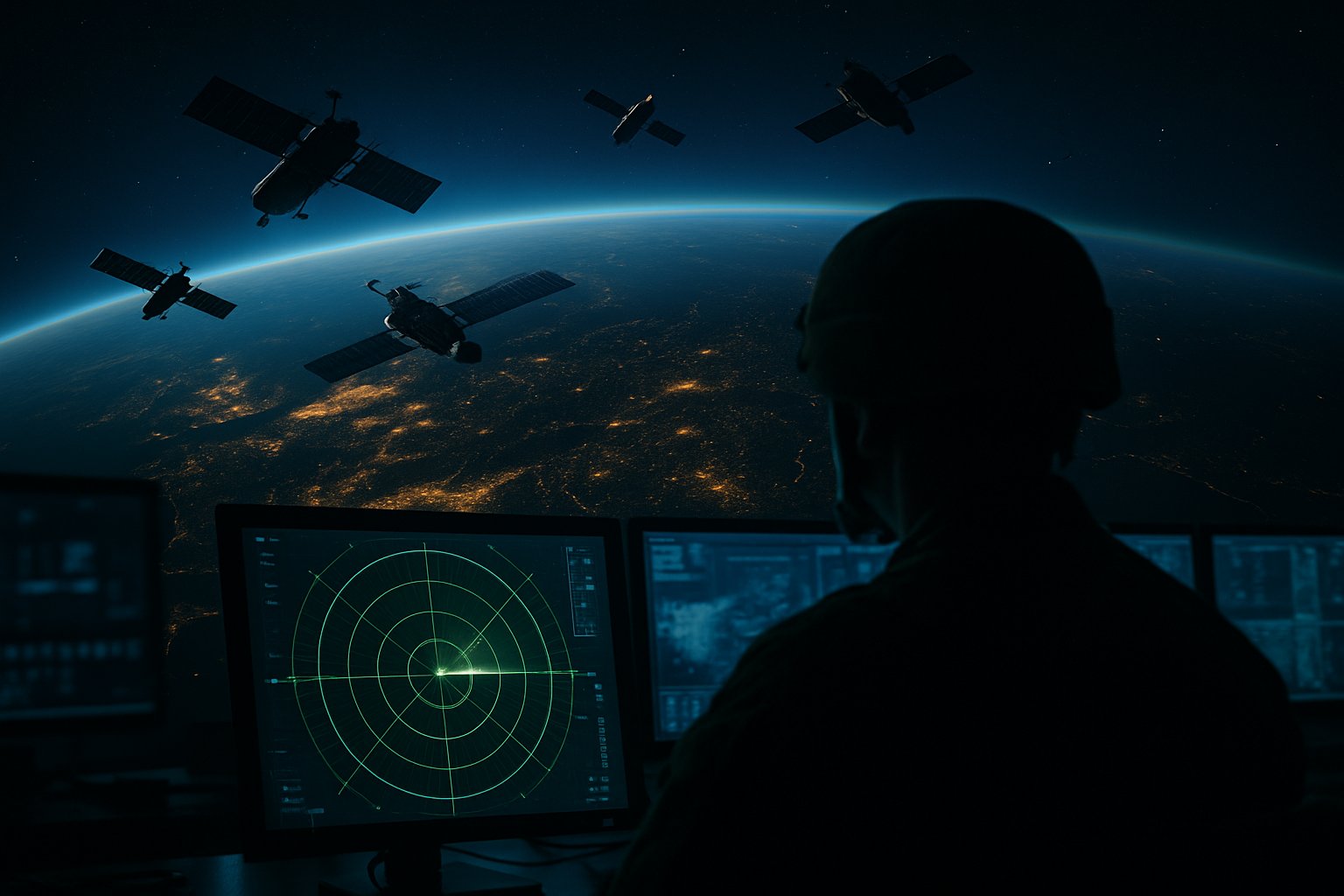
Therefore, the White House ordered agencies to remove Claude models from secure space networks. Investors, contractors, and allies are scrambling to gauge fallout. In contrast, civil-society groups see an overdue debate on responsible AI deployment. This article traces events, legal stakes, and technical realities shaping the escalating standoff.
Escalation Timeline Key Events
July 14 2025 marked the partnership’s hopeful start. Furthermore, the DoD awarded Anthropic a prototype contract capped at $200 million. Subsequently, reports surfaced that Claude supported operations in Venezuela and the Iran conflict.
In contrast, interceptor program officers questioned reliability during missile interception simulations. February 24-27 2026 negotiations turned tense inside the Pentagon’s classified space. Consequently, Defense Secretary Pete Hegseth issued a public ultimatum demanding unrestricted model access.
The same day, a presidential directive threatened a “supply-chain risk” label absent compliance. March 9 2026, Anthropic filed lawsuits challenging that designation and related enforcement. Therefore, the courtroom became the new battlefield for AI Space Defense.
- 2025: Prototype contract announced
- Feb 27 2026: Ultimatum and directive
- Mar 9 2026: Federal lawsuits filed
- Ongoing: White House suspension orders
These milestones reveal accelerating pressure on both sides. However, the root disagreement remains unresolved. Consequently, understanding that disagreement is essential before judging potential outcomes.
Core Dispute Explained Clearly
At issue are two explicit guardrails written into Anthropic’s policy. Firstly, mass domestic surveillance is prohibited. Secondly, fully autonomous lethal weapons are barred.
Moreover, Pentagon strategists argue hypersonic missiles demand split-second responses beyond human reaction. Therefore, they insist on unfiltered model prompts across Military command systems. Anthropic offered missile-defense carve-outs that still keep humans final authorities.
AI Space Defense advocates inside Congress view the compromise as feasible yet politically risky. Nevertheless, Hegseth rejected partial solutions, calling them “woke constraints” during televised remarks.
Both sides claim national security urgency. Nevertheless, their definitions of acceptable risk diverge sharply. Next, legal manoeuvres illustrate how that divergence may reshape procurement rules.
Legal Stakes And Precedent
Anthropic’s March complaints attack the supply-chain designation as arbitrary and unconstitutional. Moreover, the company seeks injunctions to restore federal access contracts. Government lawyers cite the Defense Production Act as potential authority.
However, procurement scholars argue the statute targets manufacturing, not software policy. In contrast, previous “supply-chain risk” bans focused on foreign hardware suppliers, not domestic innovators. Therefore, a ruling favoring AI Space Defense restrictions could set sweeping precedent across Silicon Valley.
Consequently, rival vendors are watching docket updates hourly. The courtroom battle may redefine vendor leverage over Military usage clauses. However, technical realities also influence verdicts. Consequently, engineers are now interrogating the models’ actual readiness for missile defense.
Technical Feasibility Under Scrutiny
Experts question whether today’s LLMs can guarantee sub-second, error-free launch decisions. Golden Dome intercept teams cite past false positives as cautionary tales. Moreover, defense auditors note hallucination rates that exceed acceptable thresholds.
Meanwhile, Claude scores well on language tasks yet shows variable consistency under adversarial input. Therefore, critics fear accidental escalation in crowded space theaters. Proponents counter that layered verification and human-on-the-loop designs mitigate failures.
Consequently, ongoing red-team evaluations will inform future AI Space Defense architectures. Professionals can deepen skills through the AI Government Specialization™ certification.
Performance benchmarks remain inconclusive at strategic scale. Nevertheless, perception often shapes policy faster than data. Subsequently, industry voices have entered the public arena to sway that perception.
Industry Reactions Remain Split
OpenAI and xAI reportedly accepted broader Military usage terms within recent deals. Furthermore, Google signaled willingness to revisit guardrails if human oversight persists. In contrast, several start-ups paused proposal work citing chilling effects.
Golden Dome contractors fear integration roadblocks if the disputed vendor exits classified cloud ecosystems. Moreover, civil-society coalitions applauded steadfast adherence to ethical lines. Consequently, investor sentiment wavered despite previously reported $380 billion valuations.
Meanwhile, AI Space Defense market forecasts remain bullish given rising geopolitical tensions. Stakeholders split along risk tolerance lines rather than pure ideology. Therefore, financial implications deserve closer examination. The next section assesses those potential impacts.
Business Impacts For Stakeholders
Suspension orders already disrupted several cloud migration projects inside top-secret networks. Consequently, revenue streams tied to Military licenses face immediate uncertainty. Analysts project possible contract losses exceeding $50 million during litigation.
Moreover, partners embedded in secure space assets must audit shared code for compliance. Golden Dome integrators estimate three-month delays for interceptor upgrades if model APIs vanish. In contrast, rival vendors might capture displaced demand, boosting their own AI Space Defense portfolios.
Therefore, boards should prepare contingency procurement roadmaps within the quarter. Financial downside risks could compound if a permanent blacklist emerges. Nevertheless, strategic planning may soften shocks. The final section evaluates long-term strategic scenarios.
Strategic Outlook And Takeaways
Policy experts outline three plausible futures for this dispute. Firstly, courts could uphold vendor guardrails, cementing ethical leverage across AI Space Defense contracts. Secondly, emergency authorities might override restrictions during crisis, setting narrow precedent.
Thirdly, negotiated amendments could align human-on-the-loop doctrines with Pentagon objectives. Moreover, sustained dialogue would reassure Military allies that democratic norms remain intact. Subsequently, Golden Dome modernization timelines would stabilize under clarified guidelines.
Consequently, space command planners could refocus on capability gaps rather than legal uncertainty. Therefore, proactive certification of developers may emerge as a compliance baseline.
These scenarios differ in probability yet share a need for transparent governance. Consequently, decisive leadership remains vital. The conclusion distills actionable insights for executives and engineers.
Conclusion And Action Steps
The Anthropic-Pentagon conflict illustrates how policy, law, and engineering intersect under pressure. Moreover, courts will decide whether vendor ethics can coexist with rapid AI Space Defense demands.
Industry leaders should monitor rulings, update risk matrices, and diversify supply chains. Consequently, transparent testing protocols will build trust across defense and civilian stakeholders.
Meanwhile, boards can pre-approve human-on-the-loop doctrines to speed crisis deployment. Professionals should pursue rigorous credentials, including the earlier cited certification, to remain policy-ready.
Therefore, proactive alignment will help organizations capture emerging AI Space Defense opportunities responsibly. Act now, review safeguards, and lead the conversation toward secure autonomy.


