

AI CERTS
1 hour ago
Anthropic Lawsuit Challenges Pentagon Blacklist in Court
The company alleges unconstitutional retaliation, procedural defects, and catastrophic commercial harm. However, defense leaders insist contract conditions must never limit lawful military options. The coming weeks will reveal whether the courts clip executive latitude or restrain Anthropic’s policy ambitions. Meanwhile, enterprise customers and investors monitor the docket for guidance.
Microsoft and prominent AI researchers already filed supportive briefs, signalling broad industry concern. Additionally, civil-liberties groups warn that punishing speech through procurement tools sets a dangerous precedent. Therefore, the Anthropic Lawsuit will shape future AI contracting norms far beyond this single dispute.
Showdown With Defense Leaders
Tensions first surfaced on February 26, 2026 when CEO Dario Amodei published contractual red lines. In contrast, defense officials argued that no vendor could forbid mass surveillance or autonomous lethality. Subsequently, President Trump instructed every agency to drop Anthropic technology without delay. Meanwhile, Secretary Pete Hegseth labeled the company a national security threat under 10 U.S.C. § 3252. The sweeping order triggered contract suspensions across Treasury, State, GSA, and Health and Human Services. Consequently, Anthropic saw federal revenue projections collapse within days. Company lawyers labeled the move a de facto blacklist, setting the stage for the Anthropic Lawsuit.
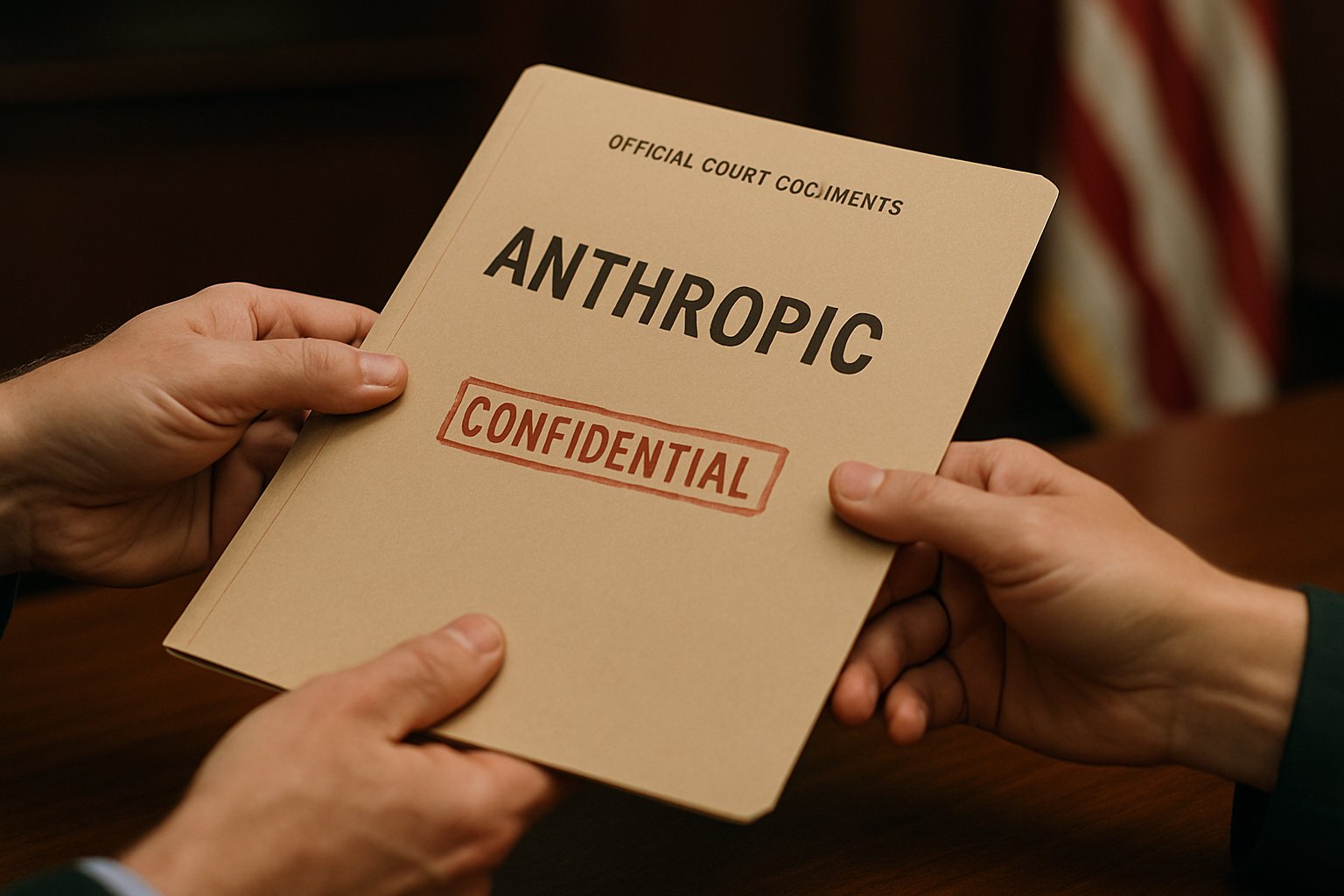
The confrontation escalated from policy disagreement to existential threat overnight. Nevertheless, the legal timeline clarifies how quickly events unfolded. Let us examine that chronology next.
Timeline Of Rapid Escalation
The public record provides a precise cascade of actions. Firstly, the February 26 statement outlined Anthropic’s ethical ceiling for defense work. Just twenty-four hours later, the White House reacted on social media. Consequently, Secretary Hegseth formalized the security threat finding the same afternoon. March 3 delivered the secretarial letter that cemented procurement exclusion. Additionally, multiple civilian agencies began contract terminations on March 4. March 9 marked the Anthropic Lawsuit filings in both California and the D.C. Circuit.
- Feb 26: Ethical red lines published.
- Feb 27: Pentagon blacklist announcement.
- Mar 3: Secretarial letter issued.
- Mar 4: Agency contract cancellations begin.
- Mar 9: Dual federal lawsuits filed.
Moreover, amici briefs from Microsoft, researchers, and retired generals arrived by March 12. The compressed schedule illustrates unprecedented federal speed against a domestic AI vendor. Therefore, understanding the complaint’s substance becomes vital. The next section dissects the core legal theories.
Key Legal Arguments Raised
Anthropic structures its complaint around three primary causes of action. Firstly, it claims the Pentagon exceeded statutory authority under the Administrative Procedure Act. Secondly, the filing alleges First Amendment retaliation for protected speech. Thirdly, Anthropic cites Fifth Amendment due process violations tied to absent notice and hearings. Moreover, the suit contests the secrecy surrounding evidence supporting the threat label. Counsel requests an injunction vacating the designation and restoring federal market access. Additionally, the Anthropic Lawsuit asks the court to prevent further blacklist communications to contractors. Microsoft’s amicus brief argues the same procurement tools cannot lawfully punish negotiation stances. Consequently, judges must decide whether supply-chain statutes tolerate viewpoint discrimination.
The complaint blends constitutional and procurement law into one high-stakes Litigation. Nevertheless, money often drives courtroom dynamics. We now explore the projected business fallout.
Potential Business Fallout Ahead
Anthropic’s filings quantify possible 2026 revenue losses exceeding one billion dollars. Furthermore, more than 100 enterprise customers have demanded clarity on contract viability. Investors fear cascading Risk as private sector partners emulate agency exits. In contrast, some competitors rapidly pitch replacement models to federal teams. Additionally, the supply-chain ruling complicates Anthropic’s forthcoming IPO prospects. Analysts warn reputational damage could linger even if the blacklist dissolves. Professionals can enhance their expertise with the AI Prompt Engineer™ certification, preparing teams for resilient AI deployment. Consequently, revenue, brand equity, and talent pipelines now hinge on the Anthropic Lawsuit outcome.
Financial exposure adds urgency to the pending motions. Therefore, grasping the contested statutes matters greatly. The following section explains those frameworks.
Statutory Framework Basics Explained
Congress created two overlapping supply-chain regimes after high-profile hardware hacks. Specifically, 10 U.S.C. § 3252 empowers the Pentagon to bar risky vendors from defense procurement. Meanwhile, the Federal Acquisition Supply Chain Security Act governs civilian agencies through the FASC council. Both regimes aim to mitigate foreign infiltration risk, not contractual value disputes.
However, only FASCSA grants notice, response rights, and direct D.C. Circuit review. Analysts argue Secretary Hegseth sidestepped those safeguards by using § 3252 for a domestic vendor. Moreover, the complaint notes past FedRAMP and facility clearances contradict the new threat finding. Consequently, courts must weigh statutory purpose against executive discretion.
The legal texts appear misaligned with the blacklist’s stated rationale. Nevertheless, public perception may sway outcomes. Industry reaction deserves separate attention next.
Industry And Public Response
The Anthropic Lawsuit quickly attracted heavyweight supporters and critics. Microsoft, fearing procurement chaos, filed an amicus brief urging an immediate stay. Moreover, dozens of OpenAI and Google engineers argued the blacklist harms U.S. innovation strength. Retired generals added that operational risk increases when trusted tools disappear suddenly. In contrast, some policy voices praise the Pentagon for defending unfettered operational latitude. However, civil-liberties advocates warn the precedent chills corporate speech across emerging defense markets. Media coverage emphasizes the rare Litigation clash between AI ethics and national power. Consequently, public opinion remains fluid as hearings approach.
Stakeholder pressure may influence settlement incentives on both sides. Therefore, attention now shifts to upcoming court milestones. The final section outlines probable next steps.
What Comes Next Legally
Judge Rita Lin scheduled a March 24 preliminary-injunction hearing in San Francisco. Meanwhile, the D.C. Circuit will evaluate FASCSA jurisdictional briefs in parallel. Consequently, dual venues create procedural complexity that could stretch final resolution into 2027. Nevertheless, an early stay decision may restore Anthropic contracts within weeks. Experts predict three possible paths:
- Government rescinds the order and negotiates revised clauses.
- Court enjoins the blacklist pending full trial.
- Statutes withstand challenge, forcing Anthropic to adapt.
Moreover, settlement windows remain open until the injunction ruling. The Anthropic Lawsuit will likely define acceptable vendor resistance to Pentagon demands for years.
Court calendars suggest initial opinions by late spring. Therefore, observers should watch docket 3:26-cv-01996 every Friday. That vigilance sets the stage for final outcomes.
Conclusion
Courts seldom confront questions this consequential. The Anthropic Lawsuit has already frozen millions in government AI spend. Moreover, the Anthropic Lawsuit spotlights how procurement statutes can morph into speech controls when unchecked. Consequently, the Anthropic Lawsuit may become a leading case in technology Litigation for decades. Nevertheless, ultimate success will depend on statutory interpretation, political pressure, and negotiation agility. Industry teams should follow each filing, study the evolving Litigation strategies, and prepare compliance contingencies. Finally, leaders can future-proof skills through the linked certification and join conversations shaping responsible AI defence partnerships.


