

AI CERTs
3 hours ago
Anthropic Deal Spurs Copyright Controversy in AI Training
Silicon Valley watched closely as a fresh Copyright Controversy shook generative-AI development. The focal point was Anthropic, a startup that trains Claude models on vast text corpora. June 2025 court records revealed millions of pirated books in its internal archives. Consequently, Judge William Alsup ruled that model training could be transformative fair use, yet flagged acquisition methods for trial. Industry lawyers and rights groups now debate long-term implications for Training Data governance, licensing, and compliance.
Moreover, the dispute highlights how DMCA safe harbors differ from wholesale copying of shadow libraries. Authors allege intentional violations of Intellectual property principles rather than simple takedown failures. Meanwhile, the settlement proposal approaches $1.5 billion, ranking among the largest creator payouts in tech litigation. These early facts set the stage for a deeper exploration of legal reasoning, numbers, and strategic lessons.
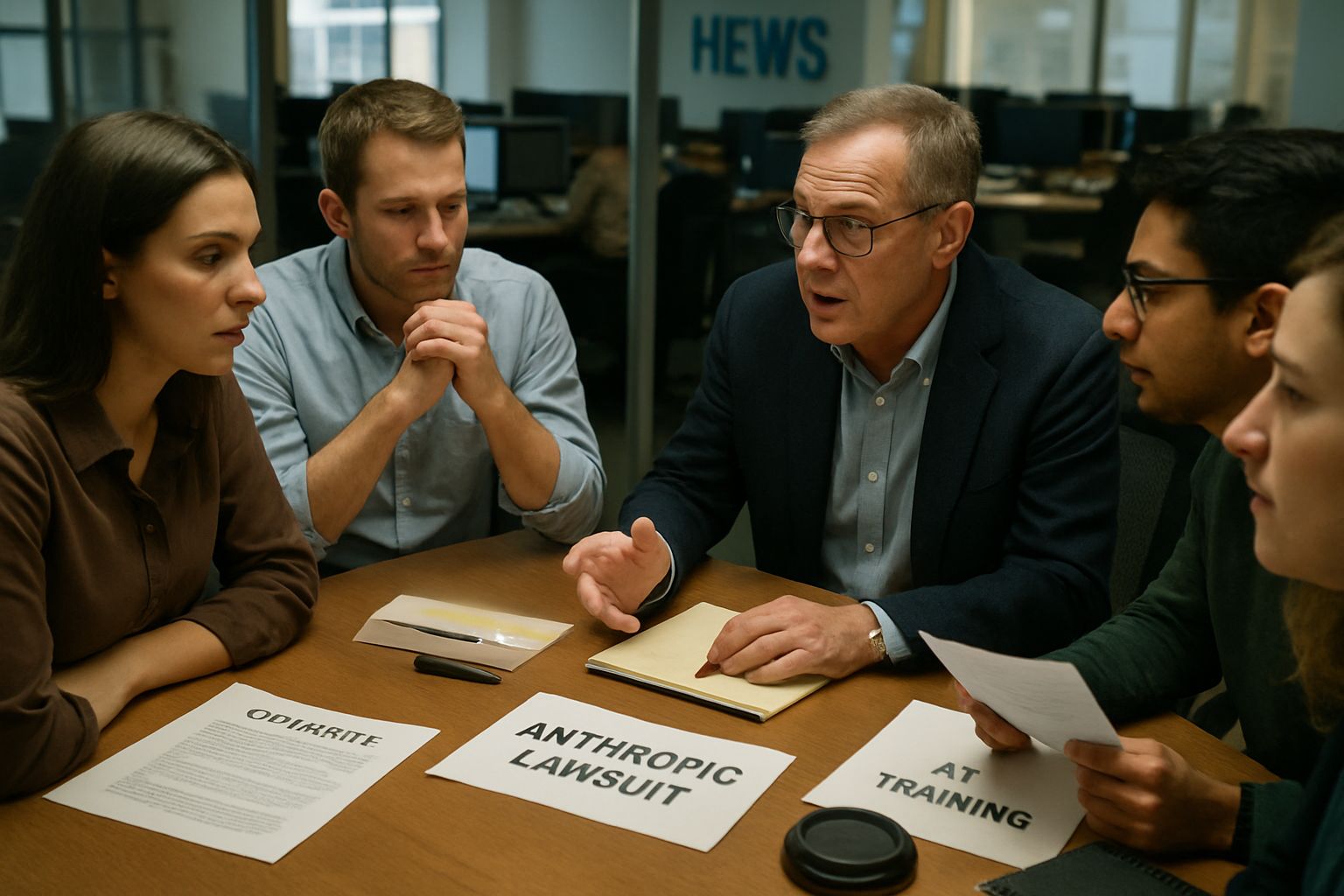
Fair Use Court Ruling
Judge Alsup’s 34-page Order on Fair Use surprised many observers. He wrote that using books to train large models is “exceedingly transformative.” Therefore, Anthropic secured summary judgment on that narrow point. In contrast, the judge scheduled a jury trial over the company’s retention of seven-plus million pirated files. Consequently, the court drew a bright line between transformation during model learning and unlawful hoarding of original works.
Legal analysts emphasized four statutory factors. Purpose favored Anthropic because Training Data generated no market substitute. Nature mildly supported authors, yet the amount factor leaned neutral given full-text ingestion’s technical necessity. Finally, effect on the market remained speculative, tilting toward fair use. Nevertheless, Alsup stressed that fair use does not excuse deliberate piracy.
These holdings reduce immediate injunction risk for model builders. However, they also demand rigorous sourcing audits. Such duality fuels ongoing Copyright Controversy within boardrooms and policy forums.
Pirated Library Debate Unfolds
Discovery exposed downloads from Books3, LibGen, and other shadow libraries. Reports list roughly 196,640 Books3 titles, at least five million LibGen texts, and two million additional mirror copies. Altogether, Anthropic engineers stored more than seven million unauthorized files in a “central library.”
Furthermore, logs revealed that some duplicate archives remained accessible “forever,” according to internal emails. Authors Guild lawyers argued this practice ignored established Intellectual property norms. Additionally, plaintiffs claimed the company sidestepped commercial licensing options that cost far less than future damages.
Judge Alsup echoed those worries, stating, “We will have a trial on the pirated copies.” Consequently, retention methods, not the act of training, may impose the heaviest liability. This nuanced separation continues to drive the broader Copyright Controversy discussion.
Settlement Numbers Explained Clearly
Subsequently, both sides negotiated a provisional deal. The framework creates a $1.5 billion fund covering about 465,000 works. Each book earns an estimated $3,000 before claim adjustments. Aparna Sridhar, Anthropic’s deputy general counsel, framed the agreement as resolving “legacy acquisition issues” while preserving the transformative ruling.
Key Settlement Statistics Overview
- $1.5 billion total fund size
- Approximately 465,000 eligible works
- Roughly $3,000 baseline per title
- Pending final court approval in 2026
Moreover, preliminary approval orders scrutinize notice procedures and opt-out rights. Authors Guild leaders call the sum “historic,” though some smaller creators fear pro-rated payouts may shrink. Nevertheless, the gigantic headline amount signals heightened cost for careless Training Data practices.
These figures underscore why investors now ask detailed provenance questions. Consequently, other AI labs may accelerate dataset audits to avoid another Copyright Controversy.
Industry Reactions And Risks
Technology executives largely welcomed the fair-use clarity. However, compliance officers warned that improper sourcing still carries billion-dollar exposure. Moreover, publishing groups urged Congress to craft a licensing regime guaranteeing remuneration for future datasets.
Independent scholars offered balanced views. In contrast, some hailed Alsup’s analogy comparing model training to human reading. Others argued large-scale copying exceeds traditional fair-use bounds. Meanwhile, global jurisdictions weigh alternative approaches, adding cross-border uncertainty to DMCA interpretations.
Consequently, startups must integrate Intellectual property expertise early. Professionals can enhance their expertise with the AI Developer™ certification, which covers data-provenance design patterns. Such preparation mitigates escalating Copyright Controversy exposure.
Policy And Future Steps
Legislators monitor constituent pressure from both creators and AI firms. Additionally, regulators consider disclosure rules for Training Data sources and retention windows. Europe’s AI Act already demands transparency, setting potential precedents.
Furthermore, legal observers expect appeals or parallel suits challenging different model architectures. Consequently, district-level diversity could produce circuit splits on fair use, prompting Supreme Court review. Meanwhile, class-action settlements may inspire negotiated licensing exchanges, easing DMCA friction.
These forthcoming moves will shape investment, research velocity, and global leadership. However, proactive governance today reduces tomorrow’s Copyright Controversy shockwaves.
Practical Takeaways For Teams
Engineering managers face an urgent checklist:
- Audit all textual Training Data for provenance.
- Remove shadow-library sources immediately.
- Document retention limits and deletion triggers.
- Pursue negotiated licenses or public-domain alternatives.
- Engage Intellectual property counsel early in model design.
Moreover, cross-functional collaboration between legal, security, and data scientists curbs rogue scraping. Consequently, organizations build trust with rights holders and regulators, reducing the likelihood of another explosive Copyright Controversy.
These steps close the compliance gap. Nevertheless, sustained vigilance remains vital as case law evolves.
Collectively, the Anthropic dispute demonstrates both opportunity and peril. Fair-use validation boosts innovation, yet reckless acquisition invites staggering penalties. Therefore, disciplined data governance, robust licensing, and certified expertise form the new baseline for responsible AI development.
Conclusion And Next Moves
Anthropic’s saga offers a dual message. Fair use can protect transformative model training, yet pirated archives invite enormous cost. Moreover, the proposed $1.5 billion deal shows creators’ growing leverage. Consequently, data audits, licensing programs, and continuous education are essential safeguards.
Professionals should study the ruling’s nuances, monitor settlement approvals, and adopt rigorous provenance controls. Additionally, pursuing industry credentials such as the AI Developer™ certification strengthens organizational readiness. Act now to navigate the next Copyright Controversy with confidence.


