

AI CERTS
2 hours ago
Analysts Debate Indian IT Selloff Fallout
Moreover, the event exposed deeper structural questions. Will agentic tools simply augment coding staff, or will they gut the traditional revenue model? In contrast, optimists claimed disciplined pivots and aggressive upskilling could offset lost billable hours. Nevertheless, few denied that February’s turmoil signalled an inflection point. As debates intensified, the phrase Indian IT Selloff dominated earnings calls, broker notes, and social media feeds.
Indian IT Selloff Shock
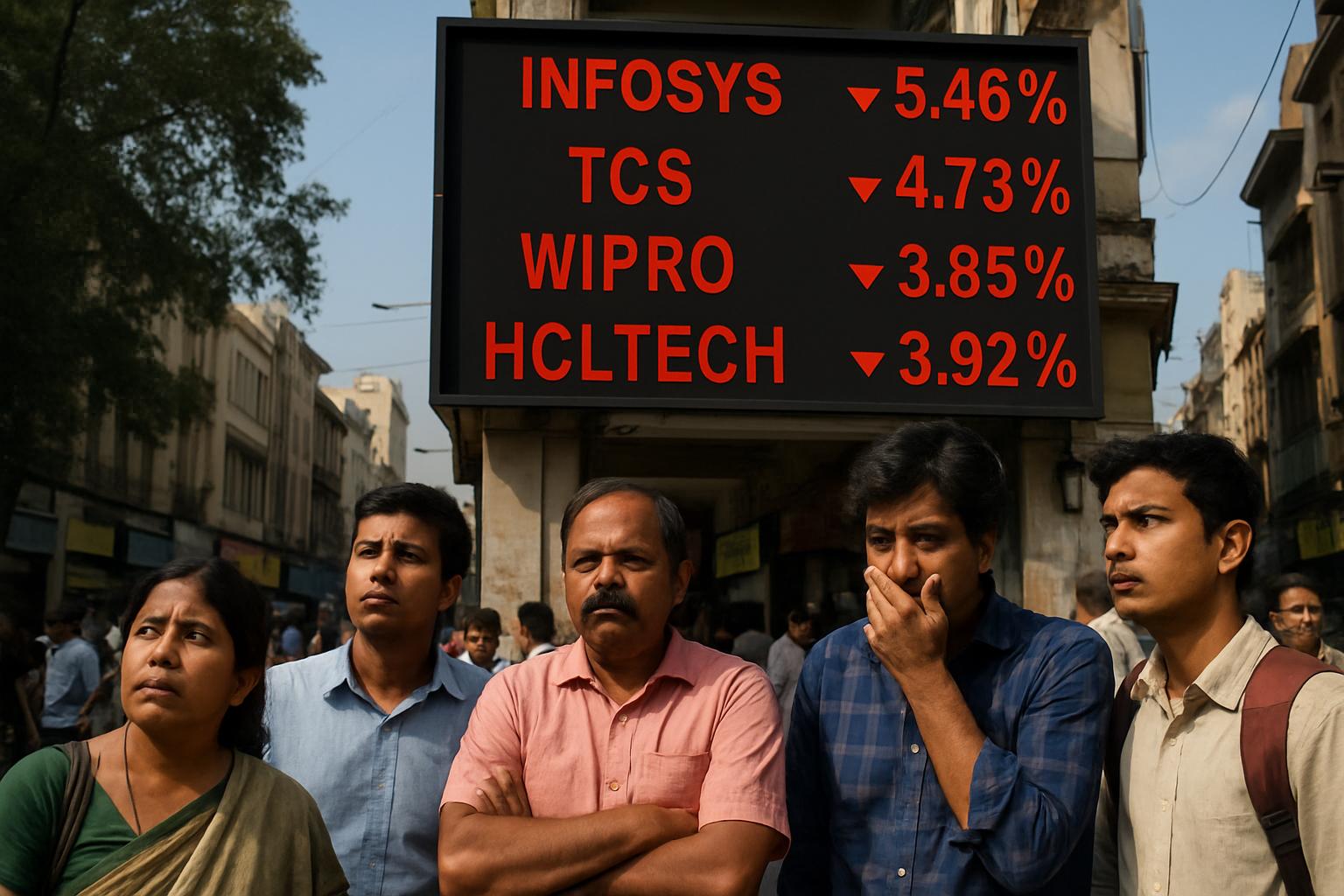
Trading screens flashed red on 4 February 2026. Therefore, the Nifty IT index plunged about 7 percent intraday before settling near 36,345. Infosys, TCS, and LTIMindtree each shed 6–8 percent. The single session ranked among the worst since March 2020. Moreover, the damage snowballed; by late February the index was down 21 percent for the month. Market watchers linked every move to Anthropic’s Claude Cowork plug-ins, whose sophisticated tools promised end-to-end workflow automation. Consequently, comparisons with the dot-com crash resurfaced, and commentary framed the bleeding as unprecedented for services exporters.
These numbers confirmed that the Indian IT Selloff reflected more than fleeting sentiment. However, the emotional tone obscured critical details that will shape recovery prospects.
Drivers Behind Panic Selling
Several catalysts converged. First, Anthropic showcased legal, marketing, and data agents able to execute multi-step tasks. Consequently, investors feared wholesale substitution of manual testing, maintenance, and reporting. Secondly, valuations had already stretched amid tepid order books. Therefore, algorithms triggered momentum selling once downside thresholds broke. Furthermore, foreign portfolio investors accelerated exits, magnifying liquidity stress.
- Rs 1.9–2.0 lakh crore wiped in one day
- All ten Nifty IT constituents declined 17–27 percent in February
- Mutual fund holdings dropped Rs 70,000 crore month-over-month
- Global software names lost up to $400 billion simultaneously
In contrast, some desks cited over-leveraged speculative positions as additional fuel. Nevertheless, consensus formed that the Indian IT Selloff showcased fragilities within the prevailing revenue model.
These causes mapped the route from innovation shock to price collapse. Subsequently, scrutiny shifted toward operational exposure.
Application Services Exposure Risk
Application services still contribute 40–70 percent of top-line for major exporters. Moreover, the effort-based revenue model relies on large benches and predictable billing hours. Claude Cowork threatens this foundation because its tools compress development, testing, and integration cycles. Motilal Oswal warned 9–12 percent of services revenue could evaporate within four years. Jefferies flagged even steeper scenarios where bleeding expands if clients pursue aggressive internal automation.
However, customised enterprise stacks, legacy compliance, and security constraints slow abrupt migration. Consequently, CLSA and JPMorgan projected a tempered shift toward outcome pricing rather than outright project cancellations. The Indian IT Selloff thus amplified a long-running debate on whether incumbents can defend margins while modernising their revenue model.
These risks underscore the urgency for operational pivots. Meanwhile, investors evaluated capital-flow dynamics that could deepen or relieve pressure.
Valuation And Flow Pressures
Before February, sector valuations traded at rich 25–28 times forward earnings. Therefore, even moderate guidance cuts could justify sharp multiple compression. Furthermore, systematic funds dumped positions as volatility surged past set thresholds. Mutual funds and LIC recorded notional bleeding that rattled domestic sentiment. Meanwhile, foreign institutions rotated into defensives like fast-moving consumer goods.
Jefferies predicted a multi-percent de-rating if application revenues stall. Nevertheless, JPMorgan countered that rapid proof-of-concept wins in AI integration could restore confidence. The Indian IT Selloff therefore became a referendum on valuation sustainability under a shifting revenue model.
These valuation swings highlighted funding gaps for transformation plans. Consequently, attention pivoted toward opportunity creation inside the disruption.
Opportunity Amid Disruption Wave
Not every headline focused on doom. Infosys quickly announced joint pilots with Anthropic to embed agentic tools inside client operations. Moreover, HCL Technologies launched an accelerator for code-generation governance. Morgan Stanley argued such moves could protect pricing power and unlock higher-margin advisory streams. Additionally, cross-selling AI security services could cushion revenue shocks.
Nevertheless, success hinges on workforce readiness. Firms must retrain tens of thousands while managing morale bleeding. Consequently, structured credential pathways gained prominence.
Upskill With AI Certification
Professionals can enhance their expertise with the AI + UX Designer™ certification. Moreover, this credential signals proficiency in marrying design thinking with generative tools. Therefore, service providers can pitch differentiated transformation roadmaps instead of commoditised staffing decks. In contrast, rivals that ignore upskilling may see their revenue model decay faster.
These opportunity vectors demonstrate that the Indian IT Selloff need not end in contraction. Subsequently, scenario planning helps clarify strategic choices.
Future Scenario Paths Explained
Analysts sketch three broad futures. First, a managed decline where automation trims margins but incumbents endure. Secondly, an augment-and-expand path where firms package AI platforms for clients and recapture growth. Thirdly, a rapid disruption tail risk that forces layoffs and accelerates competitive bleeding. Motilal Oswal assigns 50 percent probability to the middle lane, while Jefferies attaches higher weight to downside outcomes.
Moreover, government policy on reskilling incentives could influence trajectory. Consequently, continuous monitoring of contract renewals, pricing clauses, and new-logo deals will indicate which path materialises. The Indian IT Selloff serves as the baseline data point for these forecasts.
These scenarios offer stakeholders a structured lens. Therefore, leaders must distil actionable priorities from the possibilities.
Strategic Takeaways For Leaders
Boards should commission detailed vulnerability audits across project portfolios. Furthermore, shift talent budgets toward AI engineering, data quality, and domain consulting. Additionally, embed outcome-based pricing pilots to test client appetite. In contrast, delaying decisions risks deeper bleeding when next-generation tools mature.
Moreover, investor relations teams must communicate credible pivot timetables. Consequently, transparent milestones can soften further valuation shocks. The Indian IT Selloff has shown that markets reward clarity, even amid uncertainty.
These action points convert analysis into roadmap elements. Subsequently, we turn to a concise recap and call to action.
Conclusion: The Indian IT Selloff spotlighted how powerful AI tools can challenge a decades-old revenue model. Nevertheless, disciplined pivots, bold upskilling, and transparent pricing strategies can transform threat into advantage. Moreover, scenario planning and early execution will separate winners from laggards. Therefore, industry professionals should explore specialised credentials like the AI + UX Designer™ course to stay ahead. Act now, secure new skills, and convert disruption into sustainable growth.


