

AI CERTS
3 weeks ago
Amazon’s Alexa+ Emerges As Agentic Product Powerhouse
Meanwhile, Amazon claims 600 million active Alexa devices. Additionally, Prime members will receive Alexa+ access without extra fees, while others pay $19.99 monthly. These numbers highlight sizable upside, yet they also surface privacy and reliability concerns that professionals must examine.
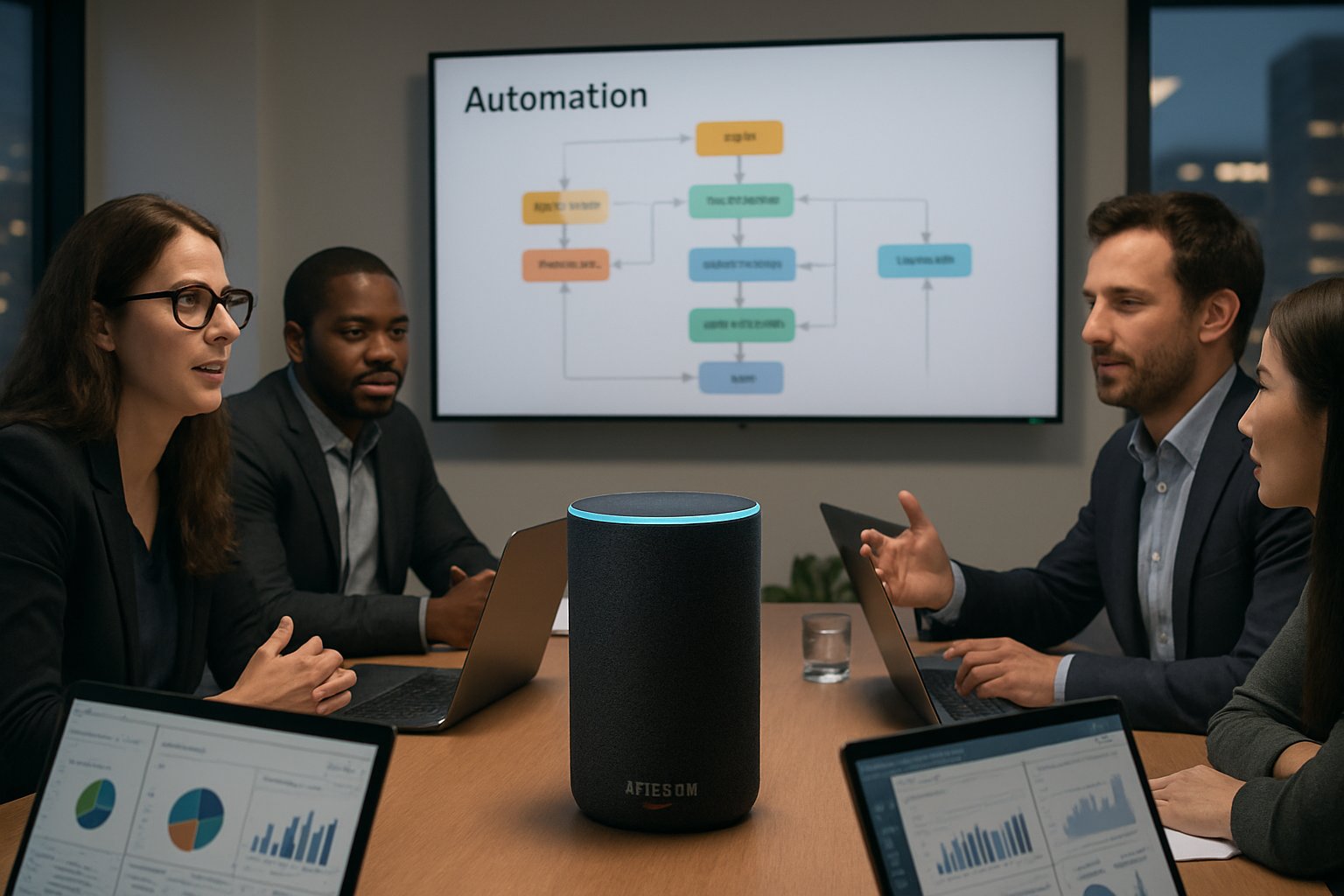
Moreover, Amazon’s architecture now orchestrates several large language models, including its Nova Act family. Therefore, the assistant no longer simply responds; it completes end-to-end Task Execution across thousands of partner services. The following sections unpack strategic, technical, and regulatory implications.
Market Stakes Rapidly Rise
Voice assistant forecasts vary by analyst firm. Future Market Insights pegs 2025 revenue near USD 7.3 billion. However, Amazon executives signal ambitions beyond that figure. An internal AWS memo called agentic AI “the next multi-billion business.”
Consequently, the Agentic Product category now anchors Amazon’s consumer and cloud strategy. Competitors at Google, Apple, and Microsoft/OpenAI scramble to match Alexa+ capabilities, yet Amazon’s installed base grants an advantage.
Furthermore, Prime bundling drives retention while opening new subscription funnels. Analysts expect churn reduction even if only a subset of features gain traction.
- Installed devices: 600 million+
- Alexa+ price: $19.99 monthly for non-Prime customers
- Early access: Echo Show 8/10/15/21 first
These figures underscore growing competition. Nevertheless, market size could expand rapidly as autonomous features gain mainstream acceptance. Consequently, stakeholders must evaluate partner integration opportunities.
These statistics reveal high upside potential. Subsequently, technical details explain how Amazon plans to deliver at global scale.
Architecture Driving Alexa+ Service
Daniel Rausch, VP of Alexa & Fire TV, stated, “It is not as easy as taking an LLM and jacking it into the original Alexa.” Therefore, Amazon rebuilt critical layers. The system now selects among multiple models, including Nova Act and Anthropic’s Claude.
Additionally, a new “expert” framework routes user intent to domain-specific agents. Consequently, complex Task Execution such as booking repairs spans authentication, form filling, and payment without user micromanagement.
Moreover, cloud processing replaces many on-device pathways, enabling heavier reasoning loops. Reliability targets remain aggressive, yet Rohit Prasad admits hallucinations “must be close to zero.”
Professionals can deepen security knowledge for such architectures with the AI Network Security™ certification.
This architecture illustrates why Alexa+ is framed as an Agentic Product rather than a voice interface. However, the shift invites scrutiny of data flows and privacy policies.
The technical overhaul promises flexibility and scale. Nevertheless, privacy concerns emerge as more audio routes to the cloud.
Privacy Tradeoff Debate Deepens
Amazon discontinued the “Do Not Send Voice Recordings” option for several Echo models. Consequently, all users now rely on a cloud pathway. Privacy advocates argue the move erodes autonomy and increases surveillance risk.
In contrast, Amazon insists cloud pipelines are required for generative reasoning. Additionally, the company claims fewer than 0.03 percent of customers used the retired setting. Yet media coverage highlights broader trust implications.
Moreover, regulators may revisit earlier settlements about voice data retention. Therefore, enterprises considering Alexa+ deployments in offices should review policies carefully.
The Agentic Product promise hinges on rich context. Nevertheless, expanded data collection intensifies compliance duties under GDPR and emerging U.S. state laws.
These privacy tensions remain unresolved. Subsequently, reliability issues also demand attention before broad adoption.
Reliability And Risk Factors
Generative models sometimes hallucinate. Consequently, autonomous booking or purchasing could misfire. Amazon’s engineering teams target near-zero hallucination rates, yet no independent benchmarks exist.
Additionally, latency may rise when Alexa+ orchestrates web navigation instead of API calls. Meanwhile, error propagation across chained services complicates troubleshooting.
Rohit Prasad acknowledges the challenge. Furthermore, lawyers warn of liability if an Agentic Product schedules wrong flights or misplaces orders.
Nevertheless, Amazon touts fallback checks and user confirmations for high-value actions. Engineers emphasize monitoring and auditing tools built into the platform.
Reliability gaps could slow enterprise uptake. However, economic incentives outlined next may accelerate investment regardless.
Business Model Monetization Path
Amazon links Alexa+ to Prime, strengthening subscription stickiness. Additionally, the $19.99 standalone price mirrors other premium assistant tiers.
Moreover, Amazon can collect referral fees from partners like OpenTable and Uber Eats. Consequently, the Agentic Product becomes a commerce gateway.
Advertising options may follow. In contrast, Google’s assistant currently monetizes search ads, offering a different revenue blend.
Furthermore, AWS aims to package underlying agent tooling for developers. Selling those capabilities could grow cloud billings as organizations bake autonomous flows into internal applications.
The business model appears diversified and resilient. Subsequently, developer engagement will determine long-term moat strength.
Enterprise And Developer Hooks
AWS formed a new agentic AI group in March 2025. Consequently, Bedrock and SageMaker tooling will surface Alexa orchestration primitives.
Additionally, Amazon promises SDKs for third-party services. Early demonstrations showed Autonomous web navigation to Thumbtack without custom APIs.
Developers can expose structured endpoints or rely on Alexa+ scraping. However, API quality still influences latency and success rates.
Moreover, enterprises may deploy internal skills for procurement, support, or facility management. Those skills could invoke internal data, making the assistant a workplace Agentic Product.
Developer adoption hinges on trust and clarity around data usage. Consequently, transparent documentation will be vital for momentum.
These hooks open new partnership channels. Nevertheless, competitive and regulatory currents could alter the trajectory.
Competitive Outlook And Regulation
Google, Apple, and Microsoft all pursue Autonomous assistants. In contrast, Amazon’s device footprint offers immediate scale.
Additionally, regulators worldwide watch agentic AI closely. The European Union debates expanded liability frameworks for autonomous systems.
Moreover, U.S. agencies could revisit children’s privacy as Alexa+ reaches younger users. Therefore, Amazon must pre-empt adverse rulings with robust guardrails.
Industry observers expect rapid feature parity battles. However, unique Redesign decisions like model-agnostic routing may differentiate Alexa+.
Regulatory shifts will influence market adoption. Subsequently, strategic planning should include compliance scenario analyses.
Key Section Takeaways
Amazon positioned Alexa+ as a mature Agentic Product through large-scale Redesign and cloud orchestration. Furthermore, privacy and reliability challenges persist, yet monetization avenues appear strong.
Conclusion And Next Steps
Amazon’s Alexa+ signals a decisive move toward fully Autonomous assistants. Moreover, the company’s installed base and Prime integration grant immediate leverage. However, privacy objections and hallucination risks underscore the need for cautious deployment.
Consequently, technical leaders should pilot small use cases, monitor error rates, and engage legal teams early. Professionals seeking to secure such environments can pursue the AI Network Security™ certification to strengthen defenses.
Ultimately, the Agentic Product wave will redefine interaction models. Therefore, proactive learning and strategic experimentation will determine which organizations capture the greatest value.


