

AI CERTS
3 months ago
Amazon S3 Tables Elevate Cloud Data Storage
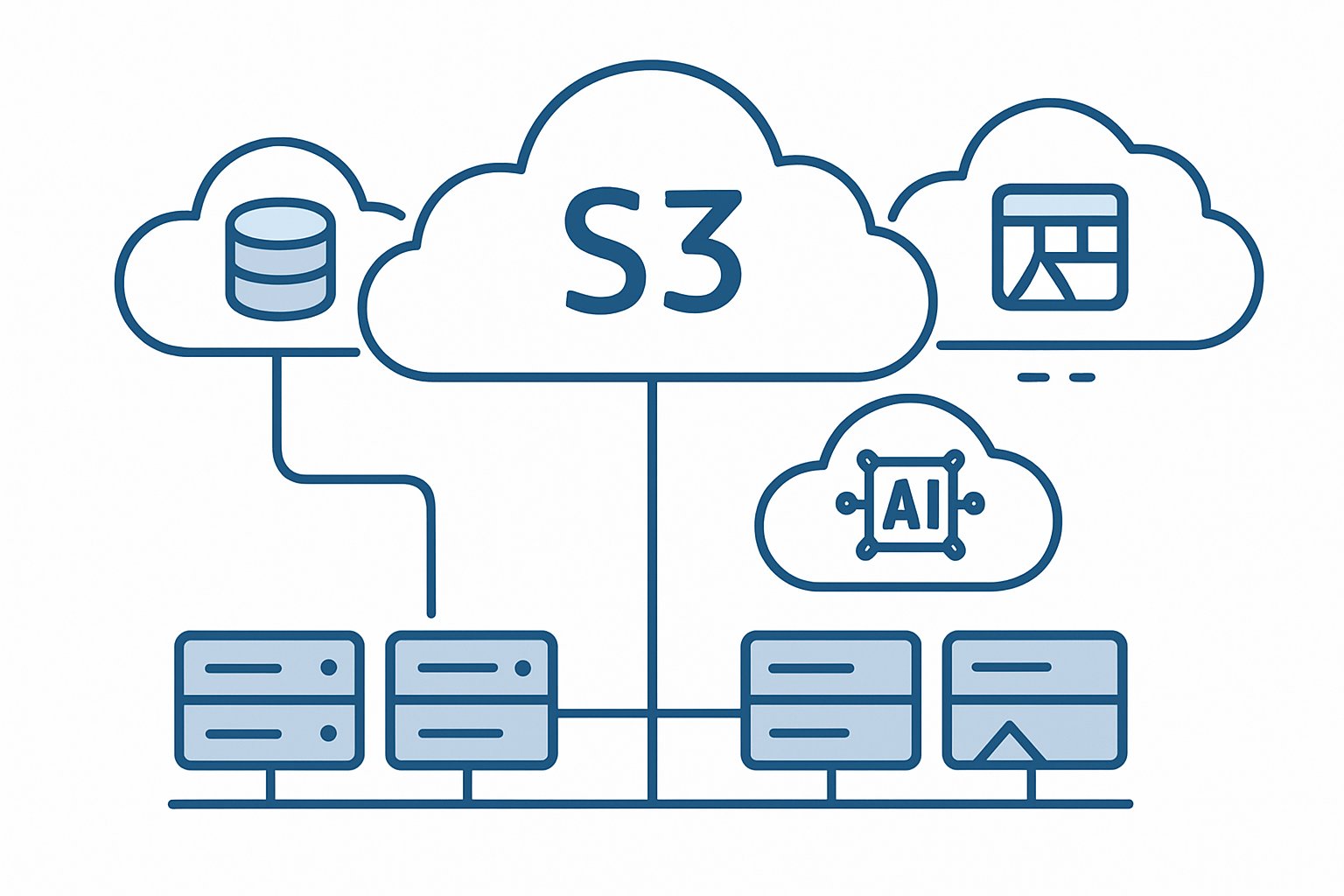
This article explores the timeline, technical foundations, AI integrations, and business trade-offs behind the launch.
Moreover, it clarifies how managed Iceberg tables and new vector features reshape daily engineering workflows.
Readers will learn performance claims, governance factors, and suggested next steps, supported by analyst commentary.
Subsequently, we outline training resources, including the linked certification, for professionals seeking to deepen practical skills.
Product Evolution Timeline Update
AWS revealed S3 Tables at re:Invent 2024, pairing them with S3 Metadata for rapid discovery.
January 2025 marked general availability, while March added SageMaker Lakehouse connectivity and console tooling.
Moreover, July delivered the Model Context Protocol server and the previewed S3 Vectors service.
Together, these milestones show a cadence targeting Cloud Data Storage leadership amid fierce competition.
- Dec 2024: Amazon unveiled Cloud Data Storage innovation via S3 Tables preview.
- Jan 2025: S3 Metadata GA improved Cloud Data Storage observability.
- Mar 2025: SageMaker Lakehouse integration fused Cloud Data Storage with ML notebooks.
- Jul 2025: MCP Server allowed agents to manage Cloud Data Storage tables safely.
- Mid-Jul 2025: S3 Vectors preview expanded Cloud Data Storage into embedding workloads.
S3 Tables evolved quickly from preview to broad ecosystem inclusion.
Consequently, customers gained managed tables before competitors duplicated the concept.
The technical underpinnings explain why early adopters cared.
Managed Iceberg Tables Advantages
Apache Iceberg offers schema evolution, ACID transactions, and time travel for iceberg tables used by analytical datasets.
However, running open Iceberg fleets demands compaction scheduling, manifest pruning, and version coordination.
S3 Tables embeds those chores inside Cloud Data Storage, delivering zero-ops maintenance and automatic optimization.
AWS claims up to three times better query performance and ten times more transactions than unmanaged alternatives.
Genesys and Pendulum report smaller engineering teams after migrating demanding analytics workloads to managed Iceberg tables.
Managed operations free engineers to focus on modeling rather than storage plumbing.
Therefore, performance boosts and simplicity drive current migrations.
AI enrichments build on that stable foundation.
AI Workflow Integrations Rise
S3 Metadata streams object tags and system attributes into queryable tables for Retrieval-Augmented Generation pipelines.
Meanwhile, S3 Vectors stores embeddings beside raw files, enabling similarity search inside the same Cloud Data Storage plane.
MCP Server integration lets AI agents create, query, and manage tables using natural language.
Consequently, developers automate test data creation, daily quality checks, and dataset documentation without bespoke scripts.
SageMaker Lakehouse now mounts S3 Tables directly, shortening the distance from raw ingestion to experiment tracking.
Professionals can validate skills through the AI for Everyone™ certification.
Storage-level AI support reduces orchestration steps.
Performance metrics still warrant inspection.
Performance Claims Under Scrutiny
AWS publicized three-fold query performance improvements and ten-fold transaction gains.
However, independent benchmarks remain scarce, leaving architects to extrapolate from marketing numbers.
Analyst firm Futurum urges enterprises to run representative analytics tests before committing workloads.
Nevertheless, early customer quotes cite faster dashboards and smoother streaming writes after adopting S3 Tables.
In contrast, critics warn that automatic compaction may spike costs during sustained peak traffic.
Hard data will soon verify query performance across varied workloads.
Governance questions also shape decisions.
Governance And Cost Implications
Centralizing tables inside Cloud Data Storage shifts some control from data teams to AWS services.
Therefore, robust IAM, Lake Formation, and Catalog policies must accompany migrations.
MCP extends permission scope to AI agents, raising concerns about accidental exfiltration.
Moreover, storage and maintenance fees alter TCO models; yet AWS touts 90% vector savings versus databases.
Teams should model ingestion rates, retention rules, and analytics concurrency when budgeting.
- Use fine-grained IAM roles for MCP actions.
- Audit table changes through CloudTrail regularly.
- Compare cost estimates with unmanaged iceberg tables benchmarks.
Governance diligence prevents costly surprises.
Finally, we consider the roadmap.
Future Outlook For Builders
Subsequently, AWS plans more regional rollouts and higher table limits.
Futurum predicts broader lakehouse adoption once Iceberg REST compatibility matures.
Additionally, ecosystem vendors like Dremio and DuckDB Labs are integrating MCP awareness for agentic tooling.
The convergence of vectors, metadata, and managed tables may redefine how Cloud Data Storage fuels applications.
Consequently, practitioners should monitor pricing updates, benchmark releases, and governance templates throughout 2025.
AWS is steering storage toward intelligent, opinionated platforms.
The discussion now turns to practical takeaways.
AWS has pushed storage closer to intelligent fabric by marrying Iceberg, metadata, and vectors.
Moreover, early adopters report operational relief and sharper dashboards.
Nevertheless, governance diligence and independent query performance testing remain essential steps.
Ready teams should benchmark costs, review IAM policies, and pursue the highlighted certification to stay competitive.


