

AI CERTS
2 hours ago
Amazon Retail Strategy Pivot: Shutting Go, Fresh for Whole Foods
Analysts view the move as a calculated response to unforgiving grocery margins. Furthermore, executives argue the reallocation improves capital efficiency and customer reach. This article unpacks the motivations, numbers, and industry implications behind the sudden shift. Readers will gain data-backed insights useful for operational planning and competitive forecasting.
Finally, we examine how technology licensing and certifications can support supply-chain resilience. Nevertheless, local employment effects and community reactions deserve equal attention. Each dimension underscores why this Retail Strategy Pivot will echo across global retail.
Amazon Store Closures Explained
Initially, Amazon launched physical grocery formats to showcase cashierless technology and own the shopping journey. However, the footprint remained modest compared with legacy chains. The announcement abruptly ends that experiment. Most stores cease trading on 1 February, granting only days for liquidation tasks. In contrast, California outlets stay open longer to satisfy state WARN requirements. Amazon labels the change a Retail Strategy Pivot designed to optimize long-term returns.
Key closure facts include:
- Total stores: 72, comprising 57 Fresh supermarkets and 15 Amazon Go locations.
- Closure date: 1 February for most markets, mid-March for California.
- Conversion plan: unspecified number will reopen as Whole Foods after remodeling.
- Employee support: severance plus 90 days pay and benefits, according to internal memos.
Consequently, the field execution timeline is compressed, raising logistical and labor challenges. These operational hurdles set the stage for examining the economic rationale.
Economics Behind Closure Decision
Grocery margins rarely top 3%, even before adding high-tech sensors and maintenance costs. Moreover, analysts estimate each Amazon Go build-out demanded millions in specialized hardware. Consequently, the payback horizon stretched beyond Amazon's acceptable threshold. Unit economics therefore lagged those of Whole Foods, which benefits from established volume and premium pricing. Same-day delivery, by contrast, scales using existing fulfillment nodes and requires limited incremental capital.
Amazon reports grocery gross sales above $150 billion and 150 million annual shoppers. Still, leadership admitted branded supermarkets lacked a distinctive customer experience and sound economic model. Hence, this Retail Strategy Pivot reallocates spending toward proven banners and delivery infrastructure. Meanwhile, Amazon projects Whole Foods sales have already climbed 40% since acquisition. Analysts foresee higher return on invested capital from additional organic and premium assortments. Such evidence forced leadership to rethink strategy without delay.
In sum, capital weight shifts from bricks to bits, guided by relentless financial discipline. The next section reviews how delivery momentum supports the shift.
Delivery Growth Rapidly Accelerates
Same-day perishable delivery now reaches over 5,000 US cities and towns. Per Amazon, perishable sales grew forty-fold during 2025 alone. Additionally, nine of the ten best-selling SKUs in same-day regions are fresh items. Andy Jassy recently proclaimed, "We’re on to something very significant with perishables". Therefore, Amazon invests aggressively in micro-fulfillment sites that push goods closer to consumers.
Key delivery milestones underline the momentum:
- Same-day coverage doubled from 1,000 to 2,300 cities during 2025.
- Perishable order volume rose 40 ×, driving basket size expansion.
- Ninety percent of Prime households now buy groceries at least once monthly.
Such data validates the Retail Strategy Pivot and guides future infrastructure budgets. Consequently, competitors must accelerate their own last-mile roadmaps. The subsequent portion explores Whole Foods' evolving role.
Whole Foods Expansion Plans
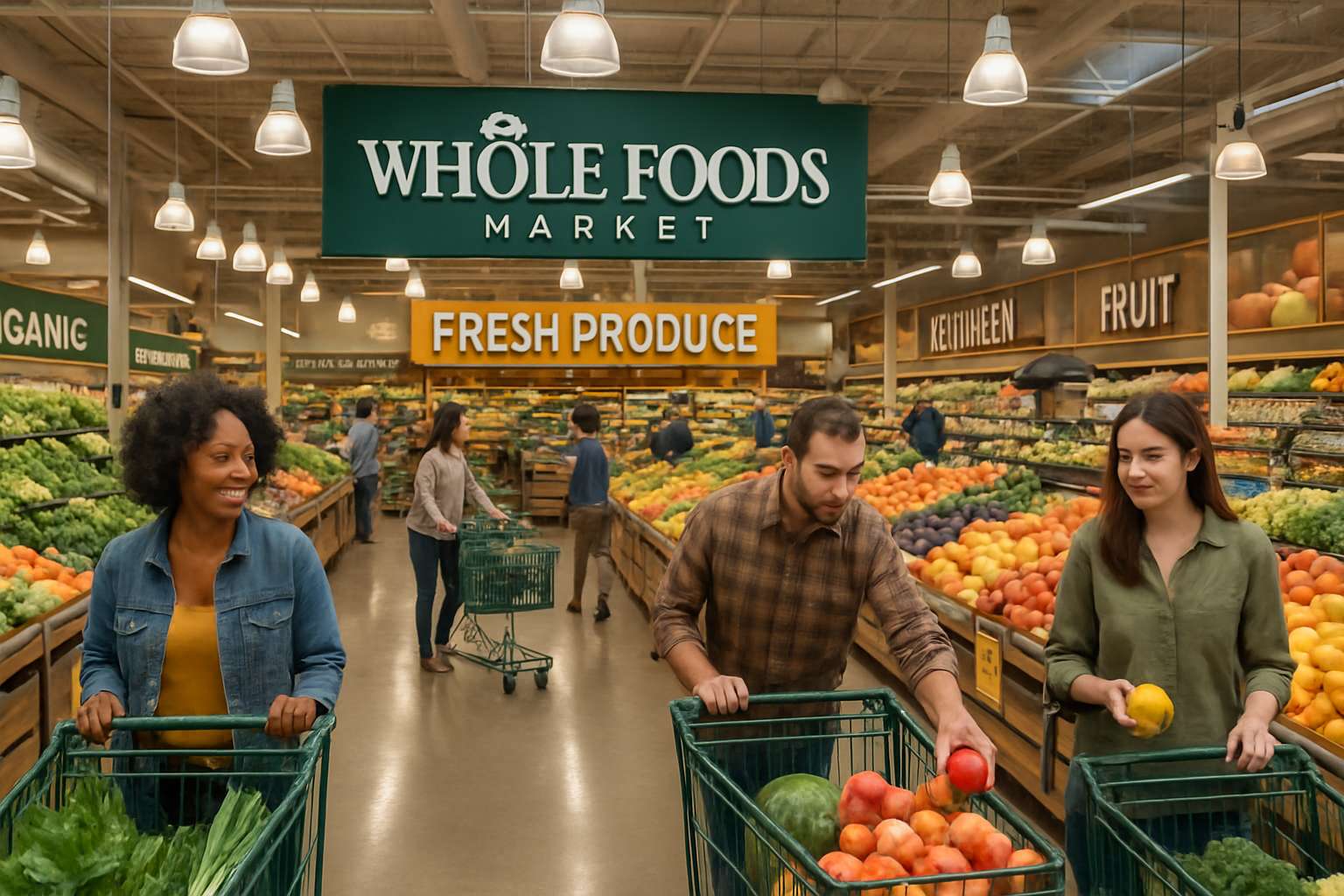
Whole Foods operates more than 550 stores after Amazon's 2017 acquisition. Moreover, Amazon intends to open 100 additional locations over the next few years. Some closed Fresh properties will convert into the iconic green-bannered chain. Additionally, smaller "Daily Shop" formats will complement traditional outlets and test neighborhood demand. This Retail Strategy Pivot leverages an established brand with loyal, high-spend customers.
Integration with Prime perks and delivery promises to deepen wallet share. Nevertheless, conversions require remodeling, licensing, and re-staffing, which may delay revenue realization. Therefore, site selection and phased rollouts are critical execution variables.
In brief, the banner offers scale, margin, and brand equity Amazon lacked in Fresh. Yet, technology still underpins the broader plan, as the next section details.
Technology Remains Central Asset
Amazon's Just Walk Out platform survives the store closures. Currently, more than 360 third-party venues license the checkout-free system. Moreover, Amazon has installed the technology inside 40 fulfillment-center breakrooms to speed associate breaks. Licensing allows monetization without heavy capital burdens. Meanwhile, data harvested from sensors continues to refine computer-vision models.
Professionals can enhance expertise through the AI Supply Chain™ certification. Consequently, teams will better align machine learning, inventory, and fulfillment initiatives. Such skills support any future Retail Strategy Pivot within complex omni-channel networks. Robust data governance remains essential to any long-term strategy for autonomous retail.
To conclude, technology licensing converts fixed costs into revenue streams. Our final section evaluates competitive implications.
Key Implications For Competitors
Walmart and Kroger already tout vast store networks. However, Amazon's delivery surge resets customer expectations on speed. In contrast, Instacart may benefit from additional marketplace volume as these stores disappear. Furthermore, third-party Just Walk Out deployments could appear in rival banners, leveling experiential gaps. Competitors must update strategy roadmaps, staffing models, and last-mile investments.
Analysts outline three urgent responses:
- Accelerate same-day fulfillment micro hubs.
- Explore autonomous checkout partnerships or internal pilots.
- Differentiate assortment with local or specialty items Whole Foods lacks.
Consequently, the Retail Strategy Pivot raises the competitive bar across pricing, speed, and experience. Stakeholders lacking flexibility risk market share erosion.
Overall, the battlefield now centers on logistics sophistication and brand trust. A concise recap follows next.
Amazon's decision to shutter Amazon Go and Fresh stores underscores ruthless focus on returns. The Retail Strategy Pivot shifts resources toward Whole Foods scale, hyper-fast delivery, and technology licensing. Moreover, delivery metrics demonstrate tangible consumer appetite for convenience. Consequently, rivals must reexamine capital allocation, store formats, and partnership options immediately. Professionals should track conversion timelines, employee outcomes, and licensing deals throughout 2026. Finally, leaders seeking operational resilience can pursue the linked certification to deepen supply-chain mastery. Staying agile today prepares organizations for the next Retail Strategy Pivot tomorrow.


