

AI CERTS
3 months ago
Amazon Q: How AI Coding Agents Redefine Enterprise Development
This article examines capabilities, adoption data, security events, and competitive context around Amazon Q Developer Code Agent. Furthermore, the review highlights practical lessons for teams planning broad code transformation initiatives. Readers will also learn how testing features and Devfile controls aim to mitigate operational risks. Meanwhile, productivity claims and economic performance figures offer a nuanced perspective on real value. Moreover, we point to certifications that help leaders govern agentic deployments responsibly. Prepare for an evidence-based journey through the state of autonomous software development. Pilot programs across finance and healthcare sectors reveal unique regulatory hurdles. Therefore, leaders seek evidence that agents respect privacy and audit requirements.
Global Market Context Today
Global spending on generative tooling is rising despite mixed macro conditions. In contrast, analyst estimates place dedicated code assistants at only a fraction of wider AI budgets. Nevertheless, Gartner’s 2025 Magic Quadrant named AWS a Leader, cementing credibility for AI Coding Agents in enterprise conversations. Reuters subsequently reported that AWS formed an internal group for agentic AI in March 2025, underscoring heightened focus.
Consequently, buyers comparing offerings from Microsoft, Google, and startups now weigh maturity, integration breadth, and governance tooling. Developers still question licensing costs relative to open-source alternatives. However, strong IDE integration frequently outweighs pure subscription pricing in decision matrices. Enterprise momentum validates the category yet leaves room for competitive displacement. The next section dissects how Amazon’s product attempts to secure that momentum.
Core Product Capability Set
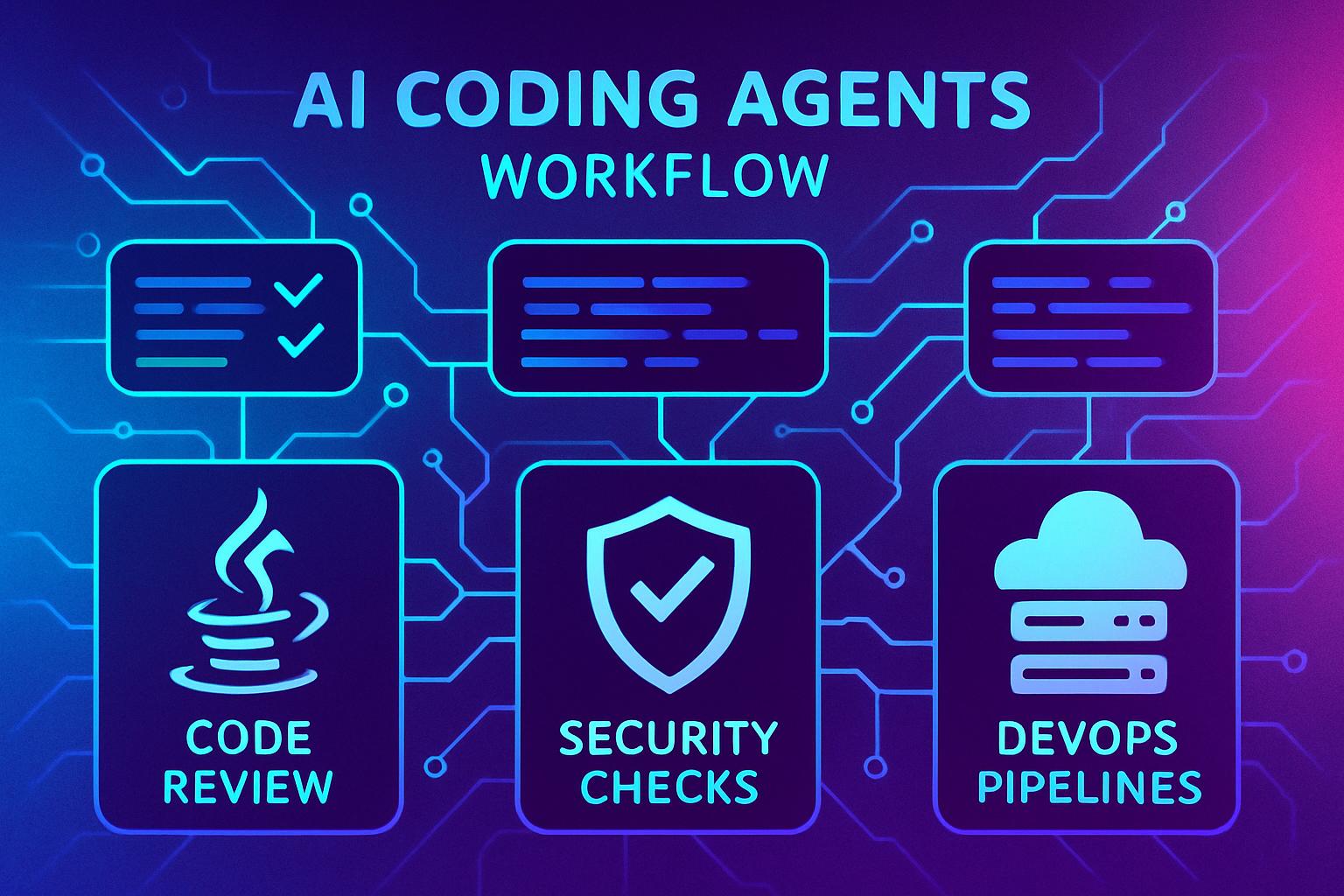
Amazon Q Developer packages several agent workflows exposed through slash commands and IDE chat. For example, /transform executes large-scale code transformation across repositories, handling imports and style updates. Additionally, a specialized workflow accelerates java upgrades by updating dependencies and resolving API changes. The unit-test agent, launched December 2024, generates tests and then calls project builds to validate outcomes. Moreover, January 2025 enhancements let the agent iterate on failures until the build pipeline passes. Subsequently, GitHub workflows trigger the agent using pull-request labels, enabling unattended fixes overnight. Meanwhile, a REST API lets platform teams script agent runs inside bespoke dashboards.
AWS documentation notes, “Agentic coding is on by default,” meaning the agent directly edits files while offering diffs and undo. Therefore, developers maintain oversight without losing speed. Devfile permissions restrict which shell commands the agent may run, reducing unexpected surface area. Such guardrails illustrate a broader pattern across AI Coding Agents seeking enterprise trust. These capabilities emphasize breadth from planning to validation. Workflow and automation gains appear next.
Workflow And Automation Gains
Teams adopt the agent primarily to compress feedback loops. Furthermore, the build-and-test cycle introduced in 2025 embodies automation that previously required manual scripts. Consequently, developers receive executable pull requests instead of raw suggestions. Customer Netsmart accepted roughly 35% of proposed changes, indicating pragmatic yet material productivity lift.
Internal Amazon studies, while vendor supplied, claim savings equal to 4,500 developer years across java upgrades and bug fixes. Meanwhile, AI Coding Agents also generate consistent documentation and compliance comments, relieving senior engineers. These automation advances particularly benefit devops teams orchestrating complex pipelines. Early adopters report backlog reduction, yet warning flags arise when legacy tests exhibit flaky behavior. Therefore, managers should track escaped defects to measure true quality impact. The stretch goal remains autonomous merge confidence. Security considerations therefore demand equal attention.
Security And Governance Risks
July 2025 exposed supply-chain fragility when a malicious commit compromised the VS Code extension. TechRadar reported injected data-wiping commands, prompting Amazon to release a cleaned version within hours. Nevertheless, researchers criticized incomplete disclosure and rewritten commit history. Such incidents remind enterprises that AI Coding Agents extend the attack surface. AWS now requires multi-party code reviews on extension updates, aiming to restore trust. Additionally, customers can self-host certain components to isolate credentials from cloud logs.
Moreover, hallucinated code can import vulnerable libraries or leak secrets. Devfile constraints and human review reduce danger but cannot eliminate it. In contrast, competitor products also battle similar issues, indicating an industry-wide challenge. Effective governance couples technical guardrails with developer education. Competitive considerations emerge alongside these risk profiles.
Competitive Landscape Shifts Now
The revenue race remains unsettled. Business Insider revealed Amazon Q Developer’s projected ARR of $16.3M in April 2025, trailing some rivals. Consequently, Microsoft’s GitHub Copilot and Google’s Gemini tools retain financial leads. However, Gartner recognition offsets revenue gaps by elevating perception of Amazon’s technical depth.
Furthermore, GitLab’s December 2024 integration positions Amazon’s agent inside an alternate ecosystem, broadening reach beyond AWS loyalists. CLI custom agents, announced July 2025, let partners craft niche workflows that could differentiate against monolithic competitors. Cursor and Cognition promote small, local models to win on privacy, challenging AWS’s cloud-first stance. Nevertheless, Amazon’s breadth of cloud services provides cross-sell leverage unmatched by newcomers. These moves demonstrate agile positioning by AWS in the crowded AI Coding Agents domain. Market shifts will influence adoption curves described next. Metrics show both promise and caution.
Adoption Metrics Outlook Ahead
Adoption numbers appear healthy yet uneven. Vendor press cites 50% suggestion acceptance in some accounts, while Netsmart sits nearer 35%. Additionally, internal Amazon projects allegedly saved thousands of hours during java upgrades and refactors. Independent benchmarks, however, remain scarce, limiting definitive ROI statements.
Nevertheless, early devops teams report shorter on-call rotations due to quicker patch generation. Automation of unit tests also reduces weekend firefighting. Professionals can enhance their expertise with the AI Executive™ certification. Such credentials equip leaders to evaluate AI Coding Agents against compliance frameworks. Metrics hint at upside yet underscore measurement gaps. Implementation tactics close those gaps, as the following guidance shows.
Implementation Best Practices Guide
Successful rollouts start with small, well-tested repositories. Therefore, teams should activate agent features gradually, beginning with documentation generation and harmless code transformation. Subsequently, expand into java upgrades once automated tests achieve reliable coverage. Meanwhile, enlist devops engineers to script safe sandboxes for build validation. Treat every rollout as a living experiment, capturing metrics at each milestone. In contrast, ‘big-bang’ launches often overwhelm governance processes.
Create a Devfile that whitelists immutable commands and sets environment variables for reproducible builds. Consequently, the agent cannot execute destructive scripts during experimentation. Regular security audits remain vital after the July 2025 incident.
- Run a pilot with experienced developers to observe how AI Coding Agents behave.
- Limit repository scope for early code transformation tasks.
- Include automation hooks inside devops pipelines for quick recovery.
- Schedule monthly security reviews after each java upgrades cycle.
Practical safeguards transform experimentation into repeatable productivity. The conclusion synthesizes strategic lessons.
Amazon Q Developer illustrates both the promise and complexity of enterprise AI Coding Agents. Moreover, measurable productivity emerges when teams pair disciplined workflows with deliberate governance. Security incidents and revenue headwinds nevertheless show the field remains young. Consequently, leaders should pilot, benchmark, and iterate rather than attempt instant organization-wide rollouts. Professionals who certify their skills gain vocabulary to scrutinize agent outputs and align them with compliance mandates. Therefore, explore the linked credential and start experimenting with AI Coding Agents today. Meanwhile, competitive insights gathered throughout this article can inform procurement roadmaps. Ultimately, strategic adoption will separate productivity winners from unprepared laggards.


