

AI CERTS
18 hours ago
Altman Hype: Scrutinising OpenAI’s Rise
Nevertheless, critics warn that marketing momentum may outrun responsible engineering. Recent milestones intensify the discussion. GPT-4.1 launched in April 2025 and drove another surge in reported users. Moreover, private valuations reportedly approached half a trillion dollars during late-2025 secondary sales.
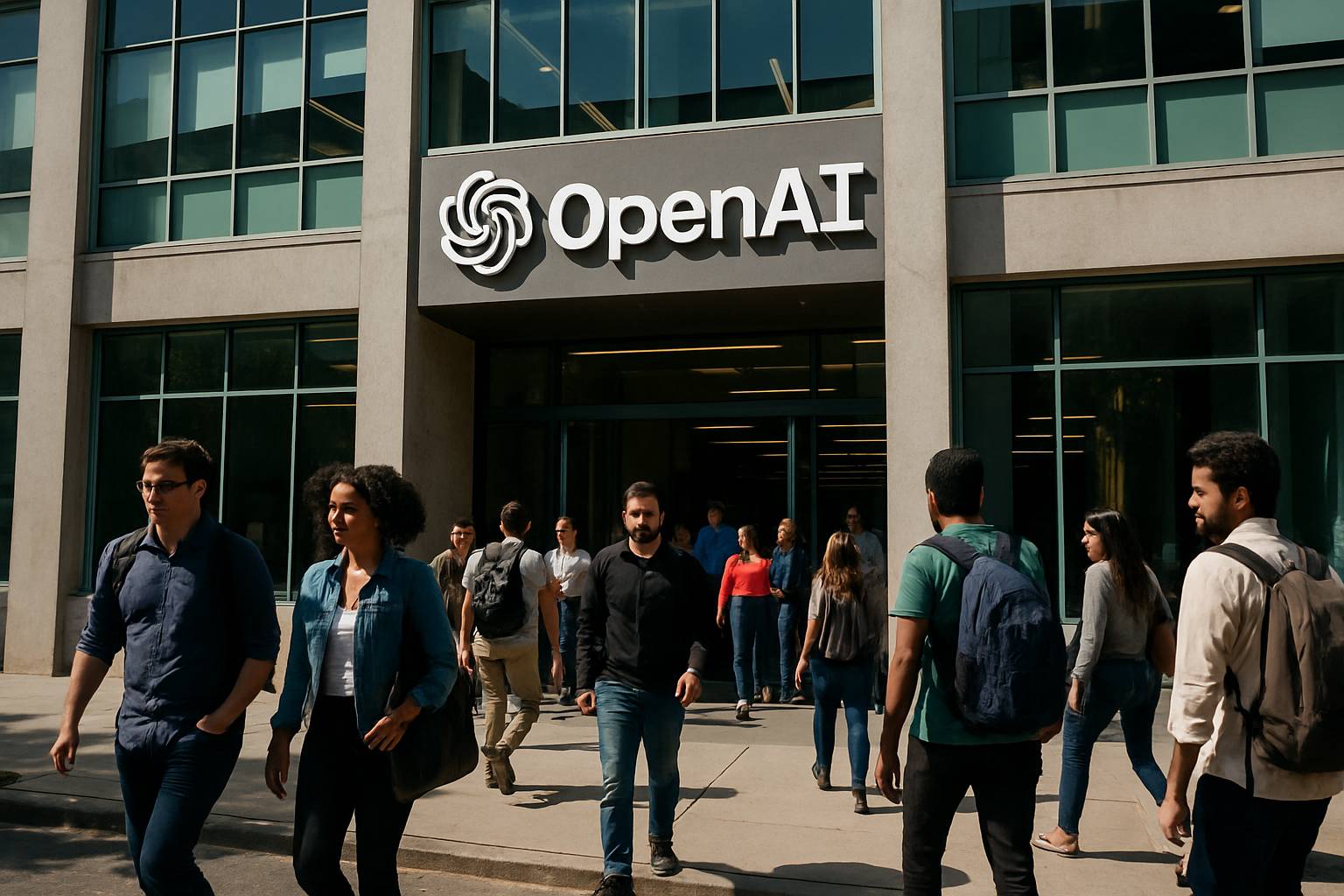
In contrast, governance turbulence during 2023 exposed structural weaknesses within the organization. This feature traces the History, data, and perspectives that now shape OpenAI’s uncertain trajectory. Additionally, looming regulatory proposals could tighten access to critical compute resources. Therefore, understanding both boom and backlash helps technology leaders prepare strategic responses.
Evidence driven analysis follows, grounded in dated disclosures, third-party audits, and expert interviews. Keep reading to evaluate whether measurable impact can sustain the narrative momentum.
Origins Of Altman Hype
Analysts trace the company’s rise to two foundational moves in 2015. First, Altman co-founded OpenAI as a research collective pledging open collaboration. Second, generous seed funding from Musk and others allowed unusually large model experiments.
However, public fascination erupted only after ChatGPT’s November 2022 preview. The conversational interface demystified transformer power for everyday users. Consequently, daily sign-ups overwhelmed capacity within days, setting new consumer software records.
By early 2023, Altman capitalized on momentum through frequent podcasts, developer Q&As, and social media clarifications. These appearances framed generative systems as stepping stones toward AGI, deepening the narrative. Therefore, many observers consider this period the inflection point in the broader AI History. Rapid awareness created lasting brand equity. However, product cadence would soon matter even more, as the next section explains.
Product Launches Fuel Momentum
Product velocity underpinned confidence after the initial viral spike. GPT-4o arrived in May 2024 with multimodal skills and faster inference. Moreover, the GPT-4.1 family launched on 14 April 2025, adding longer context and stronger coding abilities. Altman declared that 10% of the world now interacted with the service.
Consequently, independent outlets documented sequential usage leaps.
- Nov 2022: ChatGPT preview hit one million users within five days.
- Feb 2025: Weekly active users surpassed 400 million.
- Apr 2025: Reported users neared 800 million after GPT-4.1 release.
- Analysts noted Altman Hype after each successive benchmark announcement.
Developers also noticed more stable APIs, which encouraged enterprise pilots. However, each model sunset forced teams to revalidate prompts, sparking forum frustration. Altman Hype resurfaced whenever benchmark graphs preceded real documentation. Launch cadence undeniably sustained public excitement. Still, internal politics soon complicated the narrative, as governance turmoil revealed.
Governance Drama Shapes Perception
November 2023 delivered an unexpected board coup against Altman. In contrast, nearly every employee threatened to quit within forty-eight hours. Microsoft signaled support, accelerating the reversal.
Subsequently, an external investigation concluded that removal lacked sufficient cause. However, the episode exposed fragile oversight structures and concentrated authority. Critics argued that Altman Hype had eclipsed sober governance processes.
Board composition changed in early 2024, adding independent directors. Moreover, a new safety committee gained formal charter powers. Nevertheless, skeptics still question whether accountability matches growth velocity. Governance theatrics dented trust but not adoption. Funding rounds continued, which the next section explores.
Funding And Valuation Cycle
Capital kept flowing despite managerial turbulence. Late-2025 secondary transactions reportedly valued the company near 500 billion dollars. SoftBank analyses even implied higher marks based on derivative trading.
Moreover, Microsoft expanded Azure commitments, underwriting massive GPU clusters. Consequently, revenue projections reached double-digit billions, although audited numbers remain unpublished. Supporters claim such investment validates technical progress, not merely Altman Hype.
In contrast, cautious analysts reference dot-com era precedents of inflated multiples. They emphasise unknown margins and escalating chip costs. Therefore, valuation debates hinge on unit economics that independent observers cannot yet verify. Money remains available while the story persuades. Next, the article weighs competing viewpoints on substance versus spectacle.
Debating Hype Versus Reality
Evaluating claims requires measurable outcomes. Benchmark suites show steady progress on reasoning, context length, and coding accuracy. However, enterprise buyers highlight lingering hallucinations and security gaps.
Meanwhile, energy consumption per generation remains high despite architectural tweaks. Consequently, cost-benefit models vary widely across industries. Supporters argue that Altman Hype reflects aspirational roadmaps rather than deception.
Expert Voices In Contrast
Geoffrey Hinton warns that uncontrolled systems could threaten humanity. In contrast, Meta’s Yann LeCun dismisses near-term existential fears. Additionally, Anthropic positions constitutional AI as a safety-first alternative.
Diverse viewpoints ensure the evolving History receives ongoing scientific scrutiny. Future evidence will reveal whether optimism or caution prevails.
Future Tests For Credibility
Roadmaps list GPT-4.5, GPT-5, and multimodal assistants with advanced planning abilities. Therefore, the next twelve months will test delivery discipline. Regulators in Europe prepare draft rules on compute scaling and model auditing.
Furthermore, hardware suppliers must overcome supply constraints to meet training schedules. If delays mount, critics will cite broken promises as evidence of Altman Hype. Professionals can enhance their expertise with the AI Developer™ certification to stay competitive.
Product execution, regulation, and staffing will jointly decide credibility. Consequently, leaders should monitor data releases and audit results closely.
Conclusion And Next Steps
Sam Altman remains the charismatic engine of the current AI narrative. Evidence shows dramatic uptake, ambitious engineering, and record capital inflows. However, persistent uncertainties around cost, safety, and governance keep valuations fragile. Whether the Altman Hype ultimately aligns with audited results depends on forthcoming model deliveries. Therefore, technology leaders should review each OpenAI release against public benchmarks and energy footprints. Meanwhile, sharpening personal skills will hedge against shifting market winds. Consequently, consider earning the linked AI Developer™ certification to deepen technical credibility and strategic insight. Stay alert, because data not slogans will decide the next chapter.


