

AI CERTS
3 months ago
Alphabet’s $90B Capital Expenditure Surge Explained
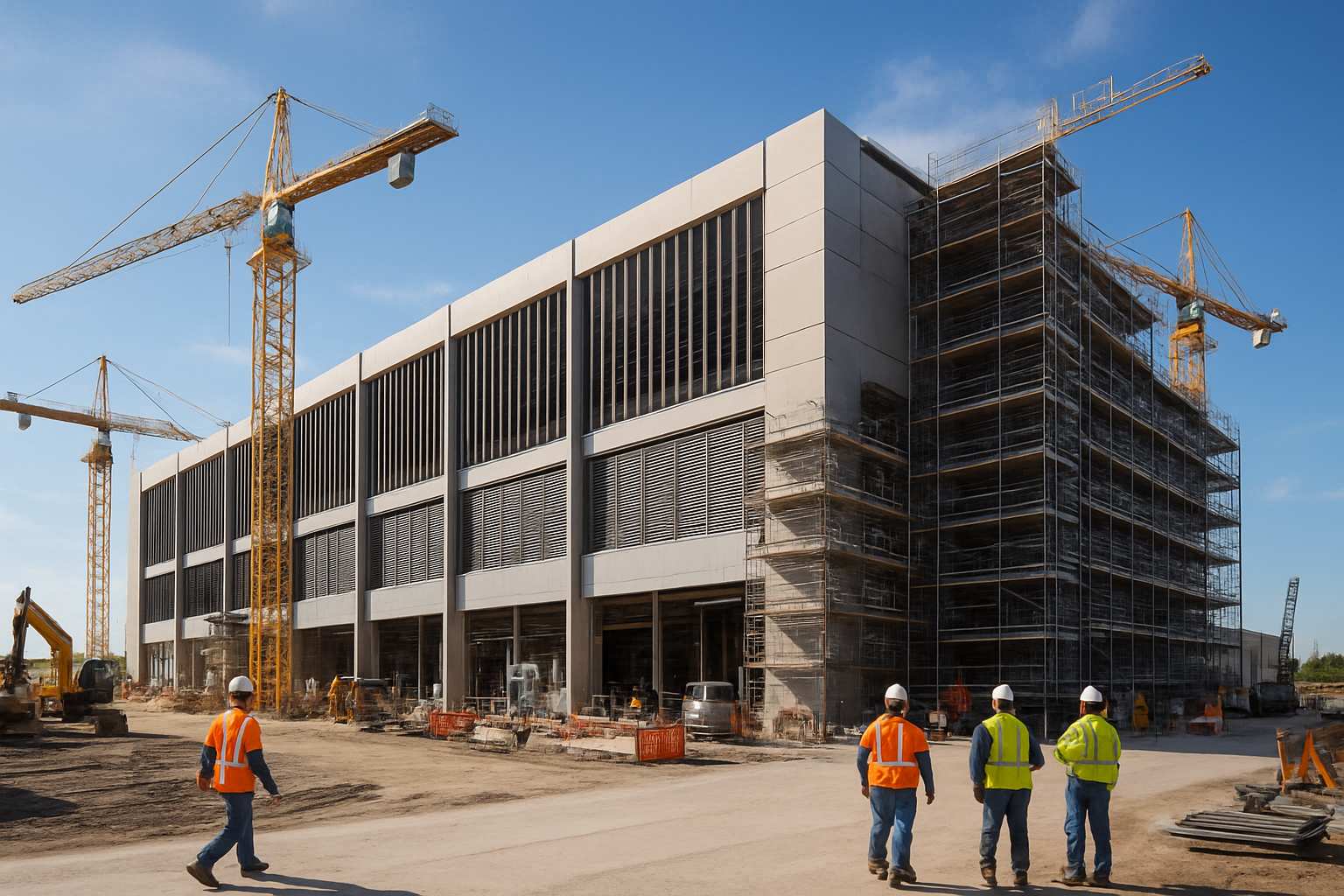
The move represents one of the largest single-year Capital Expenditure commitments in corporate technology history.
Moreover, it underscores how compute capacity now defines competitive advantage in cloud and generative AI markets.
The company seeks to convert demand momentum into long-term revenue durability through aggressive resource deployment.
However, professional readers need to follow the detailed timeline to understand why guidance moved from $75 billion to $93 billion.
Google Cloud demand, backlog growth, and custom silicon initiatives each played critical roles in this decision.
In contrast, rising energy costs, supply constraints, and margin pressure temper the optimism.
The following analysis tracks the guidance evolution, benchmarks peer spending, and assesses risk versus reward.
Additionally, it offers actionable insights and certification resources for executives navigating similar capital decisions.
Alphabet CapEx Guidance Timeline
Sundar Pichai opened 2025 forecasting roughly $75 billion, yet the figure refused to stay fixed.
Subsequently, July earnings pushed projected Capital Expenditure to $85 billion after cloud bookings exceeded expectations.
Therefore, October results raised the bar again to a $91–93 billion envelope as leadership cited AI capacity urgency.
Meanwhile, December reporting simplified the message: the tally will top $90 billion when books close.
Each revision reflected stronger backlog visibility and rising component costs.
- Feb 4: $75B plan announced for servers, centers, networking.
- Jul 23: Guidance increased to ~$85B following robust Cloud sales.
- Oct 29: Range lifted to $91–93B amid AI capacity urgency.
- Dec 10: Reports confirm AI buildout will surpass $90B for 2025.
This upward-only Capital Expenditure trend is unusual for a mature company.
Consequently, the guidance trajectory shows rare upward-only revisions.
These moves highlight intense demand and strategic confidence.
The underlying catalysts deserve closer examination.
Key Drivers Behind Investment
Demand, not vanity, fuels the spending acceleration.
Furthermore, Google Cloud revenue grew 34% year-over-year to $15.2 billion in the third quarter.
Cloud backlog hit $155 billion, providing revenue visibility that supports elevated Capital Expenditure.
Moreover, custom TPU deployments promise performance and cost advantages over commodity GPUs.
Consequently, management argues that earlier spending locks in a scalable compute moat.
Infrastructure constraints also nudge leadership toward front-loading assets.
Energy grid upgrades, specialized networking, and high-bandwidth memory require long lead times.
Therefore, securing materials early reduces schedule risk.
Additionally, inflationary component pricing motivates accelerated procurement before further cost escalation.
Such Investment aims to cement long-term leadership.
The group’s growth metrics and supply realities converge to justify bigger checks.
However, peers are not standing still.
The next section compares concurrent hyperscaler budgets.
Comparative Spending Context Overview
Microsoft targeted roughly $80 billion for AI and data centers during fiscal 2025.
Meanwhile, Meta’s plan ranges from $60 billion to $72 billion depending on lease treatment.
In contrast, Amazon remains guarded, though analysts estimate similar outlays.
Collectively, the trio joins Alphabet in what CNBC labels a $300 billion Infrastructure arms race.
Consequently, scale itself becomes a differentiator, squeezing smaller providers.
Alphabet’s projected Capital Expenditure now edges past Microsoft’s guidance, reaffirming its ambition.
Moreover, Google continues to leverage proprietary TPUs, adding an efficiency layer competitors cannot replicate easily.
Subsequently, aggressive buildout budgets compress supplier lead times.
However, similar wallet sizes suggest no single player can starve rivals of accelerator supply.
The contest may instead hinge on software differentiation and ecosystem lock-in.
Peer budgets confirm an industry-wide escalation.
Therefore, investors must examine the balance of risk and reward.
We explore that balance next.
Risk And Reward Balance
Heavy spending carries undeniable downsides.
Firstly, depreciation will swell, compressing operating margins during 2026 and 2027.
Secondly, free cash flow could lag consensus if macro demand cools.
Nevertheless, backlog strength offers partial protection.
The $155 billion Cloud pipeline supports its Capital Expenditure justification.
Moreover, investors gain if capacity unlocks new AI products across Search, YouTube, and Workspace.
Consequently, incremental gross profit may outrun depreciation after utilization stabilizes.
Yet, overcapacity remains a threat should multiple hyperscalers overestimate workload growth.
In contrast, energy constraints could cap utilization regardless of demand.
Therefore, management emphasises renewable deals to mitigate power bottlenecks.
Risks match rewards in magnitude, creating a classic high-beta scenario.
Subsequently, supply chain dynamics warrant scrutiny.
The following section dissects those dynamics.
Supply Chain Pressure Points
Semiconductor availability sits at the heart of every Buildout schedule.
Consequently, the company negotiated multiyear contracts for HBM and networking silicon.
Additionally, Google continues to scale its internal TPU roadmap to reduce reliance on NVIDIA.
Power infrastructure poses equal challenges, with regional grids requiring substation upgrades.
Moreover, renewable procurement agreements remain essential for corporate sustainability pledges.
Capital Expenditure timing thus intersects complex supplier roadmaps and permitting processes.
Therefore, any delay in chip deliveries or grid approvals can ripple through service availability.
Nevertheless, early deposits and volume commitments improve the company’s bargaining position.
Subsequently, independent analysts warn that even large buyers cannot escape global supply shocks.
Meanwhile, third-party construction partners expand capacity to capture hyperscaler demand.
Supply constraints could still derail timelines.
However, proactive deals improve the odds of timely delivery.
Attention now shifts to medium-term strategic implications.
Alphabet Strategic Outlook 2026
Looking beyond 2025, management signals no retreat from aggressive scaling.
Consequently, executives hint that 2026 Capital Expenditure may remain elevated, albeit at a moderating growth rate.
Moreover, the appointment of Amin Vahdat as chief technologist centralizes accountability for AI Infrastructure.
Google expects new TPU generations to improve performance per watt, easing energy intensity concerns.
Additionally, stronger software monetization, such as Gemini-powered APIs, could offset depreciation drag.
Professionals can enhance their expertise with the AI Sales Executive™ certification.
Consequently, certified leaders better articulate ROI narratives during board discussions.
Investors, meanwhile, will watch final 2025 cash flow figures for confirmation of spend efficiency.
Therefore, transparent reporting remains vital for maintaining market confidence.
The firm aims to translate compute scale into durable margins.
Subsequently, stakeholder upskilling will support informed capital dialogues.
The concluding section synthesizes the core themes.
Final Insights And Action
Alphabet’s record-setting Capital Expenditure of $90 billion capacity surge defines the 2025 tech narrative.
Capital Expenditure escalated with every quarter, reflecting surging demand and rising component costs.
Moreover, peer megacaps mirror that ambition, cementing the compute arms race.
Nevertheless, large checks expose investors to margin pressure, supply risks, and regulatory scrutiny.
Careful Investment sequencing can mitigate several vulnerabilities.
Consequently, informed professionals should track backlog metrics, energy deals, and chip deliveries through 2026.
Additionally, they should cultivate skills that connect technical capacity to commercial outcomes.
Such spending decisions reward leaders who translate capacity scale into revenue growth.
Explore certifications, such as the linked AI Sales Executive, to sharpen those capabilities.
Therefore, stay vigilant, stay curious, and convert data center dollars into sustainable competitive advantage.


