

AI CERTs
2 months ago
Algorithmic Policy Compliance Engines Reshape U.S. AI Governance
Mandates from Washington are changing how agencies run AI. Software buyers now demand proof of continuous compliance, not annual paperwork. Consequently, algorithmic policy compliance engines are moving from DevSecOps niches into federal boardrooms. These engines convert dense legal text into executable guardrails that run during training, deployment, and inference. Moreover, AI regulation monitoring now demands near-real-time evidence. Gartner expects the compliance engine market to accelerate at 30% compound growth. Meanwhile, enterprises race to tame risk as 78% already deploy AI systems. Failures could trigger legal exposure, procurement delays, or lost public trust. Therefore, understanding the tooling, benefits, and pitfalls has become essential for technology leaders. This article explores the drivers, mechanics, and future of the engines within U.S. governance.
Federal Mandate Driven Shift
April 2025 marked a turning point. OMB memorandum M-25-21 ordered agencies to catalog AI use cases and show enforceable safeguards. Consequently, procurement teams began writing policy-as-code language into contracts. NIST’s AI Risk Management Framework gave them a technical blueprint. Chief AI Officers now rely on algorithmic policy compliance engines to demonstrate alignment with the framework. Furthermore, continuous evidence satisfies GAO auditors who prefer machine-generated logs. Agencies cite speed, consistency, and immutable audit trails as immediate payoffs. These federal pressures create a cascading effect across contractors and state partners.
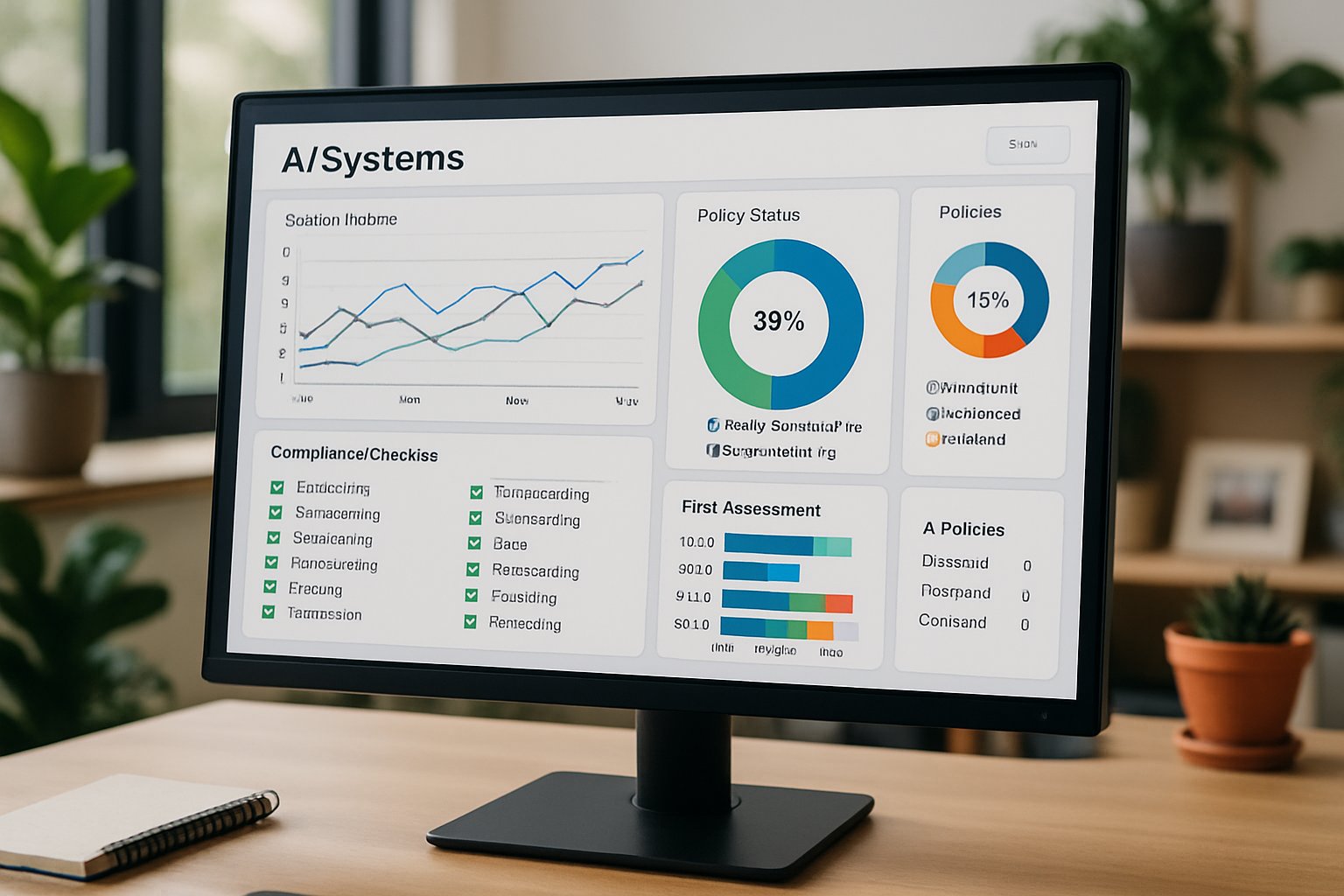
Mandates transformed compliance from annual review to daily runtime obligation. Next, we unpack how the engines actually work.
Engines Demystified Key Basics
An engine starts with a policy repository written in declarative code. Popular languages include Rego for OPA and Kyverno’s native syntax. Rules inspect data pipelines, model registries, infrastructure files, or live requests. If a rule fails, the engine can block, redact, or throttle the transaction. Importantly, every decision is logged with cryptographic time stamps for later audits. Moreover, many platforms pair design-time scans with runtime gateways for layered defense. Algorithmic policy compliance engines, therefore, operate like adaptive firewalls for governance. AI regulation monitoring dashboards visualize passing and failing checks in near real time.
These core mechanics enable later market growth, explored in the next section.
Strong Market Momentum Signals
Vendor roadmaps mirror rising demand. OneTrust integrated its engine with Databricks’ Unity Catalog for streaming enforcement. Pulumi launched Neo to scan infrastructure code and suggest automated fixes. Kyverno earned cloud-platform certification, underscoring maturity of open-source policy-as-code. Additionally, Forrester named Credo AI a category leader, giving buyers extra confidence. Analyst firms project multibillion-dollar revenues by 2030 as compliance automation budgets grow. Meanwhile, 78% enterprise AI adoption widens the governance readiness gap. Algorithmic policy compliance engines surface as the quickest bridge over that gap.
Market indicators confirm sustained investment momentum. Implementation details reveal how organizations capitalize next.
Practical Implementation Playbook Steps
Successful rollouts follow repeatable patterns. First, teams translate corporate and legal requirements into machine-readable rules. Second, they embed checks within CI/CD pipelines for models and infrastructure. Third, runtime gateways intercept prompts and user requests for policy evaluation. Moreover, continuous monitors flag drift, triggering automated remediation loops where feasible. Pulumi’s Neo illustrates this feedback design with infrastructure fixes delivered by AI.
Key success factors include:
- Clear ownership between legal and engineering
- Version-controlled policy repositories
- Automated rollback for failed deployments
- Independent audit export formats
When these steps align, algorithmic policy compliance engines deliver fast, measurable value. However, every deployment must address significant risks covered next.
Key Risks Require Vigilance
Encoding statutes into code invites semantic gaps and false confidence. In contrast, human oversight remains essential for contested decisions. Model and policy drift can silently erode protective guardrails over time. Furthermore, interoperability remains limited because standards evolve unevenly across domains. Algorithmic policy compliance engines may also introduce latency or false positives if misconfigured. OECD analysts warn against regulatory over-reliance on tooling alone.
Organizations must pair engines with audits and regular red-team exercises. Procurement choices therefore demand careful evaluation, as described below.
Evolving Procurement Outlook Ahead
Federal buyers increasingly specify evidence, inventories, and runtime enforcement in solicitations. Consequently, vendors position algorithmic policy compliance engines as turnkey packages with dashboards and attestations. Pricing models vary from per-model subscriptions to enterprise platform licenses. AI regulation monitoring metrics, such as failed checks per hour, appear in service-level agreements. Procurement officers also request integration proof across data lakes, model hubs, and DevOps pipelines. Moreover, compliance automation features now rank close to performance benchmarks in evaluation scoring.
Competitive bids therefore hinge on verifiable, machine-generated evidence. Skills gaps emerge as the final adoption hurdle.
Essential Skills And Certifications
Governance teams need interdisciplinary fluency across law, security, and machine learning. Engine configuration demands knowledge of policy-as-code, threat modeling, and auditing workflows. Professionals can enhance expertise with the AI Marketing Strategist™ certification. Moreover, the curriculum covers compliance automation patterns and AI regulation monitoring fundamentals. Organizations that fund such upskilling report fewer policy-translation errors and faster audits. Algorithmic policy compliance engines then operate with clearer intent, reducing legal exposure.
Skill development closes the last operational gap. We conclude with strategic takeaways.
Conclusion And Next Steps
Algorithmic policy compliance engines have shifted from experimental scripts to critical governance infrastructure. Federal mandates, market momentum, and rising litigation risks accelerate their adoption across sectors. Consequently, leaders gain faster audits, consistent enforcement, and scalable compliance automation. Nevertheless, success depends on precise policy translation, continuous AI regulation monitoring, and skilled personnel. Teams that combine rigorous process with certified talent realise enduring value. Therefore, evaluate vendors carefully, pilot early, and integrate learning pathways. Explore certifications and assess algorithmic policy compliance engines now to future-proof AI programs. Your proactive action secures trust and competitive advantage.


