

AI CERTs
2 months ago
Algorithmic liquidity forecasting platforms reshape trading
Real-time liquidity now shapes every electronic trade. However, many desks still rely on lagging dashboards and manual intuition. Consequently, missed fills and ballooning spreads erode performance when market volatility spikes. Enter algorithmic liquidity forecasting platforms that fuse tick data, payments feeds, and machine learning models. These cloud tools promise continuous insight, automated routing, and faster risk throttles across asset classes. Furthermore, regulators now expect intraday visibility, pushing adoption beyond early adopters. Institutional trading AI now merges with treasury dashboards, creating a unified liquidity fabric from back office to execution. Moreover, recent vendor alliances and acquisitions signal an inflection point for widespread production rollouts. The following analysis examines drivers, techniques, and risks that define this new forecasting frontier. Readers will gain actionable guidance for deploying models, meeting compliance, and capturing alpha.
Key Drivers Behind Adoption
Banks, fintechs, and asset managers face converging pressures. Firstly, supervisors demand granular intraday liquidity metrics under refreshed Basel and OSFI guidelines. Consequently, static end-day spreadsheets no longer satisfy auditors. Secondly, rising market volatility makes latency-free depth insight essential for slippage control. Meanwhile, quants equipped with institutional trading AI see measurable cost wins from improved venue selection. Finally, cloud infrastructure now offers affordable sub-second computation, removing historical cost barriers.
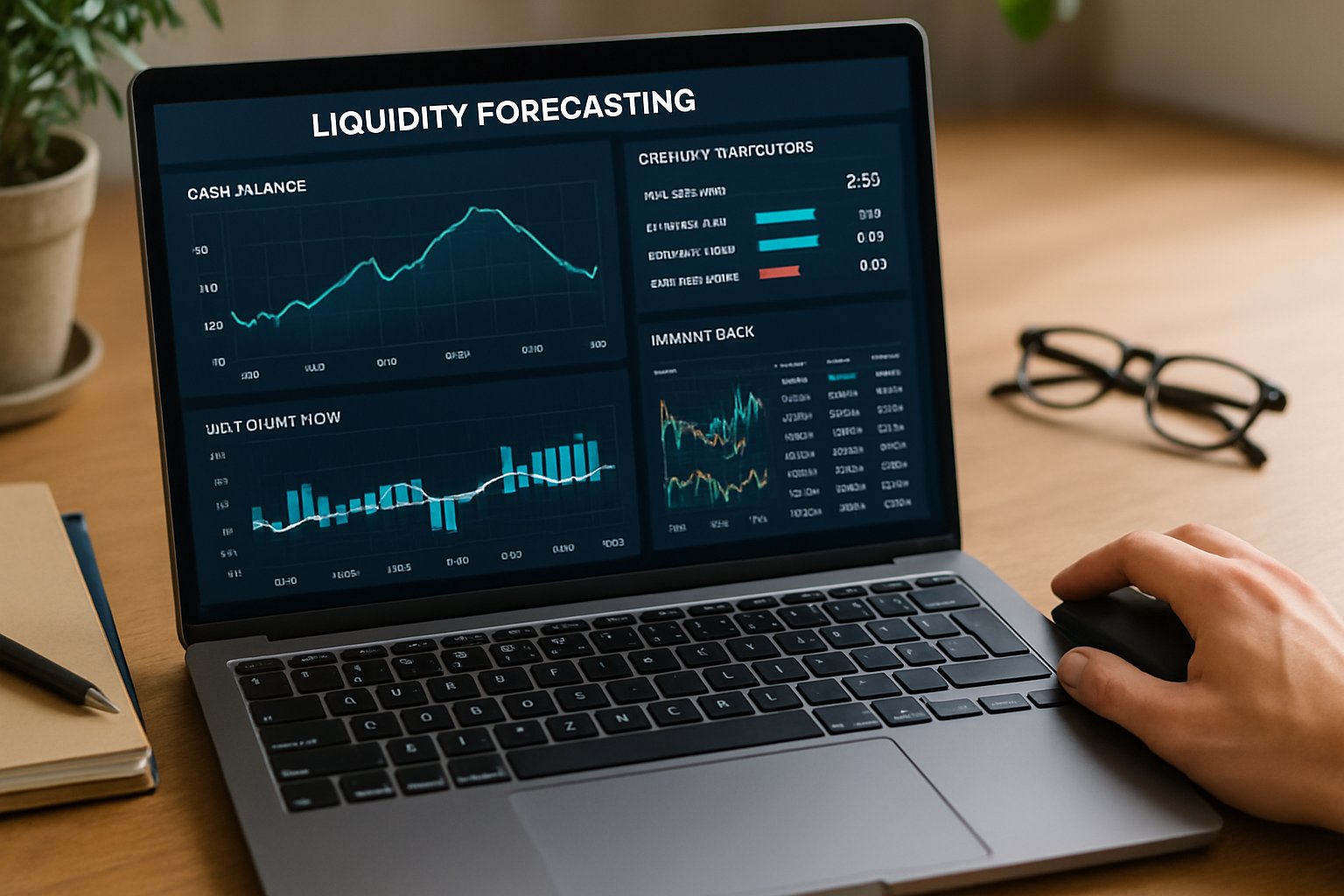
- Dataintelo sizes intraday liquidity optimization at USD 2.45B in 2024.
- Vendor reports cite mid-single-digit CAGR for treasury solutions through 2030.
- MarketAxess automation rates increased across fixed income workflows during 2024-2025.
- Academic backtests show execution cost cuts up to 14% when forecasts guide routing.
Collectively, these indicators validate a robust commercial appetite for algorithmic liquidity forecasting platforms. Therefore, stakeholders across front, middle, and back offices accelerate pilots toward full production.
Regulatory heat, volatile markets, and cheap compute converge to rewrite liquidity playbooks. Consequently, strategy teams are rethinking execution mechanics.
Trading Strategy Transformations Now
Real-time depth curves reshape order placement before a single share moves. Additionally, smart order routers now ingest probabilistic depth instead of stale snapshots. This shift lets algorithms pick venues offering predicted spread stability rather than historical averages. Algorithmic liquidity forecasting platforms feed these routers with millisecond updates.
Adaptive execution schedules represent another leap. Moreover, child orders dynamically resize when short-horizon liquidity forecasts shift. Consequently, traders capture volume without signaling intent, cutting market impact fees. Market makers also adjust quotes and inventory caps as institutional trading AI flags thinning depth.
Dynamic routing and scheduling reduce costs and slippage across equities, FX, and fixed income. Nevertheless, compliance expectations loom, directing focus toward governance.
Regulatory Pressure And Compliance
Supervisors now see liquidity visibility as systemic risk control. In contrast, historical reports offered only day-after clarity. OSFI’s latest LAR update mandates intraday peak monitoring from April 2025. Furthermore, BIS principles emphasize prompt collateral allocation when stress indicators flash red.
Algorithmic liquidity forecasting platforms align neatly with these mandates by delivering timestamped depth projections. Therefore, treasurers integrate forecast APIs directly into supervisory dashboards. Auditors receive immutable logs, while controllers get real-time kill switches tied to thresholds. However, model explainability remains critical for approval.
Regulators reward firms that pair accurate predictions with transparent governance. Subsequently, risk managers weigh benefits against model-related uncertainties.
Opportunities And Emerging Risks
Opportunities span cost, yield, and capital efficiency. Moreover, forecasts enable automatic repo sweeps which monetize idle balances intraday. Traders using algorithmic liquidity forecasting platforms report narrower execution spreads. Consequently, treasury desks unlock new revenue by optimizing working capital allocation.
Nevertheless, black-box deep models introduce measurable model risk. Data glitches or regime shifts may invert signals and amplify market volatility again. In contrast, rule-based overrides and circuit breakers can contain unexpected behavior. Vendor concentration also raises lock-in fears following the Tipalti-Statement acquisition.
Opportunities outrun risks when firms implement robust controls. Therefore, executives demand structured implementation playbooks.
Implementation Best Practice Checklist
Successful rollouts follow disciplined steps.
- Gather synchronized LOB, payments, and news data with nanosecond timestamps.
- Classify latency tiers to separate execution, treasury, and reporting pipelines.
- Backtest models, log drift metrics, and calibrate circuit breakers.
- Expose forecasts via open APIs into EMS, TMS, and risk engines.
- Map outputs to regulatory metrics, including intraday peak exposures.
Additionally, professionals can validate governance skills through the AI Project Manager™ certification.
Following these steps mitigates model risk and accelerates measurable returns. Subsequently, attention turns toward future market trajectory.
Market Outlook Through 2026
Analysts project double-digit adoption growth through 2026 for liquidity AI suites. Moreover, consolidation will likely create integrated workflow ecosystems spanning treasury and execution. Algorithmic liquidity forecasting platforms may evolve into standard infrastructure, similar to market data feeds today. Institutional trading AI will deepen integration, allowing shared feature stores across desks.
However, competitive differentiation will depend on proprietary data assets and unique modeling IP. Consequently, forward-looking firms invest in data partnerships, not merely vendor licenses. Market volatility episodes will continue to stress-test forecast robustness and governance. Nevertheless, early adopters report enduring execution savings that reinforce budget approvals.
Industry momentum, regulatory pull, and technical progress suggest durable growth for forecast automation. Therefore, decision makers should act now to secure strategic advantages.
Strategic Actions To Consider
Algorithmic liquidity forecasting platforms have shifted from novelty to necessity. Firms embracing algorithmic liquidity forecasting platforms gain execution savings, compliance assurance, and capital efficiency. Meanwhile, rivals without algorithmic liquidity forecasting platforms risk higher slippage and regulatory scrutiny. Consequently, leadership teams should pilot algorithmic liquidity forecasting platforms during the next budgeting cycle. Furthermore, investing in skilled talent ensures models remain robust across regimes. Professionals can demonstrate readiness by earning the previously mentioned AI Project Manager™ credential. Take action now and transform liquidity insights into sustainable trading advantages.


