

AI CERTs
2 hours ago
Algorithmic Fairness Audits Expose Gender Bias in Hiring AI
Hiring managers increasingly rely on language models for Recruitment, sorting massive applicant pools. However, recent studies suggest those systems misread gender signals and distort outcomes. The debate now centers on Algorithmic Fairness in high-stakes hiring. Failure to address hidden distortions can expose firms to regulatory penalties and reputational harm. Meanwhile, candidates risk exclusion from well-paid roles despite strong credentials. Fresh academic audits spanning millions of recommendations reveal systematic preference swings across multiple models. Consequently, policy makers worldwide push for stricter audits and public disclosures. This article unpacks the evidence, explains measurement pitfalls, and offers practical guidance for technical leaders. Furthermore, it links evolving rules to concrete corporate actions now required. Readers gain a clear map for navigating hiring automation without amplifying gendered prejudice.
Tools Miss Hidden Bias
Independent audits published in 2024-2025 demonstrate unexpected gender skews across 22 language models. Rozado found female-named résumés selected 56.9% of the time in controlled tests. In contrast, other researchers observed that some models favored men for lucrative engineering roles. Moreover, Chaturvedi's 40.2 million-query study reported callback rates for women swinging from 1.4% to 87.3%. Such volatility underlines the need for precise diagnostics rather than vendor assurances. Consequently, Recruitment leaders cannot rely on average performance claims when individual configurations behave unpredictably. These findings highlight that gender distortions persist even after explicit identifiers are stripped.
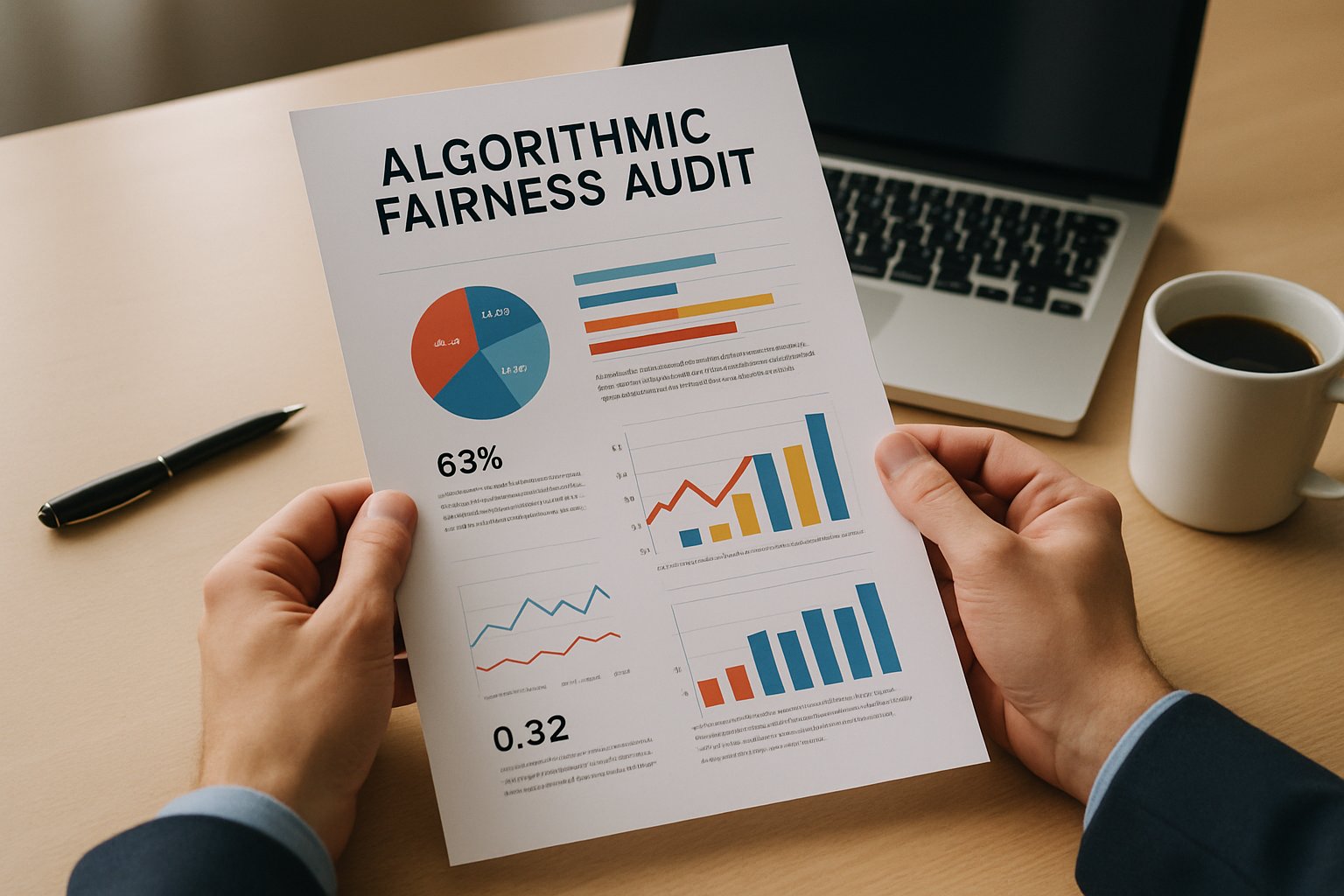
Researchers attribute part of the persistence to Proxy Variables embedded in textual features. For example, word choices around parental leave can signal gender indirectly, letting models infer sensitive traits. Therefore, simple anonymization seldom eliminates discriminatory patterns. The JobFair paper further warns that common parity metrics overlook deeper level and spread distortions. Consequently, many commercial dashboards underestimate true disparities.
Overall, recent audits expose substantial hidden distortion within automated hiring systems. However, newer measurement frameworks provide clearer visibility, leading us to emerging audit patterns.
Fresh Audits Reveal Patterns
Detailed examinations reveal two distinct distortion types: level and spread. Level distortion creates average score gaps between demographic counterfactuals. Spread distortion skews variance, concentrating scores for one group. Moreover, positional effects arise when prompts compare candidate pairs sequentially. JobFair authors showed first-listed résumés frequently gained advantage regardless of merit. Consequently, rotating prompt order is now an auditing best practice.
Core Concepts Clearly Defined
Level distortion equals average outcome gaps between demographic twins. Spread distortion involves different score variance across groups. Taste-based distortion persists regardless of résumé details, unlike content-sensitive statistical distortion. Positional distortion favors whichever candidate appears first in prompt ordering. Understanding these categories guides more surgical mitigations.
Algorithmic Fairness demands that auditors address both level and spread dimensions simultaneously. However, many vendor reports reference only the four-fifths rule, missing nuanced artefacts. Chaturvedi's dataset illustrates the gap: two models satisfied parity yet assigned women lower-wage jobs. In contrast, another model overcorrected, pushing female selection beyond 80% for entry postings. Such over-debiasing exemplifies measurement complexity facing practitioners.
These audit insights underscore that single numbers rarely capture reality. Therefore, regulators now demand richer evidence, as the next section explores.
Regulators Raise Compliance Stakes
New York City's Local Law 144 mandates external audits for automated employment decision tools. Furthermore, employers must publish summary findings before deploying screening systems. EU lawmakers negotiate equivalent transparency clauses within the forthcoming AI Act. Meanwhile, France's equality watchdog ruled Facebook's job advertising process indirectly discriminated against women mechanics. Consequently, multinational firms confront a patchwork of overlapping disclosure obligations.
Algorithmic Fairness appears explicitly in several regulatory drafts, signaling a shift from soft guidance. Recruitment vendors must now document data provenance, Proxy Variables handling, and remediation steps. In contrast, earlier self-attestation regimes proved insufficient for consistent enforcement. Therefore, legal counsel recommend continuous monitoring rather than annual spot checks.
Regulatory momentum places tangible pressure on hiring technology suppliers. However, understanding why traditional measures fail remains critical for compliance.
Why Metrics Fall Short
Classic impact tests focus on aggregate selection ratios. However, JobFair shows these averages conceal important distributional distortions. Audit teams using only those ratios risk false negatives, missing subtle discrimination. Moreover, Proxy Variables can resurrect protected information after superficial redaction, undermining observed parity. Algorithmic Fairness requires counterfactual swapping tests that isolate gender signals from résumé content.
Chaturvedi's team executed such swaps across 332,044 real job ads. Consequently, they observed taste-based distortion persisting despite identical skills. Rozado likewise noted bias invariance under content changes, confirming the proxy issue. In contrast, some vendor dashboards labeled those same models "compliant" due to over-aggregated metrics.
Limited metrics hide true risk exposure for employers. Therefore, richer diagnostic suites are essential, as the next section details.
Action Plan For Employers
Leaders should establish a multilayer audit protocol before procurement. First, demand full methodological documentation, including raw disparity tables and confidence intervals. Furthermore, require confirmation that Proxy Variables were tested and controlled. Second, pilot the tool using counterfactual résumé pairs covering diverse occupations. Third, benchmark outcomes against open-source reference models to contextualize observed performance.
Key statistics guide priority areas during evaluation:
- Rozado: 56.9% female selection across 22 models
- Chaturvedi: callback swings from 1.4% to 87.3%
- JobFair: level distortion in 7 of 10 models
- Brookings: intersectional gaps persist across simulated pipelines
Consequently, the numbers demonstrate why manual spot checks remain insufficient.
Additionally, compliance officers can upskill through the AI+ Legal™ certification covering audit requirements.
Following these steps reduces legal risk and builds stakeholder confidence. However, continuous vigilance remains necessary as technology and rules evolve.
Future Research And Oversight
Many proprietary pipelines remain opaque to outside researchers. Consequently, collaborations between regulators and academics will shape forthcoming evidence bases. Algorithmic Fairness scholars already plan cross-jurisdictional field studies that track long-term hiring outcomes. Moreover, open-source communities intend to publish benchmark suites aligned with Algorithmic Fairness principles. Recruitment platforms will need to adapt quickly or face enforcement aligned with Algorithmic Fairness mandates.
Meanwhile, funding bodies prioritize projects exploring deeper causal links between model design and discriminatory outputs. Researchers also examine how human reviewers interact with algorithmic rankings, potentially reinstating earlier prejudice. Therefore, Algorithmic Fairness must encompass the complete hiring pipeline, not isolated stages.
Continued oversight will refine tools and metrics over time. Nevertheless, organizations should act now rather than await perfect solutions.
Gendered Bias in hiring algorithms is now impossible to ignore. The evidence reviewed here shows volatility, proxy inference, and measurement blind spots. Algorithmic Fairness offers the guiding framework for responsible deployment across complex hiring pipelines. However, frameworks must translate into rigorous audits, transparent reporting, and accountable remediation. Employers who embrace Algorithmic Fairness early will reduce litigation exposure and protect brand trust. Meanwhile, ongoing research promises sharper metrics and clearer best practices. Consequently, leaders should launch multidisciplinary audit programs today and revisit them every quarter. Explore the linked certification to deepen expertise and champion equitable, data-driven hiring.


