

AI CERTs
2 hours ago
Algorithmic bias exposure mapping tools for compliant AI audits
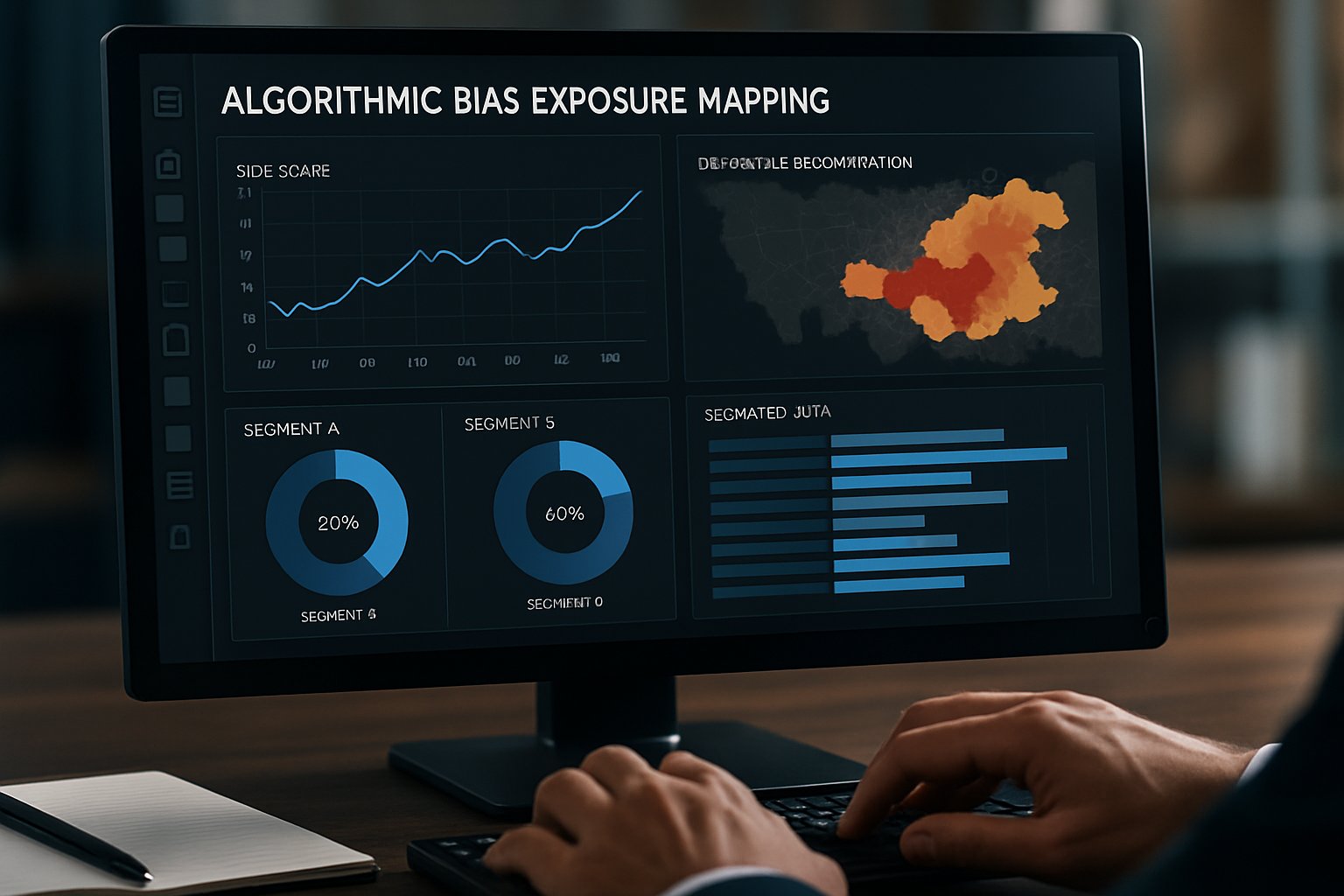
Compliance officers are under pressure as regulators demand concrete proof of algorithmic fairness. Consequently, organizations are adopting algorithmic bias exposure mapping tools to reveal hidden disparities before investigators arrive. These platforms transform raw model logs into visual, audit-ready evidence. Moreover, they accelerate fairness audits and strengthen discrimination detection programs. Recent NIST guidance, the EU AI Act, and city laws now require documented bias testing. Therefore, executives realize spreadsheets cannot satisfy regulators. Meanwhile, vendors, researchers, and civil-society groups are shipping accessible detectors, slice explorers, and observability suites. In contrast, early manual methods often miss intersectional harms or lack reproducibility. Subsequently, forward-looking teams integrate exposure mapping into continuous governance pipelines. The following analysis explains how the technology works, why adoption is surging, and which best practices reduce legal risk.
Consequently, readers will gain actionable recommendations for upcoming audits. Finally, we highlight certification opportunities for policy leaders seeking deeper expertise. Therefore, expect a clear roadmap you can adapt immediately.
Worldwide Rising Regulatory Pressures
Regulators have shifted from policy drafts to binding rules across sectors. Moreover, NIST's AI Risk Management Framework specifies testing, documentation, and evidence retention. EU authorities similarly scale enforcement under the AI Act with phased deadlines. In contrast, city laws like NYC Local Law 144 require public bias reports for hiring algorithms.
Consequently, enterprises scramble for repeatable processes that satisfy auditors quickly. Algorithmic bias exposure mapping tools deliver that repeatability by automating slice discovery and metric reporting. Additionally, Gartner lists AI governance platforms among 2025's top strategic trends. Therefore, spending on observability, explainability, and fairness modules grows at double-digit rates.
These regulatory timelines create urgent demand for algorithmic bias exposure mapping tools across industries. However, understanding tool categories is essential before procurement decisions.
Core Tool Categories Explained
Developers have converged on five functional categories supporting compliance. Firstly, unsupervised detectors cluster decisions and highlight anomalous subgroup outcomes. Secondly, fairness metrics toolkits compute disparity ratios, statistical parity, and equal opportunity gaps. Thirdly, visual slicers transform numeric findings into interactive dashboards for investigators.
Fourthly, model explainers such as SHAP or LIME expose feature contributions driving disparities. Fifthly, audit-trail platforms record inputs, outputs, model versions, and human overrides for investigation reconstruction. Together, these components form integrated algorithmic bias exposure mapping tools used throughout development and deployment.
Professionals can enhance their expertise with the AI Policy Maker™ certification, which covers governance frameworks and audit evidence requirements.
These complementary tools close evidence gaps while reducing manual workloads. Consequently, the next section explores detailed investigation workflows.
Compliance Investigation Workflow Steps
Effective investigations follow a structured sequence that mirrors regulatory expectations. Moreover, automation shortens each stage.
- Discovery: inventory models and rank risk using governance dashboards.
- Detection: run algorithmic bias exposure mapping tools for slice discovery and metrics.
- Evidence: export audit trails, logs, and dataset snapshots for secure storage.
- Root cause: apply explainability to link features, thresholds, or data sources with disparities.
- Reporting: compile fairness audits and discrimination detection summaries for regulators.
Additionally, investigators validate slice stability with statistical confidence checks before flagging potential violations. Therefore, findings remain defensible during negotiation or litigation.
This repeatable workflow lowers investigation costs and accelerates remediation commitments. Meanwhile, robust market adoption indicates growing confidence in these approaches.
Enterprise Market Adoption Trends
Spending on AI governance tools is rising alongside compliance deadlines. Precedence Research projects multi-billion revenue for trust management platforms by 2025. Furthermore, Gartner predicts mainstream enterprise adoption by 2028, driven by risk reduction mandates.
Large banks and healthcare providers pilot algorithmic bias exposure mapping tools within existing MLOps stacks. Surveyed chief compliance officers report greater visibility into disparate impacts after deployment. Nevertheless, procurement teams still demand open metric definitions and exportable evidence packages.
These adoption signals suggest sustained growth for exposure mapping solutions. Consequently, understanding limitations becomes vital for credible usage.
Persistent Challenges And Risks
Data privacy rules can restrict access to protected attributes needed for thorough analysis. Therefore, unsupervised slice discovery offers an interim workaround yet lacks demographic specificity. Additionally, automatic clustering sometimes surfaces spurious correlations in small subpopulations.
Investigators must combine statistical expertise, domain knowledge, and legal counsel during fairness audits. In contrast, over-reliance on vendor black boxes undermines evidentiary weight in discrimination detection cases. Vendors should provide raw exports to reduce lock-in risks.
Nevertheless, algorithmic bias exposure mapping tools remain indispensable when paired with human judgment.
Balancing automation with oversight helps teams avoid false assurance. Subsequently, practical guidance can refine daily operations.
Actionable Practical Team Guidance
Begin by cataloging models and aligning each with appropriate risk tiers. Consequently, allocate tooling budgets proportionally to impact severity. Combine unsupervised detectors, fairness metrics, and explainers to strengthen discrimination detection.
Preserve provenance by storing time-stamped reports, model hashes, and preprocessing scripts in immutable archives. Moreover, schedule periodic fairness audits that compare new data slices against historical baselines. Engage multidisciplinary reviewers early to interpret results within business context.
Team leads pursuing deeper policy fluency can enroll in the AI Policy Maker™ program while integrating algorithmic bias exposure mapping tools into capstone projects.
These steps institutionalize responsible AI and facilitate easier regulator conversations. Therefore, the final section surveys strategic outlooks.
Strategic Future Outlook Summary
Standards bodies continue refining metric definitions and evidentiary expectations. Meanwhile, vendors merge observability, governance, and mitigation features into unified suites. Moreover, open-source communities release lighter detectors that run in local browsers for journalists.
Experts anticipate algorithmic bias exposure mapping tools becoming default components of enterprise MLOps pipelines. Consequently, evidence quality should improve, shortening investigations and enabling faster remediation.
Future growth depends on transparent reporting and cross-jurisdiction cooperation. Nevertheless, organizations that act now will shape emerging norms.
Key Takeaways And CTA
Algorithmic oversight is shifting from ad hoc experiments to standardized, tool-driven routines. Consequently, algorithmic bias exposure mapping tools deliver rapid disparity detection, reproducible evidence, and regulator-friendly documentation. Furthermore, combined workflows that include fairness audits and discrimination detection give organizations a defensible compliance posture.
Teams that integrate explainability, audit trails, and governance alignment early will minimize future disruption. Therefore, explore exposure mapping solutions today and pursue advanced credentials to lead responsible AI programs. Consider enrolling in the linked certification to deepen policy skills and advance your career. Finally, share proven practices to elevate industry standards collectively.


