

AI CERTS
2 hours ago
AI Video Transforms Visual Storytelling Beyond PowerPoint Slides
Readers will learn why these tools matter, where value concentrates, and which pitfalls demand vigilance. Moreover, we link certification opportunities that deepen strategic insight into AI-powered marketing. Stay with us as the traditional presentation paradigm evolves into interactive, multilingual, on-demand media. Meanwhile, investors are pouring billions into companies like Synthesia, affirming the trend’s commercial momentum. Therefore, decision makers must understand the landscape before the next quarterly update arrives.
AI Video Shift Arrives
Early 2020s slide decks felt safe, yet engagement metrics sagged across training and sales. In contrast, AI Video platforms now accept .pptx files, speaker notes, and brand kits, producing narrated clips within minutes. Microsoft 365 Copilot already embeds Sora 2 models to automate that conversion inside familiar workflows. Google NotebookLM follows with Video Overviews that transform docs into short, searchable reels. Meanwhile, Synthesia, HeyGen, and Pictory promote dedicated “import PPT” buttons for frictionless onboarding. Collectively, these moves signal a decisive break from static slides toward immersive Visual Storytelling that travels anywhere.
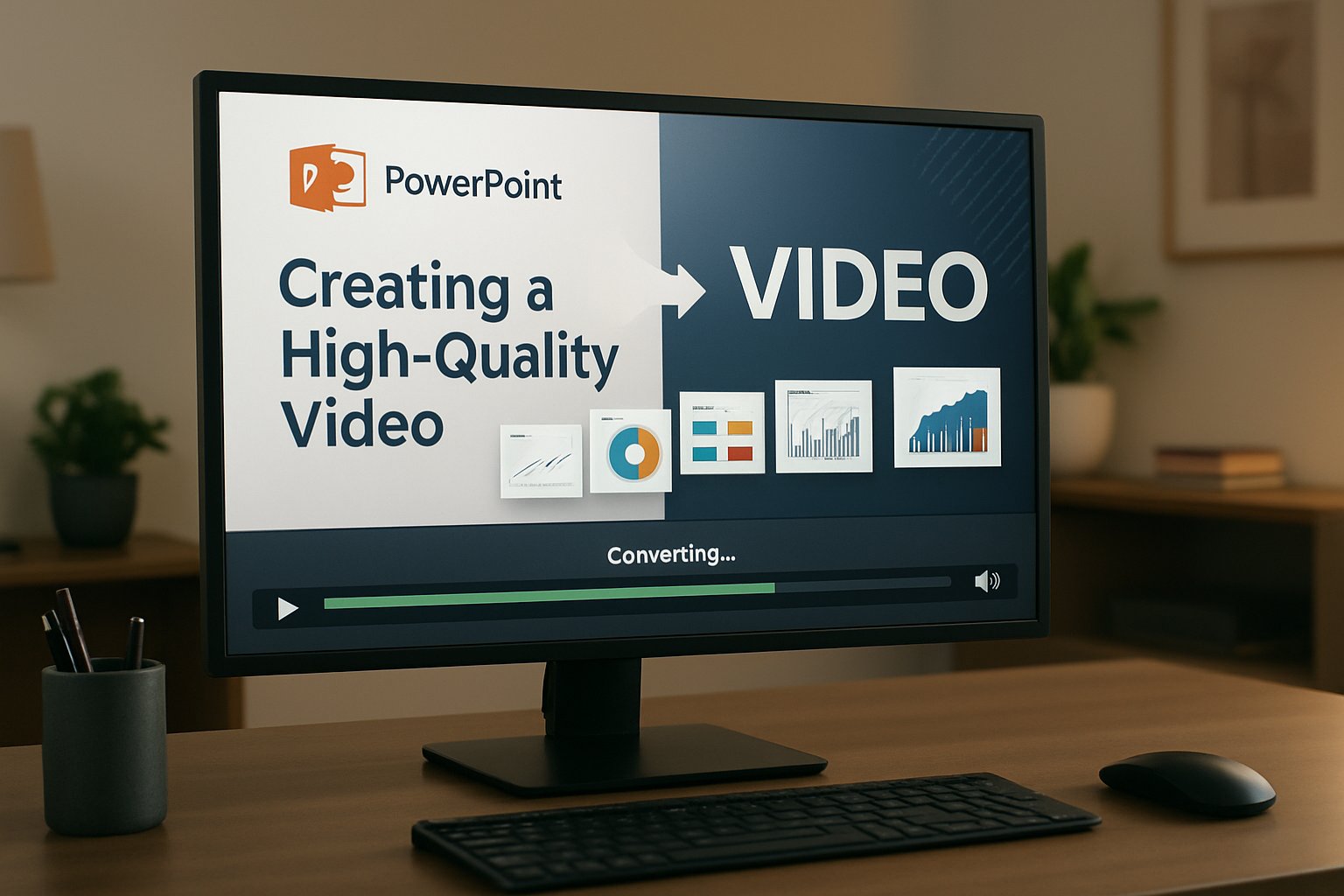
Furthermore, avatars lip-sync to generated speech, delivering consistent tone in 40+ languages without studio costs. Consequently, marketing and HR teams localize content faster while preserving brand consistency. The shift redefines expectations for compelling Visual Storytelling across regions and time zones. These developments underscore an urgent need to reassess presentation strategies. However, scale comes with new market dynamics, explored next.
Market Growth Metrics Surge
Analysts forecast explosive spend on synthetic media during the next decade. Market.US estimates USD 7.7 billion in 2024, with double-digit CAGR through 2034. Similarly, Mordor Intelligence projects 15–35% annual expansion for AI Video services. Furthermore, PwC expects overall media revenue to hit USD 3.5 trillion by 2029, powered partly by advanced video advertising. Synthesia alone crossed $100 million ARR, attracting a $4 billion valuation in January 2026. Consequently, venture capital flows continue toward platforms that elevate Visual Storytelling at enterprise scale.
Key numbers illustrate momentum:
- Synthetic media market: USD 7.7 billion 2024 base, per Market.US.
- Synthesia funding: USD 200 million Series E, January 2026.
- Microsoft Copilot preview: millions of enterprise users since Ignite 2025.
These figures confirm outsized momentum. Nevertheless, unit economics depend on adoption drivers discussed below.
Enterprise Adoption Drivers Explained
Corporate training budgets reward speed, localization, and measurable engagement. Therefore, teams convert compliance slides into AI Video modules with multilingual avatars. Sales operations repurpose Pitch Decks into short product explainers for social and email campaigns. Meanwhile, internal communications leaders push executive updates as on-demand videos, avoiding calendar conflicts. Such workflows raise retention, because viewers watch when convenient and pause for reflection.
Three core benefits drive the pivot toward richer Visual Storytelling experiences. In essence, Visual Storytelling acts as the new corporate lingua franca across continents.
- Speed: convert a 20-slide deck into video within five minutes, with automatic voiceover.
- Cost: eliminate studio fees and travel, while cloning voice for every language.
- Consistency: apply brand kits, captions, and standardized motion templates across departments.
Moreover, interactive video agents can answer learner questions on the fly, further raising completion rates. Consequently, ROI compounds rapidly, attracting C-suite attention. Those gains set the context for risks outlined next.
Emerging Workflow Risks Surface
Rapid automation also introduces governance headaches. Deepfake regulations, such as the TAKE IT DOWN Act, signal rising legal scrutiny. Nevertheless, many enterprises ignore consent workflows when cloning voices or faces for training clips. Intellectual-property concerns emerge when vendors reserve rights to train on uploaded Presentations. Microsoft and Google now emphasize tenant controls, encryption, and OneDrive storage to ease audits.
Quality gaps remain another hurdle. Automated converters sometimes misread complex charts, forcing manual edits that erode promised speed. Additionally, large video files strain network bandwidth if teams embed them back into decks. Consequently, organizations should host videos on SharePoint or streaming CDNs instead. Ignoring these issues can undermine trust in otherwise compelling Visual Storytelling outputs. These risks highlight due-diligence priorities. Subsequently, practical checklists can guide safe rollouts.
Practical Adoption Guide Steps
Executing a pilot requires structured preparation. First, inventory existing Pitch Decks, onboarding courses, and policy Presentations for high reuse potential. Subsequently, rank them by localization urgency, audience size, and shelf life. Moreover, assemble a cross-functional squad covering learning, brand, security, and procurement. Their alignment ensures Visual Storytelling goals remain balanced with compliance obligations. Follow this concise checklist:
- Request no-training clauses and data-retention limits in vendor contracts.
- Test AI Video outputs on slides containing dense tables and legal disclaimers.
- Host final files on governed storage rather than embedding large MP4s.
- Disclose synthetic avatars to viewers using on-screen labels.
Additionally, professionals can deepen expertise through certifications. For example, marketing leaders can validate skills via the AI Marketing Strategist™ program. Such credentials reinforce authority when advocating budget for next-generation Visual Storytelling projects. These steps create a robust foundation. Meanwhile, industry trends continue evolving.
Future Outlook Trendlines Ahead
Generative models are improving frame consistency and physics realism every quarter. Runway, OpenAI, and Adobe push research that soon enables longer, interactive scenes straight from text. Consequently, real-time avatar agents will intertwine with voice assistants, turning static Presentations into conversational experiences. In contrast, regulation will tighten, demanding clearer audit logs, watermarking, and consent capture.
Meanwhile, Microsoft plans deeper Clipchamp integration, letting workers regenerate Pitch Decks video variants during live co-editing. Moreover, enterprise datasets will train private models that respect confidentiality yet deliver bespoke Visual Storytelling at scale. Therefore, skills will shift from slide design toward narrative strategy, data discipline, and multimodal prompt engineering. Professionals who adapt quickly will dominate quarterly business reviews and investor Presentations. These trendlines suggest a fast-moving frontier. Nevertheless, purpose-built governance frameworks can keep pace with innovation.
AI Video conversion is no longer experimental. Enterprises now achieve faster production, wider reach, and significant savings through automated pipelines. However, deepfake risks, data governance, and quality gaps demand thoughtful oversight. The medium now balances opportunity with responsibility. Therefore, legal teams must align with creators before broad deployment. Furthermore, continuous skill development keeps practitioners ahead of model advances. Consider the linked certification to master strategy and lead your next communication leap.


