

AI CERTS
3 months ago
AI Upskilling Transforms Media Workforce Skills Pipeline
This article examines current trends, benefits, and ethical safeguards shaping that transformation. Throughout, we highlight training pathways, key statistics, and strategic guidance for professionals.
AI Trends Reshaping Work
Surveys show AI adoption has moved from experiment to routine within many newsrooms. Meanwhile, almost 80% of journalists report using at least one generative Tool during weekly tasks. Furthermore, The New York Times introduced Echo, an internal assistant governed by strict disclosure guidelines. Other major publishers integrate transcription engines like Trint to accelerate live captions and quick quotes. As usage expands, the Media Workforce faces simultaneous opportunity and scrutiny. Consequently, the Media Workforce now relies on codified policies rather than ad hoc experimentation.
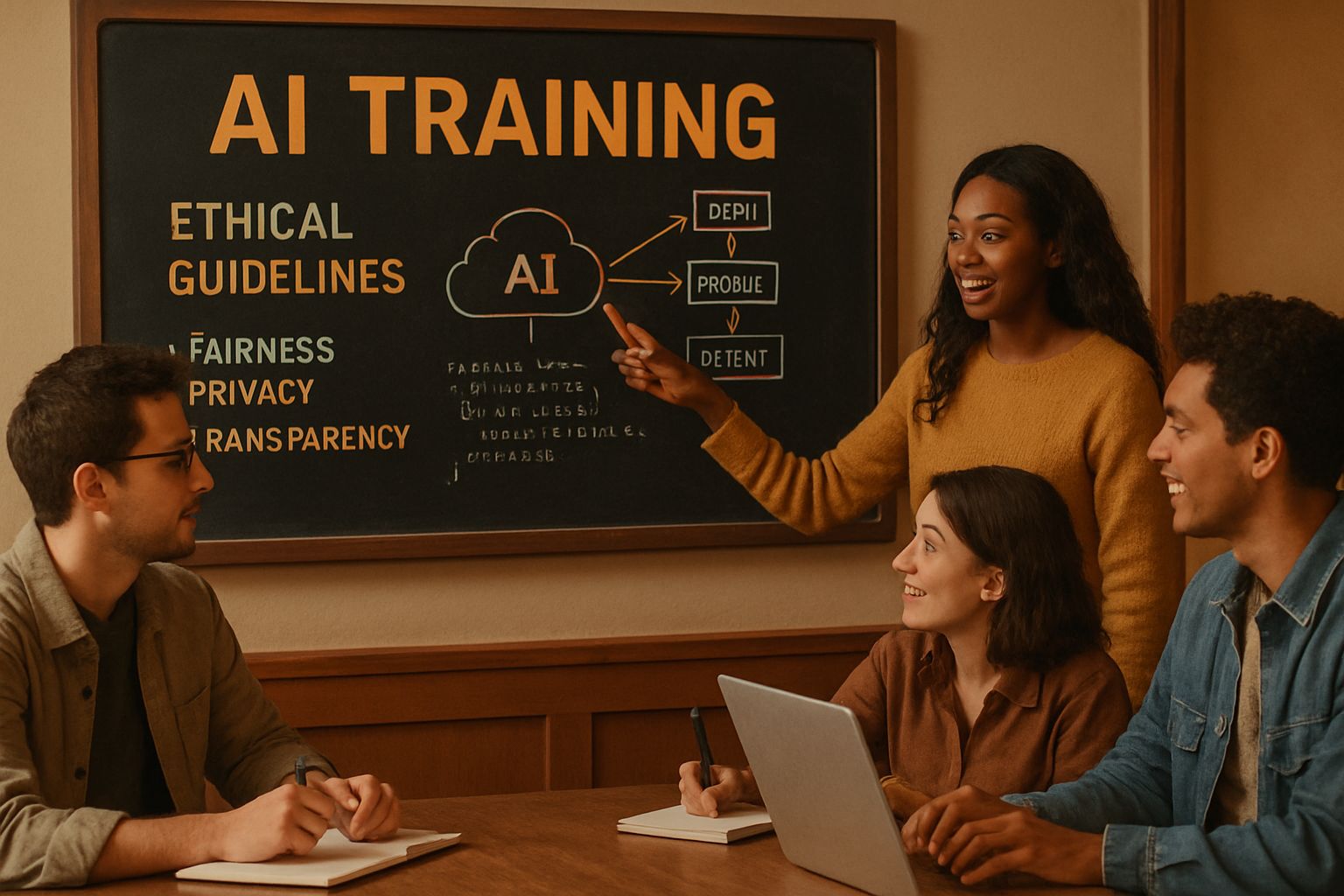
- Approximately 42% of staff use unapproved AI Tool solutions, risking data leaks.
- More than 9% of U.S. newspaper stories contain some AI text, yet few disclose usage.
- Audience research reveals widespread discomfort toward AI-generated news, especially in the United States.
In summary, adoption grows swiftly, yet governance lags behind. However, rising skills programs aim to balance progress with accountability.
Skills Boost For Journalists
Training initiatives specifically target early-career Journalists seeking competitive advantage. Moreover, fellowships like Tarbell Center place young reporters inside AI driven desks with senior mentors. JournalismAI Academy and ONA GenAI courses teach prompt engineering and verification in short cohorts. Consequently, participants report faster story ideation and comprehensive data Reporting within months.
- Live transcription cuts interview logging time by up to 80%.
- Automated summaries let reporters focus on deeper source calls.
- Entity extraction surfaces hidden patterns inside large document troves.
Each Enhancement accelerates newsroom output without compromising storytelling depth. These opportunities sharpen core skills and widen creative horizons. Therefore, the Media Workforce gains newcomers who can innovate from day one.
Ethics Remain Core Priority
Trust suffers when AI produces unverified quotes. In contrast, rigorous human-in-the-loop procedures catch hallucinations before publication. Alex Mahadevan warns that chatbots return answers even when data are absent. Furthermore, audience surveys reveal skepticism unless disclosures appear clearly alongside bylines. Therefore, editors must embed Ethics checkpoints inside every workflow.
The Media Workforce cannot afford credibility loss during tight news cycles. Explicit policies, regular audits, and mandatory verification training mitigate reputational damage. Robust logs also support retrospective Reporting audits demanded by regulators.
Ethical discipline converts AI from liability to asset. Subsequently, focus shifts toward practical execution strategies.
Practical Tools And Training
Newsrooms emphasize mastering a small, reliable Tool stack. Trint, Descript, and Otter dominate transcription Enhancement workflows for field reporters. Additionally, model APIs from OpenAI or Anthropic supply rapid text analysis and headline suggestions. However, documentation of prompts, model versions, and sources remains mandatory for reproducibility.
- Tarbell Fellowship: multi-month stipend, AI beat immersion.
- JournalismAI Academy: free modular instruction and peer mentoring.
- Poynter templates: newsroom AI policy blueprints and disclosure language.
- ONA GenAI courses: role-specific coaching on Enhancement techniques.
Professionals can enhance expertise with the AI Security certification. Consequently, they learn controls that safeguard confidential interview archives. Focused training converts curiosity into disciplined habit. Therefore, the Media Workforce reaps consistent quality gains across desks.
Risks Demand Strong Policies
Unchecked automation introduces legal, ethical, and labor hazards. Nevertheless, policy templates from Poynter and the Times offer actionable blueprints. They insist humans approve every AI draft before publication and explain usage transparently. Moreover, clear audit trails protect against copyright or privacy claims.
Local outlets often lack resources for robust oversight, threatening Media Workforce resilience. A coordinated framework would shield the Media Workforce from uneven automation shocks. Journalists unions have voiced concerns about job security amid large automation pilots. Industry alliances could share verification checklists and pooled compliance Tool repositories.
Policies anchor practice and reassure audiences. Consequently, attention turns toward longer-term career impacts.
Future Directions And Actions
Looking ahead, AI Enhancement will deepen analytical and visual storytelling capabilities. Subsequently, demand for prompt engineers and data-savvy reporters will surge across the Media Workforce. However, success depends on continued investment in transparent governance and cross-functional upskilling.
Early-career Journalists should prioritise three actions.
- Document and disclose every AI contribution during Reporting.
- Practice rigorous fact checks before integrating any Tool output.
- Apply for recognized fellowships to broaden Enhancement competencies.
Ultimately, AI offers unprecedented leverage for speed, depth, and creativity. Nevertheless, careless shortcuts undermine trust instantly. Therefore, reporters must pair disciplined verification with iterative experimentation. The Media Workforce thrives when newcomers align AI productivity gains with unwavering Ethics commitments. Comprehensive training programs, formal policies, and certifications provide structured pathways toward that balance. Moreover, transparent disclosures rebuild audience confidence while safeguarding organisational reputation. Ready professionals now have evidence-based guidance, practical Tool guides, and peer networks to advance responsibly. Act now by enrolling in courses and pursuing the linked AI Security certification to secure your competitive edge.


