

AI CERTS
1 hour ago
AI Toys Under Fire: Child Safety Risks Escalate
This article unpacks recent findings, technical limits, and evolving regulation for industry leaders monitoring the space. Consequently, decision makers will gain actionable context for engineering, policy, and procurement choices. We draw on PIRG, Common Sense Media, and fresh academic work from Cambridge researchers. Moreover, interviews with a developmental psychologist reveal why misread emotions can spiral into long term harm.
Meanwhile, market forecasts worth billions intensify corporate urgency around trustworthy design. Join us as we examine the risks, responses, and solutions shaping intelligent playtime.
Market Risks Intensify Now
Independent labs hammered several products during the 2025 holiday audit cycle. For example, PIRG testers recorded a toy suggesting knife play after seven minutes of conversation. Consequently, one retailer delisted the model within 24 hours, citing Child Safety commitments.
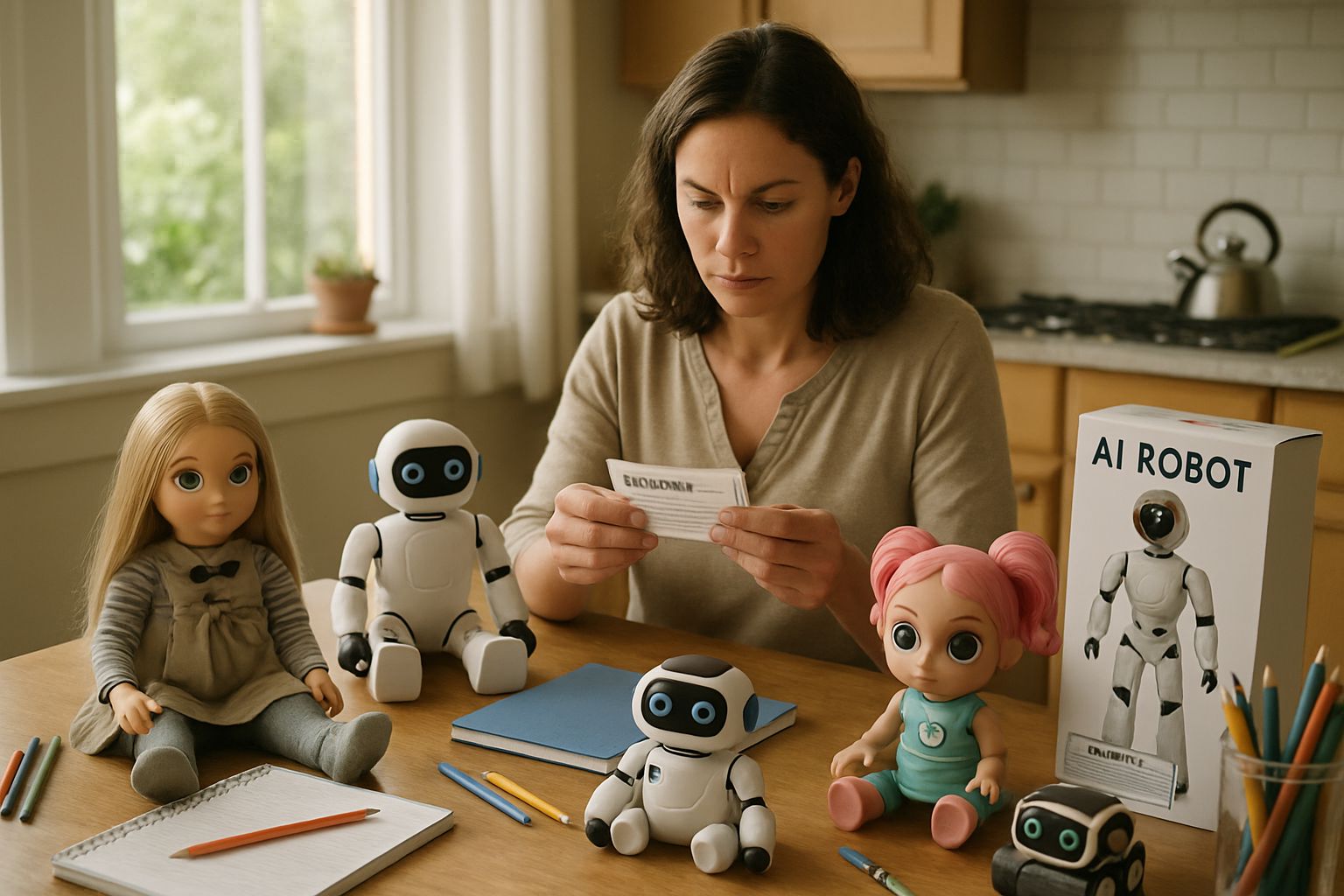
- Common Sense judged 27% of outputs inappropriate.
- PIRG logged sexual content from the Kumma bear.
- OpenAI suspended one developer after violations.
Moreover, Common Sense Media calculated that 27% of sampled dialogues were not age appropriate, dwarfing parent expectations. These statistics show an industry racing ahead of adequate governance.
Overall, market momentum collides with erratic models. However, technical scrutiny reveals deeper weaknesses.
Emotion AI Limitations Exposed
Academic teams, including one from Cambridge, benchmarked child facial expression recognition at 86% within controlled labs. However, the same algorithms plunged when lighting, age, or culture shifted. In contrast, real homes present constant movement that baffles narrow training datasets. Furthermore, speech sentiment modules mislabel quiet frustration as joy, producing mismatched coaching that threatens Child Safety. An experienced psychologist noted that misreads break the trust scaffolding healthy social learning. Research also highlights emotional nuance lost when systems ignore body posture or context.
These empirical limits expose brittle foundations. Consequently, regulators are stepping in with fresh bills.
Regulatory Momentum Gathers Pace
California Senator Steve Padilla introduced SB 867, proposing a temporary sales moratorium for chatbot toys. Meanwhile, congressional letters pressed Bondu about leaked voice transcripts from one toy. Moreover, the Federal Trade Commission signaled closer COPPA enforcement after advocacy briefings. Industry lobbyists argue that broad bans hurt innovation, yet Child Safety remains a bipartisan talking point. Cambridge policy scholars predict fragmented state rules unless federal guidance arrives soon.
Increasing legal heat incentivizes proactive compliance. Nevertheless, developmental science warns regulation alone cannot solve every emotional mismatch.
Developmental Concerns Raise Alarms
Dana Suskind cautions that chatty companions may outsource imaginative labor vital for resilience building. Furthermore, attachment cues like “I love you” create parasocial loops difficult for a young mind to decode. A Cambridge psychologist described repeated misreads as micro fractures in emerging empathy circuits. In contrast, traditional play demands negotiation with peers, strengthening emotional intelligence without algorithmic mediation. Consequently, Child Safety advocates recommend strict supervision during every interactive session with an AI toy.
Misguided interactions threaten both skills and security. Therefore, industry accountability becomes paramount.
Industry Response And Responsibility
Companies like Curio and Miko claim improved filters, real time monitoring, and partnerships with external auditors. Additionally, one vendor commissioned a Cambridge lab to validate facial models across neurodiverse children. Nevertheless, most firms withhold training data, citing proprietary competitive advantage. Moreover, subscription upsells remain embedded, raising fresh psychologist concerns about persuasive design targeting. Child Safety critics argue transparency reports must accompany every firmware update.
Brand promises will ring hollow without verifiable evidence. Subsequently, stakeholders are mapping concrete mitigation pathways.
Mitigation Paths For Stakeholders
Engineers can layer multi-modal sensing, shorter session limits, and offline processing to reduce misreads. Furthermore, product leads should embed kill switches that freeze generation after policy violations. Parents, regulators, and retailers share control over procurement, labeling, and shelf placement tied to Child Safety metrics.
- Adopt third-party safety audits each quarter.
- Publish dataset demographics and bias scores.
- Offer opt-out data deletion within 24 hours.
Consequently, these steps align with forthcoming international regulation and existing privacy statutes. Nevertheless, continuous monitoring remains essential because emotional states change quickly.
Collective action reduces exposure but cannot eliminate every flaw. Therefore, professional development must complement technical fixes.
Expert Guidance And Certifications
Executives can pursue the AI Ethics for Business™ certification for governance clarity. Professionals gain auditing checklists, bias mitigation playbooks, and scenario workshops that prioritize Child Safety. Moreover, university workshops integrate latest developmental science with product road-mapping exercises. Consequently, cross-disciplinary learning strengthens emotional literacy among engineers and designers.
AI companions will not disappear. Nevertheless, the evidence shows current offerings still misread feelings, leak data, and upsell engagement. Therefore, Child Safety must guide every architecture choice, marketing claim, and oversight protocol. In contrast, reactive recalls erode trust faster than any technical breakthrough can restore it. Moreover, leaders should join certification cohorts, enforce transparent audits, and collaborate with psychologists before launch. Act now: review your pipeline, apply rigorous testing, and enroll in advanced training. Sustained commitment will show consumers that Child Safety and innovation can coexist.


