

AI CERTS
2 hours ago
AI Talent Crisis: The Rapidly Shifting US-China Brainpower Race
However, the U.S. still commands most private capital and the largest model portfolio. Visa uncertainty, export controls, and aggressive Chinese recruitment inject new volatility into talent flows. In contrast, ample funding and equity offers continue to lure elite researchers to American labs. Moreover, venture exits generate role models who reinforce the ecosystem’s appeal. Therefore, executives must track shifting incentives to secure critical staff and defend market positions. This article unpacks the numbers, policies, and forecasts underlying the present AI Talent Crisis.
Compute Still Drives Advantage
Private capital remains the single strongest advantage for the U.S. AI ecosystem. Moreover, Stanford estimates 2024 domestic investment at $109.1 billion, dwarfing China’s $9.3 billion. Consequently, labs like OpenAI and Google can afford unprecedented compute budgets and salaries. The resulting infrastructure magnetizes top-tier researchers from every continent. For comparison, Chinese private investment equals roughly one eighth of the American total, limiting project scale. Yet exchange listings in Shanghai and Hong Kong could unlock fresh venture liquidity within months. Nevertheless, capital alone cannot solve the AI Talent Crisis without enough visas and supportive policy.
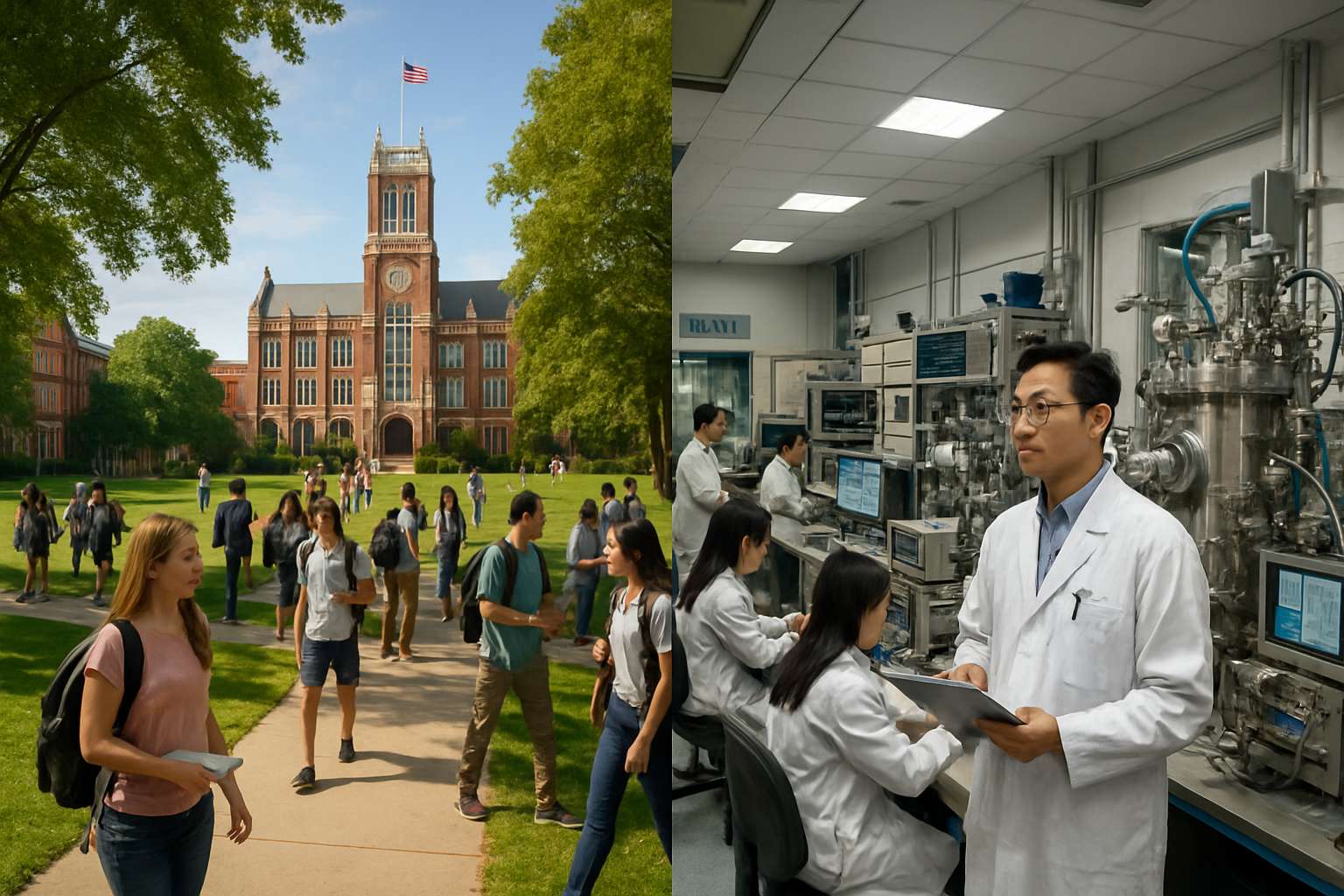
Massive spending sustains present dominance yet hides structural fragilities. Next, we examine how China converts scale into output.
China Elevates Research Output
Chinese universities now produce a swelling pool of AI specialists. Additionally, MacroPolo tracking shows China’s share of top-tier NeurIPS researchers climbing from 29% to 47% within three years. In contrast, the U.S. pipeline grows slowly amid immigration uncertainty. Domestic tech giants now endow research institutes inside leading campuses, shortening path from theory to deployment. Such proximity accelerates internships, thesis funding, and eventual corporate absorption of promising graduates.
China also leads select patent categories, signaling momentum beyond academic prestige. Consequently, some analysts argue Beijing has eroded Washington’s brainpower edge in foundational science. Yet many graduates still pursue American PhDs, reflecting the gravitational pull of Silicon Valley labs. The ongoing AI Talent Crisis therefore hinges on whether those graduates stay overseas or return home. Moreover, provincial incentive programs promise housing, seed funding, and tax breaks to entice returnees. These carrots reshape Geopolitics by integrating talent policy with national industrial strategy.
China’s research surge reflects deliberate coordination of universities, firms, and state planners. However, migration policy will decide ultimate leadership.
Visa Policies Shape Flows
Immigration rules increasingly dictate where advanced models are built. For instance, Optional Practical Training backlogs delay foreign graduates entering American startups. Meanwhile, new congressional bills would bar Chinese AI products from federal contracts, deepening Geopolitics tensions. CSET warns that tightening without offsets could cost the U.S. its coveted brainpower edge within five years. Interviews with graduate advisors reveal growing anxiety about missed conference seasons due to delayed paperwork.
Some students select Canadian programs instead, citing faster processing and abundant grants. Furthermore, survey data show some students changing plans before visa interviews occur. Therefore, the AI Talent Crisis may accelerate if stay rates decline even modestly. Nevertheless, streamlined green-card pathways could reverse the trend quickly.
Visa levers act faster than academic reforms, magnifying policy stakes. Subsequently, we explore how investment reinforces or counteracts these levers.
Capital Fuels Talent Magnet
Money not only funds servers; it also shapes career calculus. Equity packages at leading American labs can exceed lifetime Chinese salaries. Public stock market rallies also elevate option values, enhancing total compensation packages. Furthermore, cross-border venture funds increasingly back founders willing to operate distributed teams. Consequently, many Chinese-born researchers remain abroad despite patriotic appeals. Venture funding likewise bankrolls startup visas and attorney fees, offsetting bureaucratic hassles.
Nevertheless, Chinese mega-firms now offer comparable stock options, narrowing gaps. The evolving packages illustrate how the AI Talent Crisis intertwines with compensation arms races. Moreover, diversified funding expands experimentation, creating virtuous cycles that attract fresh graduates.
Capital amplifies talent movements but cannot substitute predictable rules. Hence, strategic security concerns increasingly collide with market rationality.
Security Versus Openness Tension
National security voices portray AI as a core battlefield technology. Accordingly, export controls target high-end chips and cloud access. Legislators debate mandatory disclosures when training models with foreign data sets. Critics warn such rules might fragment global repositories essential for reproducibility. However, excessive secrecy can repel international collaborators and weaken the U.S. innovation community.
Jack Clark argued democracy yields safer systems during recent hearings. Meanwhile, Chinese officials bolster indigenous fabs to replace restricted hardware. These reciprocal measures exemplify Geopolitics driving technical decisions. Nevertheless, the AI Talent Crisis deepens if trust networks fracture and conferences fragment.
Balancing openness and protection remains the hardest governance puzzle. Consequently, stakeholders seek middle paths described next.
Strategies To Sustain Edge
Multiple policy proposals aim to preserve America’s brainpower edge without sacrificing security. For example, automatic green-cards for STEM PhDs would streamline retention. Additionally, federal scholarships could tie graduates to domestic service for several years. Corporate initiatives also matter; Nvidia funds university clusters that train future engineers.
Regional accelerators could match graduates with small firms lacking recruitment muscle. Meanwhile, national labs propose shared compute vouchers redeemable across approved cloud providers. Consequently, combined public-private playbooks may blunt the AI Talent Crisis trajectory. China follows parallel strategies with state subsidies and municipal housing for returnees.
Key moves under discussion include:
- Fast-track visas for top conference medalists
- Tax credits for companies mentoring foreign graduates
- Joint research grants requiring cross-border teams
- Transparent chip export licensing with academic carve-outs
Moreover, professionals can enhance skills through the AI Learning Development™ program. These options build capacity while signaling openness.
Coordinated levers offer practical paths forward. Subsequently, we spotlight upskilling routes for individual careers.
Certification Routes For Professionals
Career resilience requires continuous learning amid shifting hiring maps. Therefore, engineers confronting the AI Talent Crisis should pursue recognized credentials. Programs like the AI Learning Development™ certification validate applied design, governance, and deployment expertise. Additionally, certified practitioners command higher salaries and enjoy greater geographic mobility. In contrast, uncredentialed peers face tightening screening from both governments and employers.
Consider the immediate benefits:
- Structured curricula aligned with industry benchmarks
- Access to exclusive research communities
- Portable proof of compliance awareness
Consequently, upskilling doubles as risk mitigation against volatile Geopolitics. The right certification also signals commitment to ethical standards valued by global researchers. That reputation lift strengthens personal brainpower edge within competitive hiring pools. Nevertheless, credentials supplement rather than replace hands-on project experience. Mentor networks attached to certification programs can also expand professional connections across continents.
Formal learning complements workplace practice to sustain relevance. Finally, we review core insights and next steps.
Global leadership now rests on attracting, training, and retaining scarce specialists. Throughout 2024-2025, China narrowed research gaps while the U.S. preserved investment dominance. However, restrictive visas and export controls threaten to erode that advantage. Meanwhile, provincial incentives and abundant graduates energize Beijing’s ascent. Consequently, companies cannot remain passive observers of the AI Talent Crisis.
Executives should champion streamlined immigration, fund open collaboration, and subsidize upskilling. Professionals should pursue certifications like the AI Learning Development™ credential to stay competitive. Together, informed policy and proactive learning can preserve innovation momentum despite shifting Geopolitics. Act now to secure your share of tomorrow’s breakthroughs.


