

AI CERTS
3 hours ago
AI Surveillance Raises Consumer Privacy Stakes
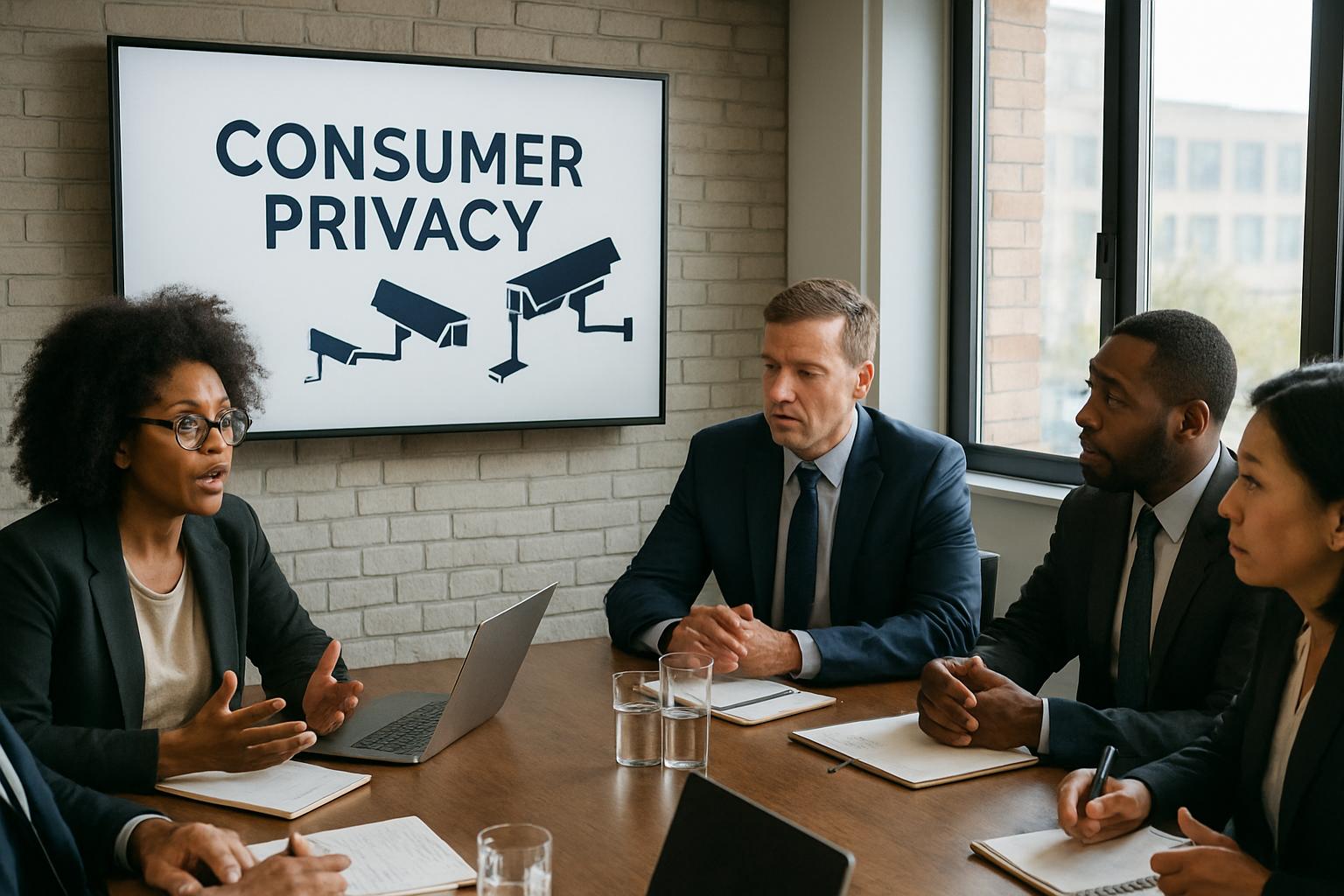
Nevertheless, civil-liberties groups warn that unchecked algorithms can misidentify customers.
Retail AI Adoption Surge
Retailers embraced AI aggressively during 2025 and early 2026.
Furthermore, Solink surveyed 150 decision-makers and found 86% will boost AI spending this year.
Honeywell reported similar enthusiasm in 2025, with 80% planning bigger automation budgets.
Meanwhile, global video analytics revenue already sits in the multi-billion range, according to ResearchAndMarkets.
Edge sensors also reveal queue behavior patterns that guide staffing.
These numbers show momentum, yet investment motives remain pragmatic.
Consequently, executives seek measurable shrink reductions and faster investigations.
Nevertheless, boards insist any deployment must safeguard Consumer Privacy from design onward.
Retail budgets now prioritize algorithmic eyes.
However, understanding tool evolution is essential.
Video Intelligence Market Shift
Legacy CCTV once served post-incident review only.
Now, edge AI turns each lens into a live sensor.
Moreover, person re-identification enables tracking across aisles without necessarily storing faces.
Facial recognition watchlists then alert staff when a known offender enters.
- Missed-scan detection at self-checkout counters
- Queue length monitoring for staffing decisions
- Heat-mapping shopper behavior across departments
- Real-time evacuation guidance during emergencies
Each capability promises operational gains yet widens data collection footprints.
Video intelligence has moved from reactive review to predictive command.
Subsequently, adoption raises deeper biometric questions.
Continuous auditing offers one practical route to uphold Consumer Privacy in real time.
Facial Tech In Stores
Facewatch illustrated scale by issuing 516,739 known-thief alerts during 2025 across UK shops.
That equates to roughly 1,415 daily warnings affecting customers and staff.
In the United States, Walmart pilots Everseen ceiling cameras while Sam’s Club tests exit scanners.
Furthermore, some associates complain about false positives that confuse workers and irritate shoppers.
Accuracy depends on lighting, angles, and diverse skin tones.
Nevertheless, NIST still reports low error rates in laboratory benchmarking.
Retail managers therefore balance shrink savings against misidentification risk and Consumer Privacy obligations.
Facial recognition tools appear effective on paper.
However, field performance varies widely, demanding stricter oversight.
Regulatory And Legal Pressures
Biometric law now shapes strategic planning.
Consequently, Illinois BIPA enables private lawsuits over unconsented face collection.
California CPRA treats biometric templates as sensitive, while New York City restricts public venue usage.
Meanwhile, the UK ICO reviews live Facial recognition systems deployed in retail.
Courts have already handled wrongful arrest claims involving major shops and Face ID evidence.
Moreover, FTC can label opaque data handling as deceptive practice.
Legal uncertainty amplifies boardroom anxiety regarding Consumer Privacy compliance costs.
Litigation risk now equals technological promise.
Therefore, compliance teams must engage earlier with product engineers.
Key Retail Stats Snapshot
- Global retail shrink reached $112.1B in FY 2022, NRF estimates.
- Solink found 86% of retailers intend higher AI budgets in 12 months.
- Facewatch averaged 1,415 alerts daily across UK sites in 2025.
- Market forecasts project double-digit growth for video analytics through 2030.
These numbers underscore momentum yet also magnify data exposure.
We must examine risk mitigation strategies next.
Balancing Risk And Value
Executives often justify surveillance by citing staff safety and reduced shrink.
However, advocacy groups counter that constant tracking chills legitimate shopper behavior.
Moreover, biased algorithms can disproportionately flag Black customers, worsening community relations.
Experts recommend multilayer governance, including bias audits, consent signage, and strict data retention limits.
Professionals can deepen technical stewardship through the AI Network Security™ certification.
Such programs teach encryption, edge processing, and transparent reporting that strengthen Consumer Privacy controls.
Balancing goals demands disciplined governance.
Consequently, cultural change becomes as crucial as code fixes.
Civil Liberties Concern Points
ACLU warns that Facial recognition often misidentifies minorities and children.
In contrast, vendors emphasize rigorous testing and encryption measures.
Nevertheless, whistleblowers from large shops report false alerts that lead to tense confrontations.
Advocates urge legislatures to ban real-time tracking without judicial warrants.
Public skepticism will persist until transparency improves.
Therefore, stakeholder engagement must precede deployment.
Future Retail Surveillance Trends
Edge computing will minimize cloud video transfer and reduce latency.
Subsequently, synthetic data will train models that respect Consumer Privacy while enhancing detection accuracy.
Moreover, self-checkout cameras may soon analyze shopper behavior scores before unlocking exits.
Research firms also expect multimodal sensors that combine RFID, audio, and thermal tracking.
Consequently, governance frameworks will become product differentiators.
Technology progress appears inevitable.
However, principled design can still protect Consumer Privacy.
Conclusion And Next Steps
Retailers worldwide view AI surveillance as a critical shield against theft and violence.
Meanwhile, lawmakers, advocates, and consumers demand proof that Consumer Privacy remains intact.
This article revealed soaring adoption, evolving regulations, and the delicate trade-offs facing shops.
Nevertheless, disciplined data governance, rigorous testing, and employee training can align innovation with ethics.
Consider sharpening your expertise through the AI Network Security™ credential.
Consequently, you can deliver surveillance that respects Consumer Privacy and builds customer trust.


