

AI CERTS
1 day ago
AI Surge Drives Global Industry Transformation Outlook
You will see how economic change intersects with Security prioritization and corporate well being initiatives. Statistics from McKinsey, IDC, and Nvidia anchor the narrative with tangible numbers. Meanwhile, new rules from Brussels and Washington redefine compliance roadmaps. In contrast, energy debates question the sustainability of boundless compute demand. Finally, the piece acts as an actionable industry guide for decision makers. Every section ends with concise takeaways and a forward link. Let us begin with the economics driving adoption worldwide.
Shifting Global AI Economics
McKinsey projects generative AI could inject $2.6–$4.4 trillion into yearly GDP. IDC forecasts a cumulative $19.9 trillion contribution by 2030, confirming explosive demand. PwC scenarios vary, yet the Industry transformation outlook remains undeniably bullish.
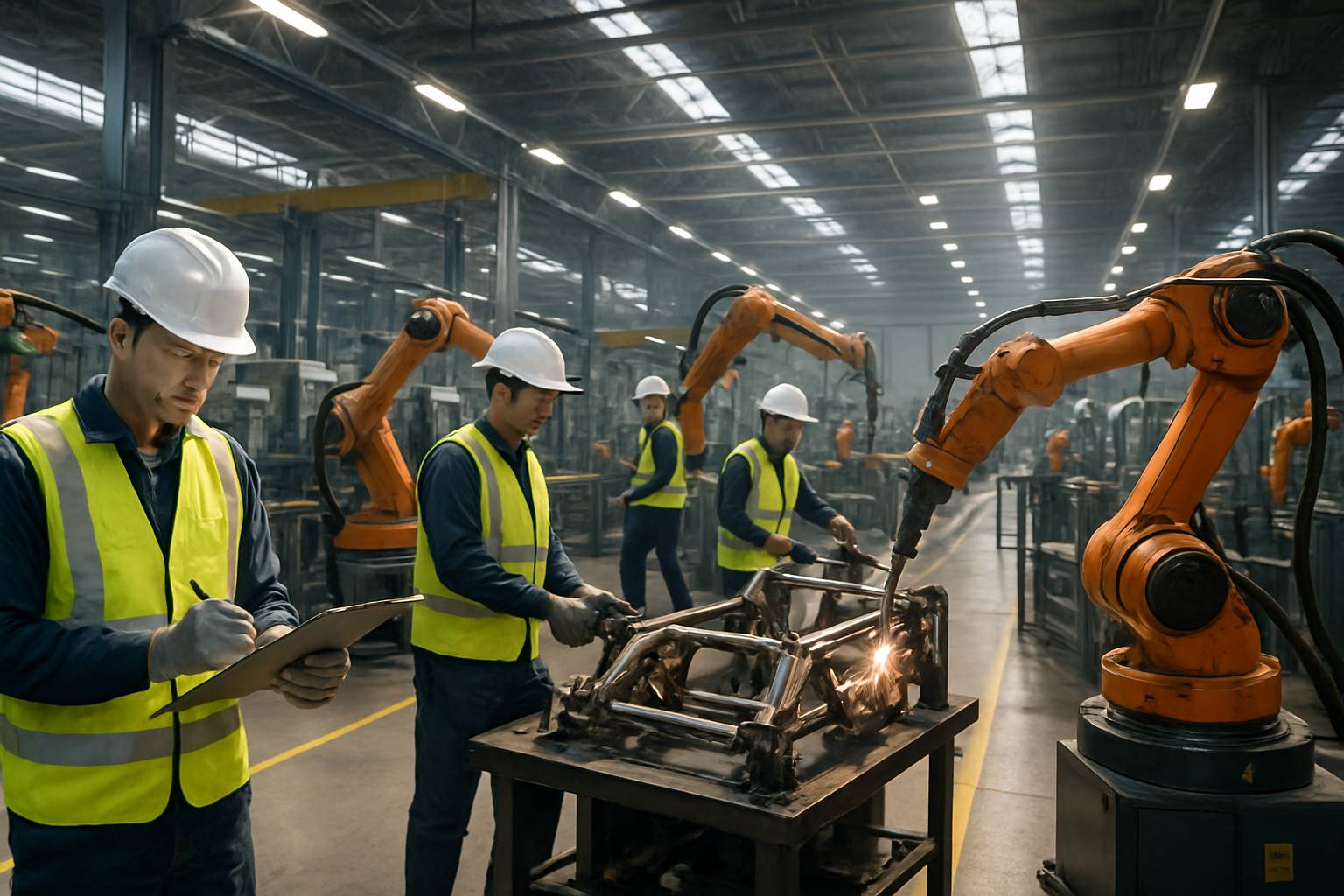
- McKinsey: 63 use cases, highest value in customer operations and coding.
- IDC: $19.9 trillion economy-wide impact by 2030.
- WEF: Net 78 million new jobs by 2030.
Moreover, Nvidia's record data-center revenue illustrates where profits currently concentrate. However, economists caution that productivity gains arrive unevenly across sectors. Together, these numbers reveal vast upside paired with uncertainty. Prudent leaders must internalize range scenarios. Next, infrastructure realities clarify why some firms accelerate faster.
Infrastructure Bottlenecks Shape Winners
Demand for Nvidia Blackwell GPUs still outstrips supply despite expanded fabs and packaging capacity. Consequently, hyperscalers secure long-term chip contracts, squeezing smaller competitors. Microsoft, Google, and Amazon treat capacity as strategic arsenal, echoing Jensen Huang's supercycle language. Energy, land, and cooling also constrain new AI clusters, intensifying geographic competition. Yet the Industry transformation outlook depends on easing these bottlenecks through multi-cloud and edge strategies. Therefore, Security prioritization becomes critical when workloads hop across providers and private clusters. Infrastructure gaps can stall planned productivity gains. Capacity planning now decides near-term winners. Regulation further influences those capacity decisions.
Regulatory Landscape Accelerates Compliance
The EU AI Act entered force in 2024, starting a phased rule rollout through 2027. Meanwhile, NIST published draft SP 800-1 guidance on foundation model risk management. These documents act as a living industry guide for auditors, vendors, and procurement officials. Consequently, companies align internal policies with mandatory transparency, testing, and incident reporting requirements. Ignoring compliance jeopardizes brand trust and distorts the Industry transformation outlook inside regulated sectors. Security prioritization must accompany governance because misuse threats rise with model autonomy. Regulators now shift from advice toward enforcement. Enterprises must budget compliance like any other capital line. Workforce strategies represent the next dependency.
Workforce And Skills Evolution
WEF expects 170 million new roles while 92 million fade by 2030. Moreover, reskilling demands focus on AI fluency, prompt engineering, and domain adaptation. Employee well being suffers when change management lags skill development. Consequently, leaders pair learning stipends with mental-health programs to protect well being during rapid transitions. A realistic Industry transformation outlook factors reskilling costs alongside hardware spending. McKinsey's talent playbooks provide an adaptable industry guide for scaling internal academies. Human capital determines whether AI lifts productivity or amplifies inequality. Companies that invest early gain retention and innovation advantages. Sustainability concerns now join the leadership agenda.
Sustainability And Energy Debate
Peer-reviewed studies suggest AI may consume up to 40% of data-center electricity by 2025. In contrast, vendors claim efficiency gains will offset demand. Nevertheless, unchecked energy growth could blunt projected economic change benefits. Community well being also depends on water usage and emissions tied to megawatt-hungry campuses. Investors now question how sustainability metrics reshape the Industry transformation outlook. Furthermore, Security prioritization extends to energy grids because outages cripple AI driven operations.
- Renewable power purchase agreements.
- Advanced cooling and heat reuse.
- Model efficiency benchmarks per task.
Environmental transparency influences permit approvals and public perception. Companies adopting clear targets gain regulatory goodwill. Leaders can integrate these insights into a strategic playbook.
Strategic Playbook For Leaders
Decision makers need a concise industry guide translating macro shifts into tactical steps. First, map applications to value pools validated by McKinsey and industry peers. Second, embed Security prioritization across development, deployment, and supply chain procurement. Third, scenario-plan revenue streams under multiple economic change trajectories. Validate expertise via the AI Network Security™ certification. These steps ground the Industry transformation outlook in concrete, measurable action. Leaders balancing technology, people, and planet will capture durable advantage. Structured playbooks convert hype into operational excellence. We now recap the critical insights.
Conclusion And Next Steps
AI's rapid diffusion reshapes markets, regulation, skills, and sustainability simultaneously. Therefore, the Industry transformation outlook hinges on resolving infrastructure, compliance, and talent challenges in tandem. Consequently, executives should benchmark value pools, tighten security controls, and safeguard well being during economic change. A data-driven Industry transformation outlook empowers boards to allocate capital effectively. Act now to turn the Industry transformation outlook into competitive advantage and lasting impact. Download our full industry guide and pursue certification to lead your organization confidently into the AI decade.


