

AI CERTs
2 hours ago
AI Summit Protest: Arrests, Legal Battles, and Security Fallout
A high profile AI Summit Protest has shifted India’s tech narrative into a legal battleground. On 20 February 2026, shirtless demonstrators from the Youth Congress disrupted the India AI Impact Summit. Security personnel quickly hustled them out, yet the episode sparked an expansive criminal investigation. Consequently, Delhi Police have now arrested eight activists, including national Youth Congress president Uday Bhanu Chib. The detentions raise acute questions about summit security, free speech, and proportional law enforcement. Moreover, industry leaders fear reputational fallout for India’s rapidly growing artificial intelligence sector. This article unpacks the evolving timeline, the charges, and the broader political stakes. It draws on court orders, police statements, and expert analysis to provide a balanced picture. Meanwhile, legal experts debate whether investigators exceeded their mandate by seeking extended police custody. Readers will also find actionable resources, including a foundational AI certification for professional upskilling. Follow the sections below for a concise, fact driven breakdown of this contentious saga. Understanding the facts is essential before judging either side.
Protest Timeline And Context
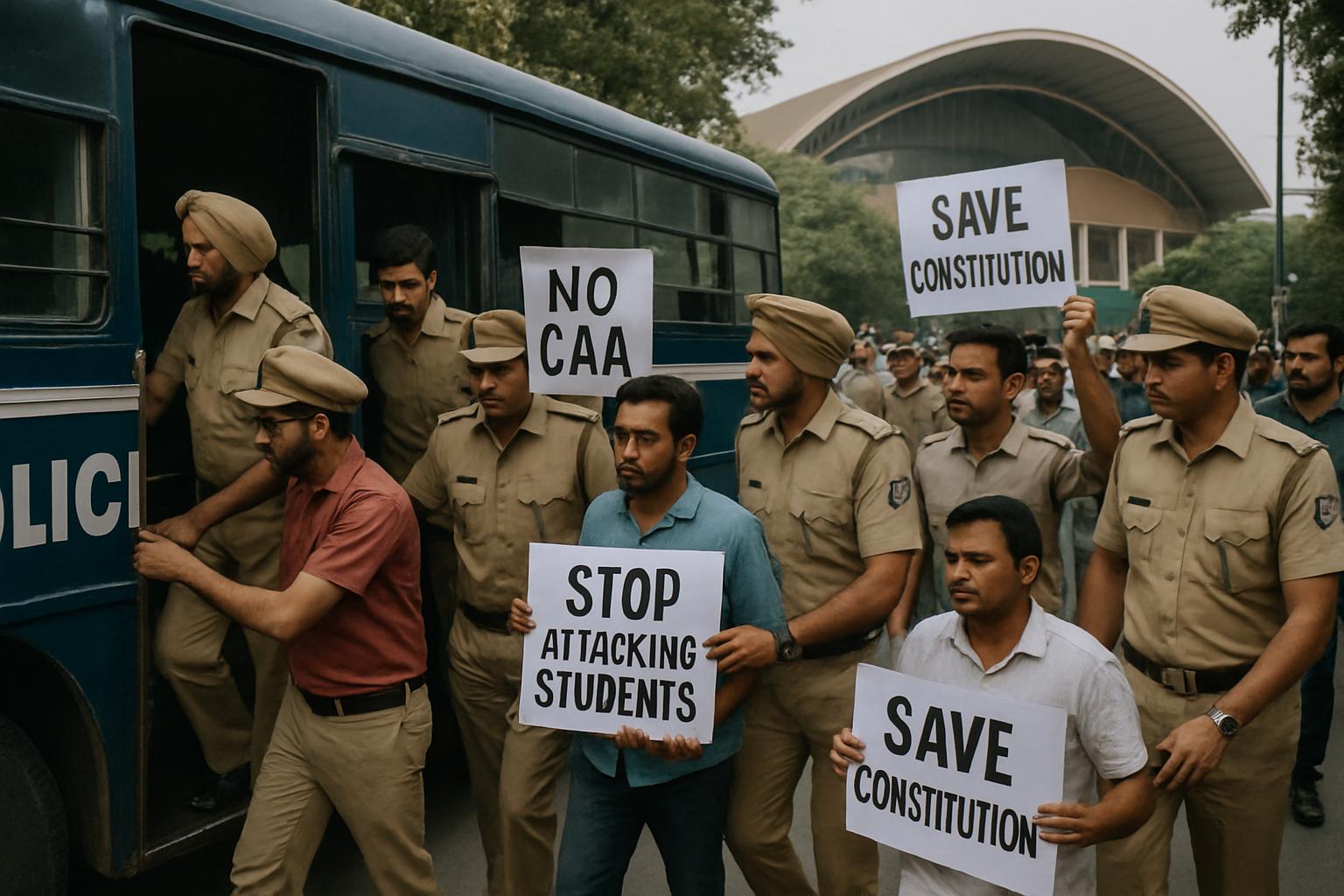
Investigators reconstructed events using CCTV footage and witness testimonies. Initially, around noon, 10 protestors slipped into Exhibition Hall Five wearing heavy jackets. Subsequently, they removed layers to reveal slogan printed T-shirts and began chanting against alleged unemployment. The AI Summit Protest lasted barely three minutes before security intervened. However, the disruption occurred while foreign delegates toured startup booths, increasing diplomatic sensitivity. Police detained four demonstrators at the venue and lodged a detailed FIR that evening. Later raids across several states brought the arrest tally to eight. Youth Congress leadership insists the action was peaceful street theatre, not a pre-planned conspiracy. Police disagree, labelling Uday Bhanu Chib the operation’s mastermind based on phone records and travel logs. In summary, facts show a short, symbolic disruption escalating into multi state arrests. Consequently, attention shifted from slogans to charges, which the next section unpacks.
Legal Charges And Process
Police invoked sections on criminal conspiracy, unlawful assembly, and assault on public servants. Moreover, later briefings mentioned rioting and wanton provocation to strengthen custody arguments. Courts repeatedly remanded several accused to police custody for interrogation about funding and logistics. However, the magistrate ordered investigators to supply the FIR, rejecting claims of a sensitive file. Defiance lawyers hailed the order as a win for transparency under the new BNSS code. The AI Summit Protest appears in clause one of the FIR as the triggering incident. In contrast, Youth Congress counsel argues charges exaggerate a minor offence to intimidate opponents. Analysts note custodial interrogation over printed T-shirts could be disproportionate. Meanwhile, police maintain that a broader mastermind network might exist and needs mapping. To recap, serious sections amplify policing power, yet judicial scrutiny continues. Therefore, security justifications set the stage for the next discussion on summit protocols.
Summit Security Protocol Concerns
Bharat Mandapam hosted 4,200 security and traffic personnel across summit days. Additionally, digital QR passes controlled every entrance, yet activists still accessed sensitive zones. Officials believe the AI Summit Protest exploited crowd peaks during lunchtime when checks relaxed. Consequently, investigators study CCTV gaps and badge issuance logs for accountability.
- Summit dates: 16–20 Feb 2026
- Venue security staff: about 4,200
- Protesters inside hall: roughly 11
- Arrests reported: eight IYC members
Security consultants warn that any high profile breach risks discouraging international investors. However, civil society warns that excessive screening can deter genuine delegates and stifle openness. Balancing both imperatives remains challenging for future events. Observers note that global media mentioned the AI Summit Protest in coverage of India’s tech ambitions. Summit managers now audit procedures, looking for overlooked gaps. Subsequently, political fallout dominates headlines, as explored next.
Diverging Political Reactions Evident
Within hours, Congress leaders condemned the arrests as an assault on democratic expression. Meanwhile, BJP spokespersons called the AI Summit Protest an irresponsible spectacle hurting national prestige. Rahul Gandhi tweeted that Youth Congress members voiced legitimate economic grievances. Conversely, BJP lawmakers urged tough action to deter copycat disruptions during upcoming election season. Media coverage mirrored partisan lines, with some channels praising bold dissent and others echoing security concerns. Moreover, online discourse quickly framed Chib as either youth icon or reckless mastermind. Opinion polls remain scarce, yet anecdotal evidence suggests limited public sympathy for the summit breach. Nevertheless, student unions announced solidarity rallies if detention continues. Clearly, political stakes intensify beyond courtroom walls. Therefore, legal transparency assumes greater importance, addressed in the following section.
Rights Transparency And Courts
Section 230 of BNSS mandates prompt FIR access for accused persons. However, police initially withheld the document, citing case sensitivity. Patiala House Court rejected that plea and ordered immediate disclosure. Consequently, defence attorneys finally received the AI Summit Protest FIR on 24 February. They argue delayed access hindered bail applications and prolonged police custody unnecessarily. Senior advocate Sanjoy Ghose called the prolonged remand an overreach inconsistent with proportionality. In contrast, Delhi Police say interrogations need time because digital evidence spans multiple states. Legal scholars highlight a recurring pattern where high profile protests face heavier penal sections. Summarily, courts act as key arbiters between security imperatives and civil liberties. Consequently, expert commentary now takes center stage.
Expert Analysis And Debate
Technology policy analysts warn that overcriminalising dissent may chill innovation conferences. Moreover, investor relations teams worry that repeat incidents could deter foreign exhibitors. Cybersecurity veteran Rina Malhotra noted summit networks stayed uncompromised despite the AI Summit Protest. Nevertheless, she advises future organisers to segregate VIP movement paths from public expo zones. Public safety expert Anil Kohli believes authorities reacted proportionally, given crowded halls and dignitary presence. Meanwhile, civil liberties groups counter that lengthy police custody rarely yields intelligence proportional to liberty cost. Commentators remain split on whether Chib truly acted as operational mastermind or symbolic figurehead. Such polarity underscores the complex trade-offs between speech, security, and political gain. Experts converge on one point: transparency will decide public trust. Subsequently, stakeholders must plan next steps, as discussed below.
Stakeholder Implications Going Forward
Summit organisers plan tighter credential audits and random bag checks for coming editions. Additionally, the Ministry of Home Affairs may issue fresh guidelines for political gatherings near strategic events. Corporates watch closely because the AI Summit Protest narrative can deter partnerships and funding. Meanwhile, Youth Congress vows sustained campaigns until all activists exit police custody. If courts dismiss conspiracy claims, the government could face allegations of overreach. Conversely, confirmation of a wider mastermind plan would justify rigorous surveillance at tech venues. Professional audiences observing India’s AI push should also enhance their own knowledge foundations. They can pursue the AI Foundation Essentials™ certification for baseline competency. In essence, reputations, policies, and careers hinge on investigation outcomes. Therefore, staying informed remains vital for all involved.
The AI Summit Protest highlights the delicate balance between innovation showcases and political expression. Delhi Police opted for aggressive charges, yet courts demanded procedural transparency. Meanwhile, Youth Congress frames arrests as intimidation ahead of elections. Stakeholders should monitor evidence disclosures, remand hearings, and possible policy changes. Consequently, future tech events will likely adopt stricter, yet more accountable, security architectures. Industry professionals can buffer career risk by deepening domain knowledge and compliance awareness. Therefore, consider bolstering your credentials with the AI Foundation Essentials™ program. Stay informed, stay skilled, and navigate India’s dynamic AI landscape confidently.


