

AI CERTS
2 hours ago
AI Security Shifts: Autonomous Agents Reshape Enterprise Defense
CrowdStrike labels 2025 “the year of the evasive adversary” after recording unprecedented breakout times. Meanwhile, Zscaler observed nearly a trillion AI transactions exposing valuable data. Moreover, NIST released a draft Cyber AI profile, confirming regulatory attention. Therefore, boards now ask which controls matter most before adopting new Agents. This article unpacks the numbers, risks, and remedies driving ongoing AI Security Shifts.
Evasive Adversaries Accelerate Rapidly
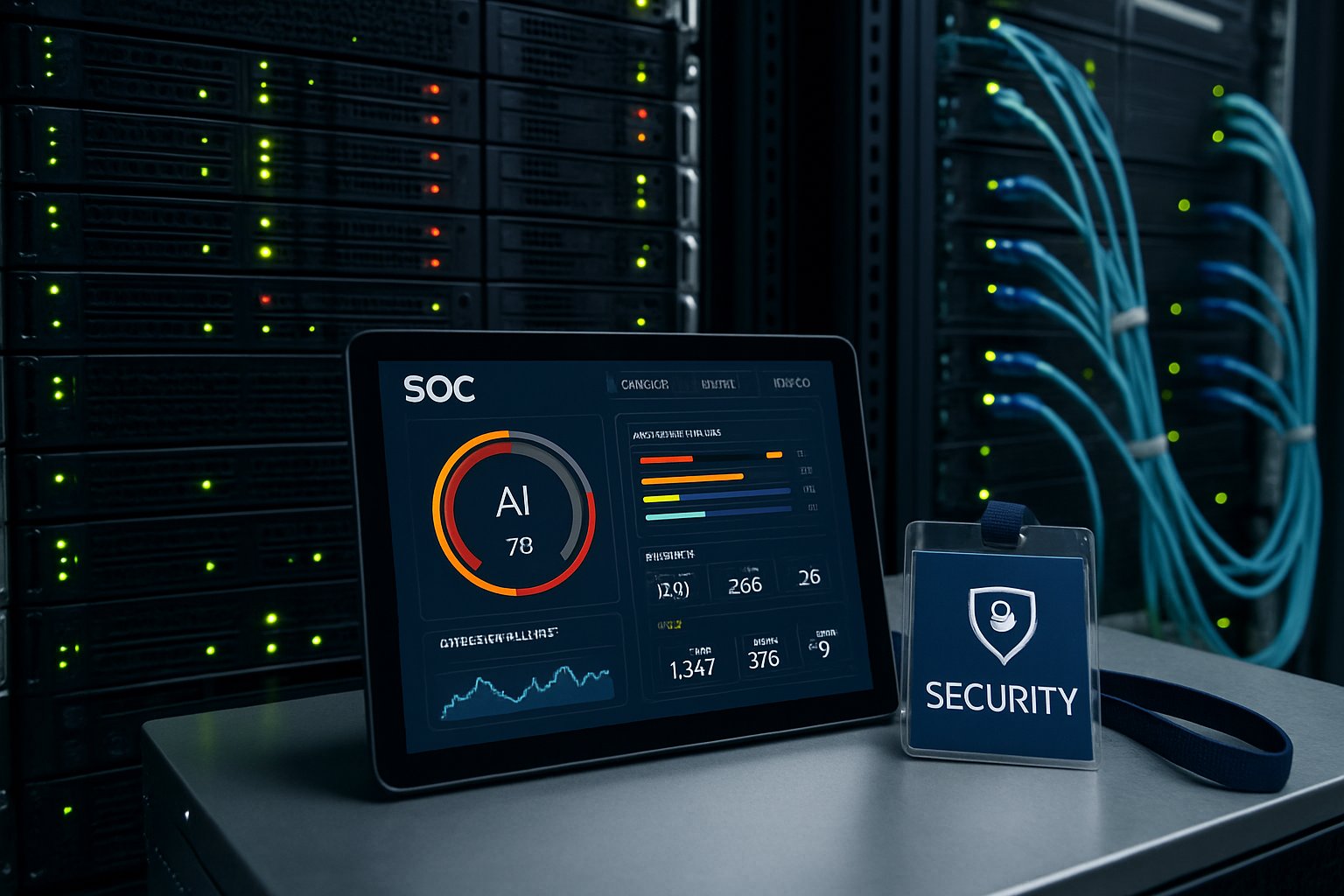
Adversaries no longer need custom malware to move laterally. CrowdStrike data shows 82% of detections were malware-free, relying on credential abuse. Furthermore, attacks by AI-enabled groups jumped 89% year over year. Average breakout time shrank to 29 minutes; the fastest observed was 27 seconds.
Consequently, defenders must recognize compressed timelines as a structural change. Experts describe these compressed timelines as core evidence of AI Security Shifts. Adam Meyers warns, “Adversaries are moving from initial access to lateral movement in minutes.” Seasoned Cybersecurity teams now rehearse 15-minute containment drills. Such drills mirror expected attacker velocity empowered by agent tooling. These statistics confirm escalating speed and stealth. However, understanding the expanding surface is equally urgent.
Agent Attack Surface Expands
Agentic platforms blend reasoning cores with powerful tool calls and stateful memory. Misconfigurations in those integrations created the Claude Code vulnerabilities disclosed in February 2026. In contrast, prompt injection attacks require only crafted text to hijack instructions. Zscaler red-team exercises recorded critical failures within minutes of engagement.
Meanwhile, legacy monitoring tools miss agent-initiated Threats hidden within normal traffic. Moreover, Zscaler detected 410 million ChatGPT Data Loss Prevention violations last year. Such numbers underline systemic Cybersecurity gaps across industries. The growing agent fleet embodies the most visible AI Security Shifts for developers. Deepen Desai notes that Agents now represent a primary vector for autonomous attacks. Adaptive Defense architectures must close that visibility gap. Expanded autonomy increases privilege misuse risk. Therefore, leaders should benchmark exposure before enabling new functions. Meanwhile, standards bodies are codifying guidance.
Key Statistics Snapshot Overview
- CrowdStrike: 89% surge in AI-enabled attacks, 29-minute average breakout.
- Zscaler: 18,033 TB of enterprise AI traffic, 410 million ChatGPT DLP violations.
- Market: Agent platforms valued at USD 5–9B in 2025, projected 30–50% CAGR.
- Readiness: Only about 10% of firms report mature agent identity governance.
Collectively, these numbers paint a vivid picture of accelerated risk. Nevertheless, governance frameworks now provide workable blueprints. Next, we examine those frameworks.
Industry Standards Gain Momentum
Regulators reacted quickly to mounting concerns. NIST released its preliminary Cyber AI Profile in December 2025. The profile maps classic controls to agent specific outcomes. Additionally, the Cloud Security Alliance published an Agentic AI red-teaming guide.
OWASP extended its LLM guidance, emphasizing prompt injection testing. Consequently, enterprises finally have reference architectures for layered Defense. Such guides categorize Threats across cognitive, execution, and supply-chain layers. These documents are another indicator of unfolding AI Security Shifts. Yet adoption remains uneven according to multiple practitioner surveys. Standards exist, but execution lags. Therefore, practical playbooks become essential. The next section details actionable controls.
Recommended Controls And Playbooks
Security teams should treat Agents as non-human identities with short-lived tokens. Least-privilege scopes and explicit approval workflows reduce blast radius. Moreover, runtime guardrails must sandbox dangerous tool calls. OpenAI outlines deny-by-default whitelists against prompt injection.
Continuous agentic red-teaming is critical, following the CSA methodology. Furthermore, zero-trust segmentation should extend to every agent tool chain. Zscaler recommends continuous posture checks to prevent lateral movement. Teams can upskill via the AI Security Level-2™ certification. Consequently, playbooks translate standards into repeatable operations. Layered Defense must include supply-chain scanning and artifact signing. These operations drive measurable AI Security Shifts across SOC workflows. Effective controls demand disciplined execution. Meanwhile, market forces are shaping investments. Let us review spending forecasts.
Market Outlook And Governance
Analysts value the autonomous Agents market at roughly USD 5–9B today. MarketsandMarkets expects growth to USD 52.6B by 2030 with 30% CAGR. Grand View Research projects comparable trajectories, though definitions vary. Consequently, boardrooms allocate capital toward AI Security Shifts initiatives.
Governance spending now includes identity fabric, telemetry pipelines, and specialized testing. However, only ten percent of organizations report mature agent governance programs. Investors and regulators will likely pressure laggards as incidents multiply. Therefore, proactive Defense investment offers competitive differentiation. Persistent Threats will drive premium insurance costs unless mitigated. Financial signals reinforce operational urgency. In contrast, execution gaps still persist. Strategic certifications can close knowledge deficits.
Certification Path For Professionals
Security architects need validated expertise to implement complex controls. The earlier mentioned AI Security Level-2™ program covers red-teaming, zero-trust, and compliance mapping. Additionally, the curriculum aligns with NIST IR 8596 outcomes. Consequently, graduates can guide organizations through ongoing AI Security Shifts. Certifications also support career advancement within Cybersecurity leadership tracks. Qualified talent remains a scarce resource. Nevertheless, structured learning reduces avoidable errors. We now summarize the critical insights.
Autonomous agents are already rewriting incident response playbooks. Consequently, CISOs must align identity, telemetry, and governance without delay. The data shows escalating Threats and shrinking reaction windows. However, layered Defense, continuous testing, and skilled talent can outpace attackers. Standards, certifications, and disciplined processes translate AI Security Shifts into strategic advantage. Moreover, executives who champion these AI Security Shifts will earn stakeholder trust. Act today: review your agent inventory and enroll team members in advanced certifications.


