

AI CERTS
2 hours ago
AI Real Estate: QikBIM Launch Signals BIM Automation Surge
Moreover, analysts forecast a double-digit CAGR for Building Information Modeling, signalling lucrative disruption. Nevertheless, firms must weigh liability, data governance, and skills. This article unpacks market context, vendor strategies, benefits, and practical guidance.
Market Momentum Signals
Market research places BIM revenue near USD 9 billion in 2025. Furthermore, projections reach USD 22 billion by 2032, a 13.5 percent CAGR. Meanwhile, AI-enabled functions drive much of that growth. Analysts cite vendor announcements across 2024-2026 as concrete adoption signals. Autodesk embeds generative agents in Revit. Nemetschek adds an AI Assistant across brands. Arkance distributes BIMLOGIQ, an AI modeling extension. These moves confirm strategic focus on automation.
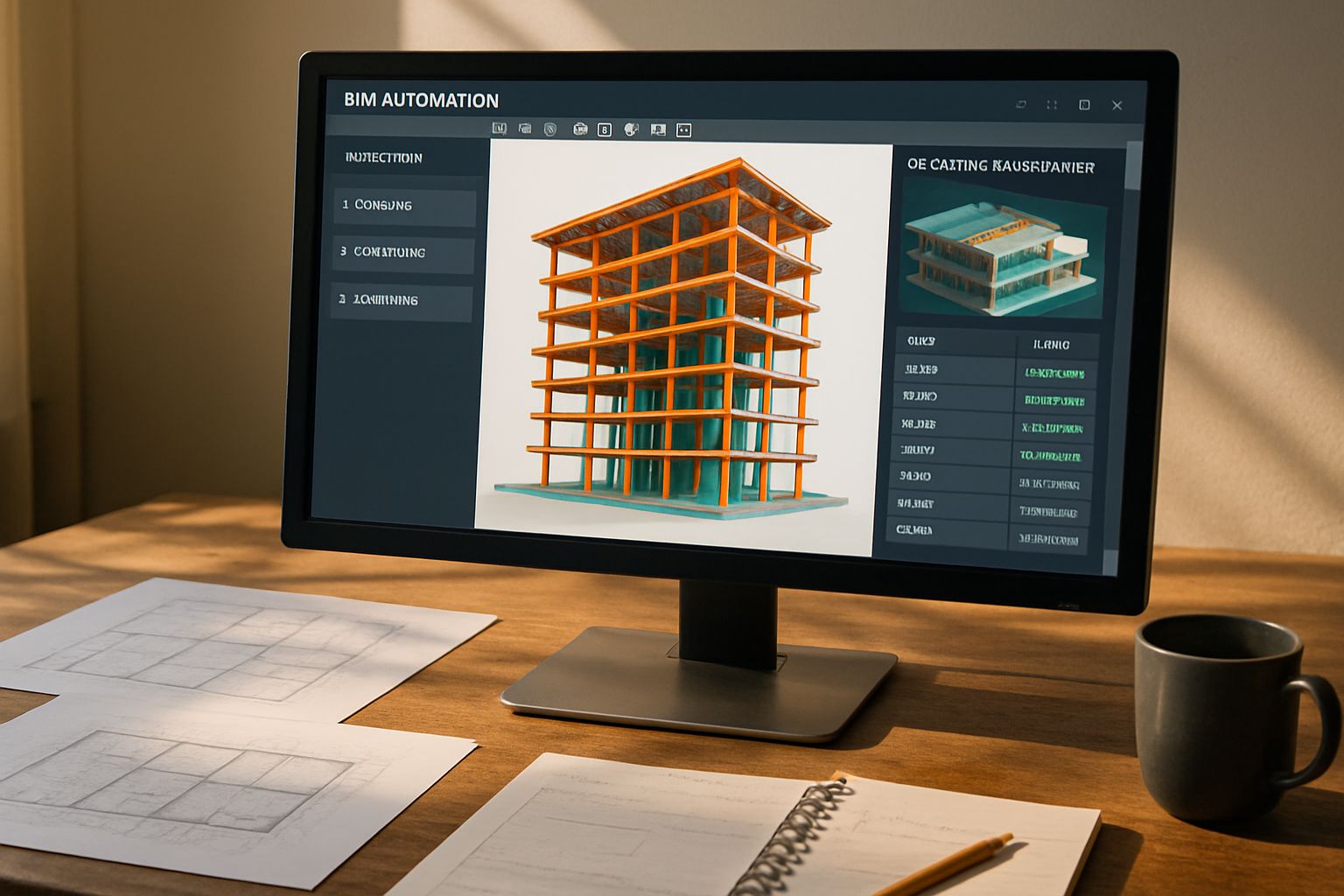
Growth Metrics In Focus
- ResearchAndMarkets: BIM climbs from USD 9.03 billion in 2025 to USD 15.4 billion by 2030.
- Fortune Business Insights: 13.5 percent CAGR expected through 2032.
- AI in construction market could reach USD 12.1 billion by 2030.
Consequently, investors link AI Real Estate potential to expanding BIM budgets. These indicators underline accelerating momentum. In contrast, maturity varies by region and discipline.
These metrics frame vendor moves. Subsequently, we examine OFA Group’s commercial launch.
OFA QikBIM Spotlight
OFA Group shifted from pilots to full market release on 15 January 2026. QikBIM now converts 2D drawings into Revit or IFC models spanning architecture, structure, and MEP. Additionally, the Corporate Membership price is USD 20,000 per year for projects below 16,000 square feet. CEO Larry Wong stated, “The industry does not need incremental productivity gains. It needs a fundamentally different production model.”
Members upload PDFs or CAD files. Subsequently, machine-learning routines generate parametric objects, apply discipline rules, and flag clashes. Human reviewers then approve outputs. Moreover, outputs comply with Industry Foundation Classes, easing interoperability. Early pilots reportedly reduced modeling cycles from weeks to single-digit hours.
OFA Group also positions QikBIM as a gateway to digital assets management. The platform tags elements for downstream facility use. Therefore, owners can integrate models with digital twin dashboards later.
QikBIM exemplifies AI Real Estate innovation, yet competitors rapidly respond. The next section explores rival activity.
Rivals Push Automation Forward
Arkance partnered with BIMLOGIQ in December 2025. The extension adds copilot chat, smart annotations, and automated family placement inside Revit. Meanwhile, Nemetschek embedded a cross-brand assistant that answers model queries and generates visualization scenes. Buildots advances site-to-model feedback by pairing computer vision with conversational AI.
Moreover, incumbents Bentley and Trimble invest in reality-capture integrations, while startups like Cupix and Avvir pursue cloud pipelines. Consequently, customers face a crowded landscape. Nevertheless, interoperability gaps persist, making open standards critical.
Competitive pressure accelerates capability release cycles. However, differentiation now hinges on accuracy, audit trails, and liability coverage.
These rival moves intensify the value debate. Subsequently, we analyse benefits and cost payoffs.
Benefits And Cost Payoffs
Firms embrace automation for speed, cost, and coordination. Vendors claim routine buildings can be fully modeled within a day. Furthermore, automated clash detection reduces rework downstream. In contrast, manual workflows require iterative back-and-forth between disciplines.
Speed And Savings Data
- OFA Group pilots: 80 percent time reduction during schematic modeling.
- Buildots users: 50 percent faster issue closure when site progress syncs to models.
- Nemetschek demos: 40 percent fewer clicks during detailing with the AI Assistant.
Additionally, subscription pricing scales compute without proportional headcount growth. Consequently, margin expansion becomes realistic for lean practices. Integrating AI with digital assets workflows also unlocks lifecycle value for owners.
These payoffs attract AI Real Estate investors. However, risks accompany automation. The following section details governance challenges.
Key Challenges Demand Governance
Automated outputs still require validation. Inaccurate geometry or metadata can expose firms to litigation. Moreover, uploading confidential drawings to third-party clouds raises intellectual property concerns. Data standardization remains uneven across geographies, limiting interoperability.
Governance Risks Explained Clearly
Industry bodies urge clear audit trails, liability clauses, and human oversight. Additionally, consultants recommend private-AI deployments where security is paramount. Furthermore, reliance on a single vendor may create lock-in if IFC translations degrade fidelity.
Nevertheless, structured processes can mitigate many issues. Therefore, an implementation checklist proves valuable.
These governance gaps emphasize preparation. Subsequently, we outline checklist highlights for buyers.
Practical Implementation Checklist Highlights
Procurement leads should address five question areas before signing contracts.
Key Questions For Buyers
- Data inputs: Which formats and LOD standards does the platform require?
- Validation: What accuracy metrics and acceptance tests are provided?
- Auditability: Does the system log every automated change?
- Integration: How are Revit, IFC, and BCF exports managed?
- Security: Is the environment SOC 2 certified and privately hosted?
Additionally, firms should review indemnities around model errors. Moreover, professionals can deepen expertise through the AI Project Manager™ certification. Consequently, teams gain structured frameworks for risk governance.
These checklist items foster confident adoption. The final section assesses strategic outlook through 2026.
Strategic Outlook Through 2026
Market analysts expect automation to shift from optional pilot to standard requirement within two years. Furthermore, AI Real Estate investors anticipate consolidation as platforms mature. OFA Group plans expanded square-footage tiers for QikBIM. Meanwhile, rivals will embed deeper generative design and cost forecasting.
Additionally, demand for validated digital assets will increase as owners pursue operational twins. Consequently, service firms offering end-to-end modeling plus analytics gain competitive edge. Nevertheless, regulatory frameworks may tighten around data privacy and professional liability.
AI Real Estate leaders therefore must balance innovation with controls. Moreover, acquiring multidisciplinary skills remains critical. Professionals who complete advanced certifications demonstrate readiness for automated workflows.
The 2026 horizon appears dynamic and profitable. However, disciplined governance will define sustainable success.
In summary, intelligent BIM automation is leaving the lab and entering daily practice. QikBIM’s launch, rival feature releases, and robust market forecasts signal irreversible momentum. However, accuracy, security, and interoperability require meticulous attention. Consequently, firms should adopt structured checklists, invest in staff training, and demand transparent metrics. Moreover, earning recognized credentials strengthens credibility. Forward-looking readers should evaluate pilot opportunities now and pursue the linked certification to sharpen strategic advantage.


