

AI CERTs
2 hours ago
AI-Powered Price Elasticity Engines Boost E-Commerce Margins
Black Friday margins slipped last year, yet data-rich retailers found an unexpected rescue lever.
Among the standout solutions, AI-Powered Price Elasticity Engines rapidly recalibrated prices in near real time.
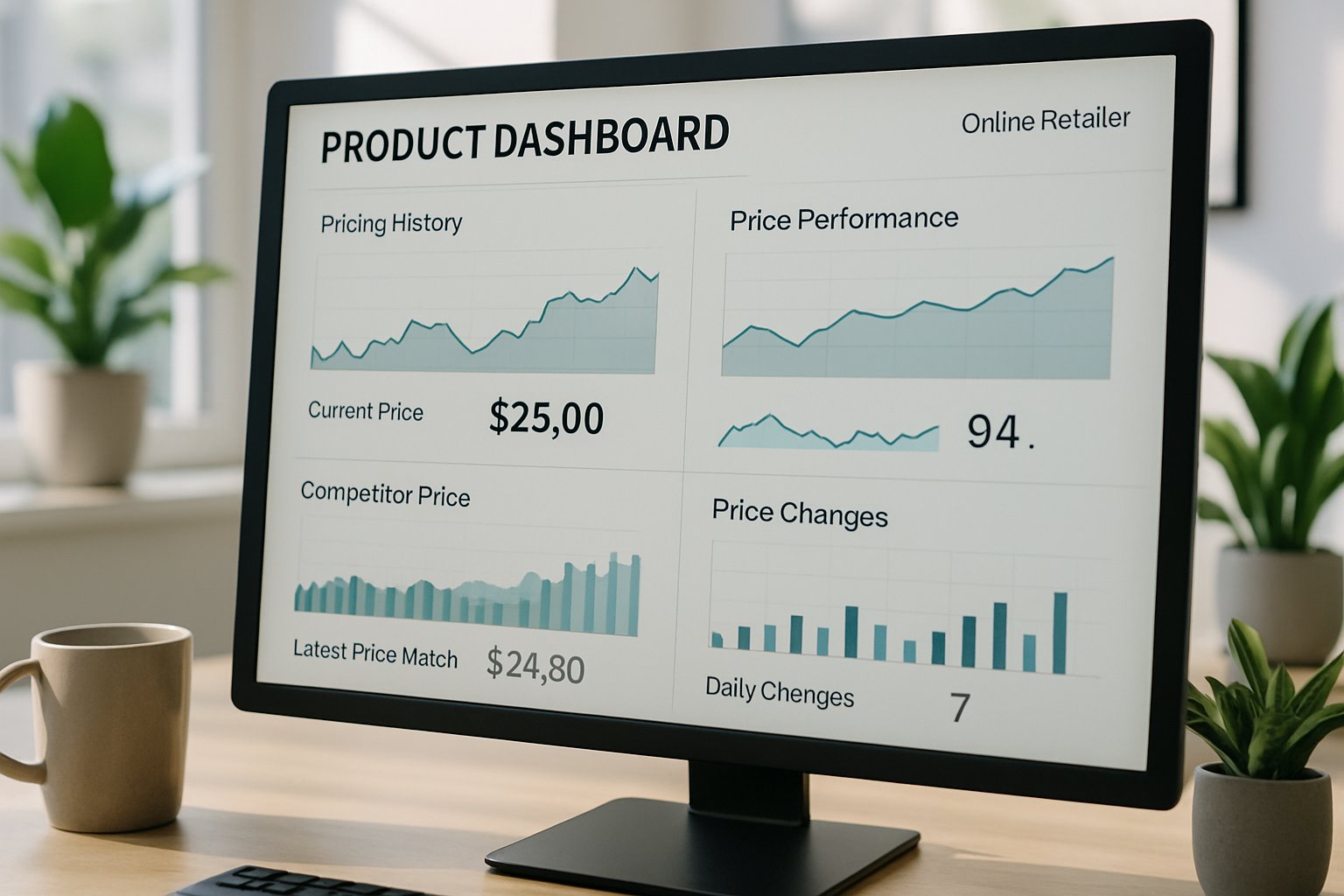
Consequently, early adopters recorded margin lifts reaching low double digits without blanket price hikes.
E-commerce executives now watch the technology’s advance with equal parts excitement and caution.
This article unpacks the mechanics, benefits, and risks that technical leaders must evaluate.
Furthermore, it highlights governance tactics and certifications that strengthen deployment credibility.
By the end, readers will grasp how margin science meets antitrust reality.
Moreover, regulators intensify scrutiny as algorithms set cross-market benchmarks.
Consequently, mastering both science and policy is now a board-level directive.
AI-Powered Price Elasticity Engines
AI-Powered Price Elasticity Engines estimate how each SKU reacts to price shifts across segments.
The engines ingest transactions, competitor catalogs, media spends, and inventory signals to build granular demand curves.
Subsequently, constrained optimizers or reinforcement agents push updated prices to storefronts within minutes.
Guardrails block violations of margin floors, MAP rules, and fairness thresholds.
Therefore, category managers retain control while benefiting from automated experimentation.
These characteristics make the engines a strategic layer between raw data and checkout prices.
In summary, the engines marry statistical rigor with operational speed.
The next section explains why adoption accelerates across retail segments.
E-commerce Adoption Momentum Rise
Retail pilots have matured into enterprise rollouts during the past eighteen months.
Moreover, over half of large online retailers now run elasticity modules in live categories, according to vendor surveys.
These capabilities extend classic dynamic pricing into causal elasticity territory.
Competera, Pricefx, and other vendors added contextual AI layers that integrate competitor scraping and customer segmentation.
Consequently, repricing cadence dropped from weekly cycles to hourly pushes for thousands of SKUs.
Enterprises adopting AI-Powered Price Elasticity Engines report faster price testing cycles.
McKinsey reports typical revenue lifts between two and five percent when engines feed disciplined commercial processes.
Additionally, case studies cite margin improvements near ten percentage points in best cases.
Consultants position the approach as a cornerstone of strategic revenue optimization programs.
Adoption momentum reflects proven economic gains and falling implementation friction.
However, technology brilliance matters little without clear proof of financial impact, discussed next.
Technology Under The Hood
Elasticity engines rely on hierarchical Bayesian regressions, transformers, and reinforcement learners.
Furthermore, feature pipelines blend pricing history, promotions, media exposure, and competitor availability.
RL controllers explore price actions within guardrails, searching for long-run profit maxima.
In contrast, econometric models deliver transparent coefficients that satisfy finance stakeholders.
Hybrid stacks choose the algorithm per product maturity and data volume.
Moreover, leading platforms expose API hooks for dynamic pricing engines running downstream promotions.
AI-Powered Price Elasticity Engines increasingly embed explainability dashboards that surface elasticity drivers for each decision.
Summarizing, the stack blends statistical clarity with adaptive control.
The subsequent section quantifies commercial results delivered by these innovations.
Measured Business Impact Metrics
Decision makers seldom approve new algorithms without hard numbers.
Therefore, vendors publish case studies highlighting verified uplifts.
Recent pilots report the following headline figures:
- Revenue lift: two to ten percent across electronics and grocery trials.
- Margin improvement: five to ten percentage points with disciplined inventory actions.
- Price update cadence: weekly to hourly, trimming manual labor by fifty percent.
- Market size: $2.9 billion in 2024, projected mid-teens CAGR through 2034.
Moreover, Competera cites a seven percent profit gain in grocery pilots.
McKinsey summarises typical sales growth between two and five percent in controlled experiments.
Retailers using AI-Powered Price Elasticity Engines consistently cite board confidence in pricing transparency.
These outcomes validate revenue optimization budgets in tough trading conditions.
Collectively, the numbers prove commercial viability.
However, legality and consumer trust determine sustainable scale, as the next section explores.
Governance And Compliance Guardrails
Algorithmic collusion has become a headline risk since regulators flagged shared repricers.
Consequently, legal teams now join pricing war rooms from day one.
Firms embed audit logs, distance competitor data, and test for supra-competitive results.
Additionally, brands establish fairness guardrails preventing discriminatory surges on vulnerable customer groups.
In contrast to naive dynamic pricing scripts, governed engines respect corporate ethics.
Teams bolster knowledge through the AI Security™ certification, which covers algorithmic risk management.
Governance frameworks also require human approvals for large price swings exceeding defined thresholds.
AI-Powered Price Elasticity Engines can export rule explanations that satisfy antitrust counsel.
Strong guardrails secure trust across boards, regulators, and shoppers.
Next, we inspect looming opportunities and associated uncertainties.
Future Outlook And Risks
Research pipelines explore multimodal demand estimation using vision and language embeddings.
Meanwhile, reinforcement learners promise self-tuning discounts that reflect real-time supply shocks.
Nevertheless, academics warn that independent learning agents may converge on collusive equilibria.
Regulators may therefore impose disclosure mandates or algorithm audits within two years.
Investors still expect adoption to expand at mid-teens CAGR, driven by relentless revenue optimization pressure.
Dynamic pricing will grow more personalized yet must remain transparent to avoid backlash.
Forward-looking teams pilot AI-Powered Price Elasticity Engines in sandbox markets before scaling company-wide.
The horizon blends technical promise with legal uncertainty.
Consequently, leaders must pair experimentation with rigorous oversight.
Future Outlook And Risks
Research pipelines explore multimodal demand estimation using vision and language embeddings.
Meanwhile, reinforcement learners promise self-tuning discounts that reflect real-time supply shocks.
Nevertheless, academics warn that independent learning agents may converge on collusive equilibria.
Regulators may therefore impose disclosure mandates or algorithm audits within two years.
Investors still expect adoption to expand at mid-teens CAGR, driven by relentless revenue optimization pressure.
Dynamic pricing will grow more personalized yet must remain transparent to avoid backlash.
Forward-looking teams pilot AI-Powered Price Elasticity Engines in sandbox markets before scaling company-wide.
The horizon blends technical promise with legal uncertainty.
Consequently, leaders must pair experimentation with rigorous oversight.
Future Outlook And Risks
AI-Powered Price Elasticity Engines have shifted from hype to measurable board results.
Moreover, companies harnessing dynamic pricing now couple those gains with tighter governance and certified talent.
Consequently, revenue optimization strategies feel less speculative and more procedural.
Antitrust scrutiny and fairness concerns nevertheless demand transparent algorithms and audit trails.
Therefore, leaders should pilot, measure, and govern before scaling across every channel.
Teams seeking deeper risk knowledge can pursue the linked AI Security™ credential.
Ultimately, AI-Powered Price Elasticity Engines will dominate e-commerce playbooks for profit and resilience.
Act now, test responsibly, and convert data into durable advantage.


