

AI CERTS
3 hours ago
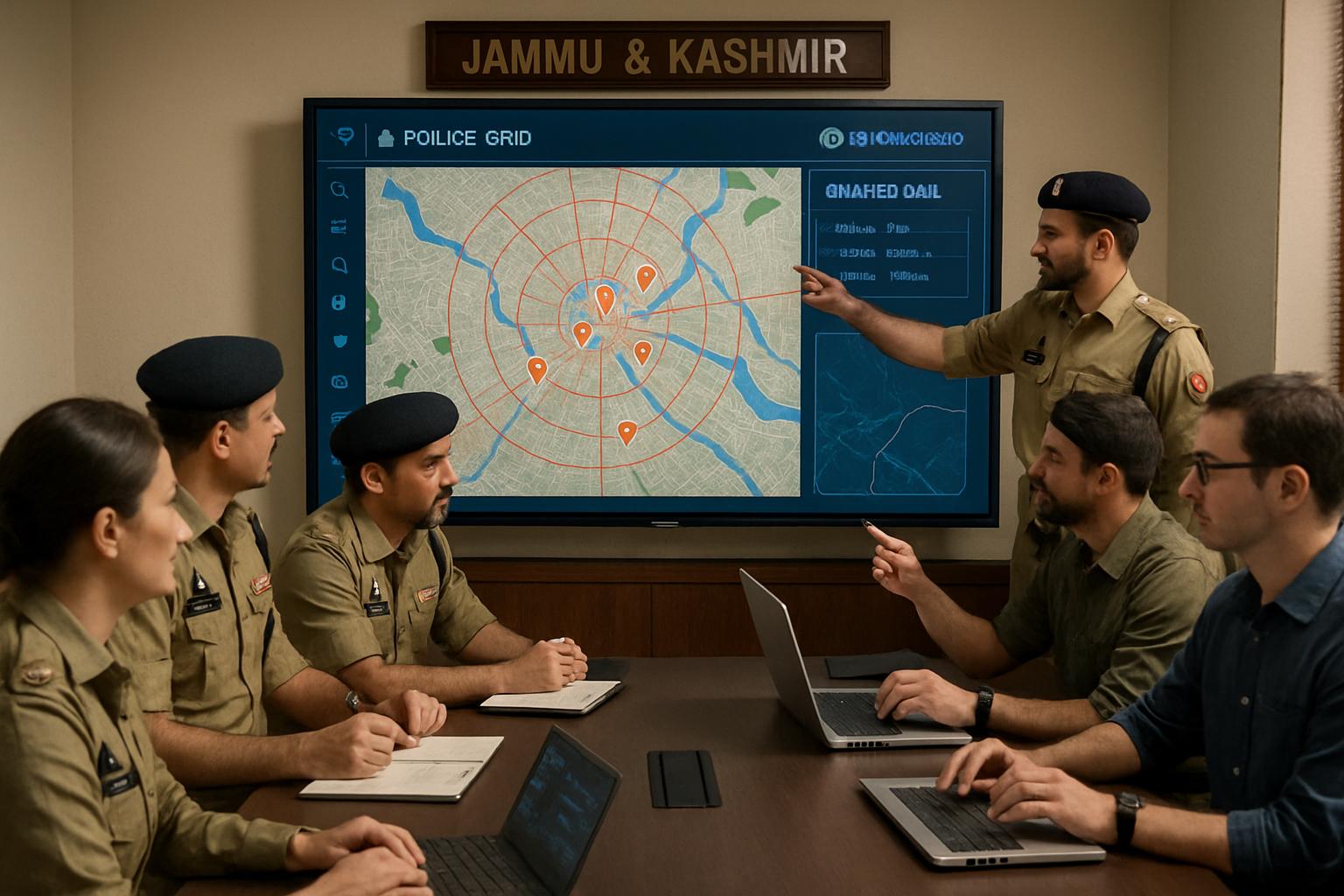
AI Police Grid boosts J&K ballistic forensics
Moreover, officials claim it will cut examination time from weeks to hours while preserving expert oversight. This article explains the stakes, benefits, and open questions surrounding the ambitious rollout.
Why Modernize Ballistic Work
Counter-terror cases such as Operation Mahadev proved the value of decisive ballistic matches. Furthermore, Parliament heard that cartridge markings linked recovered AK-47s to the Pahalgam massacre. Traditional matching relies on senior forensics examiners using comparison microscopes. Meanwhile, global case volumes keep rising. Therefore, many labs now evaluate Automated Ballistic Identification Systems (ABIS) that search huge image databases in minutes. The AI Police Grid plans to layer machine-learning over such systems to triage candidates and suggest likely matches.
Industry estimates place the ballistic imaging market near USD 1.4 billion, with steady single-digit CAGR. Additionally, a 2025 deep-learning study reported 92 percent accuracy when classifying cartridge cases. Nevertheless, researchers caution that court-grade reliability demands rigorous validation.
- Global market value: USD 1.4 billion (2024)
- Experimental ML accuracy: roughly 90-92 percent
- J&K target turnaround: hours instead of weeks
These statistics highlight a ripe modernization window. Nevertheless, success depends on secure data pipelines and skilled police analysts. Consequently, J&K leadership emphasizes that humans must remain “masters of machines.”
The modernization rationale sets the context. However, understanding technical mechanics clarifies how gains materialize.
How AI Assists Examiners
AI image classifiers excel at finding minute surface features. In contrast, human eyes fatigue quickly when scanning thousands of samples. The AI Police Grid will ingest 2D and 3D images from comparison scopes, then compute similarity scores. Moreover, convolutional networks can cluster unknown casings by probable weapon family. Consequently, analysts receive a ranked candidate list, not a single verdict.
Core AI Workflow Functions
Additionally, the grid integrates multi-modal data. Cartridge matches can link directly to location-based surveillance clips, facial recognition hits, or previous incident logs. Therefore, investigators gain fast context without switching systems. Subsystems also promise accelerated DNA sequencing and document analytics, creating a seamless forensic hub.
Professionals can deepen expertise through the AI Security Level 2 certification. The program teaches threat modeling and secure algorithm deployment—skills vital for any AI Police Grid administrator.
These functions explain the toolkit. Consequently, real cases illustrate tangible value.
Operational J&K Case Studies
Officials cite recent successes to justify the expansion. During Operation Mahadev, recovered shells were matched to seized rifles at CFSL Chandigarh. Subsequently, ministers shared the signed ballistic report in Parliament. Although traditional microscopes handled the match, analysts argue the AI Police Grid could have shaved critical days.
In another 2025 encounter, field teams air-lifted exhibits within hours. Moreover, remote advisors reviewed digital images before physical transfer, accelerating tactical response. With full deployment, AI triage could occur on-scene using mobile imaging rigs.
These vignettes reveal promising efficiency gains. Nevertheless, structured metrics quantify the benefits.
Benefits Speed Scale Metrics
Quantified Time Savings
Internal estimates suggest a 70 percent reduction in examination queues. Furthermore, cross-jurisdiction correlations that once needed manual queries now run instantly. In contrast, human-only workflows seldom handle millions of archived images.
Enhanced Investigative Response
Consequently, commanders expect faster operational response to emerging attacks. Moreover, automated alerts can flag links between new shootings and prior cold cases. The AI Police Grid therefore becomes an always-on investigative companion.
Key benefits include:
- Shorter lead time for arrest warrants
- Improved resource allocation during joint operations
- Greater confidence through multi-source forensics
These advantages appear compelling. However, robust oversight remains essential.
Benefit metrics impress decision-makers. Nevertheless, potential pitfalls demand equal attention.
Risks And Oversight Needed
Interpol reviews warn that algorithmic matches must remain investigative leads, not courtroom facts. Moreover, biased training data can skew similarity scores. Therefore, J&K plans mandatory human sign-off before any report leaves the lab. Additionally, blind proficiency tests will monitor examiner accuracy.
Privacy advocates raise broader surveillance concerns. Facial recognition and predictive policing modules share data lakes with ballistic imagery. Consequently, strict access controls and audit trails are vital. J&K’s ban on USB drives in government offices signals rising cyber hygiene awareness.
These risks underscore governance imperatives. In contrast, the commercial landscape offers technical guardrails.
Market Landscape And Vendors
Global suppliers such as IBIS, Evofinder, and BALISTIKA dominate the ABIS space. Furthermore, open-source research groups publish cutting-edge models that rival proprietary tools. The AI Police Grid team has not disclosed its vendor lineup. Therefore, journalists pursue Right-To-Information requests for procurement documents.
Market analysts project steady growth driven by rising police modernization budgets. Additionally, cross-border arms trafficking fuels urgent demand across South Asia. Consequently, vendors now bundle analytics dashboards, secure cloud storage, and mobile capture kits.
Understanding suppliers informs strategic planning. Subsequently, stakeholders consider future milestones.
Strategic Next Steps Forward
First, independent scientists should review validation datasets and error rates. Secondly, courts need clear admissibility guidelines for AI-assisted forensics. Moreover, public consultations can balance security with civil liberties. The AI Police Grid governance board is expected to release draft policies within six months.
Meanwhile, frontline officers must receive structured training. Professionals may upskill through the earlier linked certification, ensuring secure, ethical deployments. Consequently, the ecosystem can evolve responsibly.
These steps chart a sustainable path. Therefore, continuous evaluation will keep technology aligned with justice goals.
Key Takeaway Summary
The AI Police Grid offers faster ballistic results, integrated DNA workflows, and richer situational awareness. However, scientific validation, privacy safeguards, and human oversight remain non-negotiable. Additionally, market momentum suggests sustained innovation ahead.
Security leaders should monitor J&K’s rollout, request transparency, and invest in skills. Furthermore, consider pursuing the AI Security Level 2 credential to master secure AI deployment within any evolving AI Police Grid.


