

AI CERTs
3 hours ago
AI Neural Mapping Mirrors Brain Activity
Modern neuroscience and artificial intelligence are converging fast. However, their union remains misunderstood outside research circles. Consequently, recent papers showing close links between network activations and brain signals have drawn intense attention. Moreover, experts stress that correlation is not equivalence. This article unpacks the core findings, limits, and professional implications of AI Neural Mapping.
Researchers now align machine representations with neural recordings across vision, language, and emotion. Furthermore, they build digital twins replicating thousands of real neurons. Meanwhile, policy makers debate privacy and AI Bias as data volumes explode. Therefore, professionals need clear guidance and verified facts.
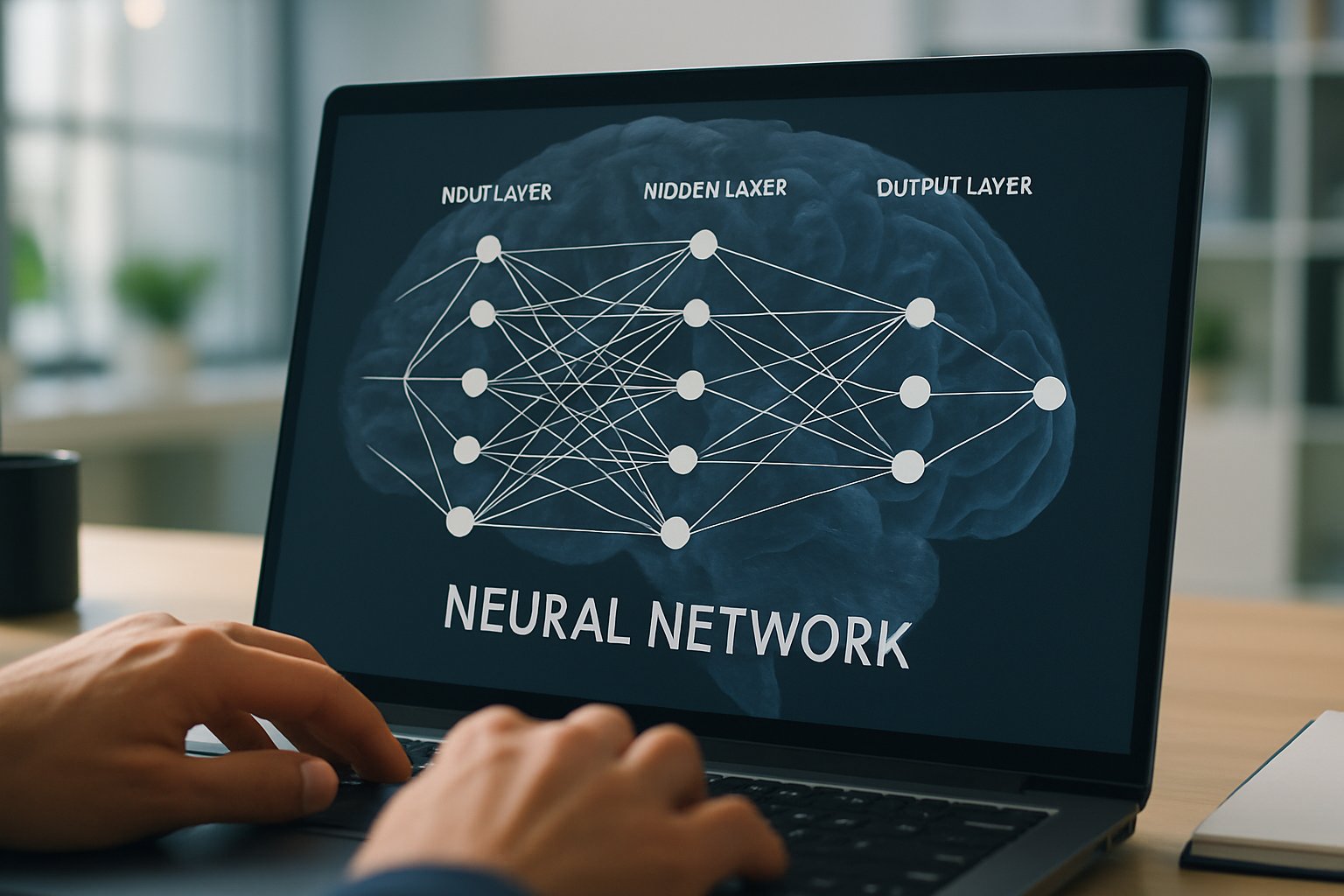
Brain-Like AI Models Explained
Scientists compare artificial activations with biological activity using encoding models. In contrast to black-box speculation, this quantitative approach predicts voxel or neuron responses from model embeddings. AI Neural Mapping thus becomes a practical tool, not a metaphor.
Consequently, high prediction accuracy suggests shared representational geometry. Nevertheless, authors caution that similar outputs do not confirm identical learning rules. Additionally, factors like input statistics and AI Bias can shift alignment results.
Representational Alignment Methods Overview
Teams first present humans or animals with words, images, or movies. Subsequently, they extract recorded fMRI, ECoG, EEG, or calcium signals. Next, they feed the identical stimuli into a language model or vision network. Linear regressors then map model layers to brain regions. Importantly, higher correlation scores indicate stronger alignment.
Moreover, benchmarks such as Brain-Score allow cross-lab comparison. Therefore, progress is now measurable and transparent.
Digital Twin Case Study
The MICrONS consortium released a mouse visual-cortex twin in April 2025. Researchers trained the model on 900 minutes of calcium imaging across eight mice. Consequently, it predicts responses from tens of thousands of neurons to unseen videos. Andreas Tolias noted, “If you build a model of the brain and it’s very accurate, that means you can do a lot more experiments.”
This twin exemplifies AI Neural Mapping at large scale. Nevertheless, mechanisms differ; synapses in silicon do not match biophysics. These nuances set up the next research discussion.
These technical foundations clarify how mapping works. However, recent empirical breakthroughs reveal how far the approach has progressed.
Latest Research Highlights Uncovered
New studies extend alignment beyond vision into language and multimodal cognition. Furthermore, they quantify how data size and architecture influence predictivity.
Language Model Scaling Findings
Fedorenko’s team showed that a GPT variant trained on only 100 million words reaches near-maximal fMRI predictivity. Moreover, encoding performance rises logarithmically from 125 million to 30 billion parameters. Consequently, better perplexity means stronger alignment.
- 15 % correlation gain observed over the 125 M→30 B range
- Layer depth corresponds to later cortical time windows
- Training corpus roughly equals a child’s decade of exposure
Meanwhile, Nature Communications linked transformer layers to real-time ECoG responses during storytelling. In contrast, older recurrent networks showed weaker temporal matches.
These results span multiple labs, yet reproducibility remains an open challenge. Nevertheless, the pattern appears robust across domains. Therefore, benefits for neuroscience are becoming tangible.
Benefits For Neuroscience Tools
Accurate in-silico models accelerate hypothesis testing. For instance, researchers can lesion virtual neurons before proposing invasive animal work. Additionally, alignment insights inform brain-computer interface design, enhancing signal decoding fidelity.
Moreover, AI Neural Mapping may reduce animal experiments by shifting early screening to computers. Consequently, funding agencies highlight ethical advantages. However, mismatched training distributions and potential AI Bias still require vigilance.
These benefits illustrate why industry and academia invest heavily. However, they also raise serious ethical questions now addressed.
Challenges And Ethical Questions
Equivalence fallacies remain rampant. Furthermore, measurement noise obscures subtle differences between brains and models. In contrast, invasive recordings offer detail yet involve small cohorts.
Privacy concerns intensify as neural data storage grows. Moreover, AI Bias can propagate through datasets, skewing medical interventions. Consequently, ethicists urge new regulations classifying neural information as sensitive personal data.
Reproducibility issues persist because many studies rely on proprietary models or limited subjects. Nevertheless, community benchmarks improve transparency each year.
These hurdles demand multidisciplinary solutions. Consequently, professionals must upskill to navigate technical and policy landscapes.
Professional Skill Development Pathways
Neuroscientists, data scientists, and UX strategists increasingly collaborate. Additionally, employers seek talent versed in both machine learning and cognitive science. Professionals can enhance their expertise with the AI+ UX Designer™ certification.
The program covers user research, ethical design, and AI Bias mitigation. Moreover, it contextualizes principles within AI Neural Mapping applications. Therefore, graduates bridge gaps between lab insights and product teams.
Skill diversification future-proofs careers. Consequently, structured learning paths like certified courses offer measurable advantages.
These development routes empower experts to tackle emerging demands. Meanwhile, continuous research will refine best practices.


