

AI CERTs
3 hours ago
AI Models Redraw Brain Evolution Map
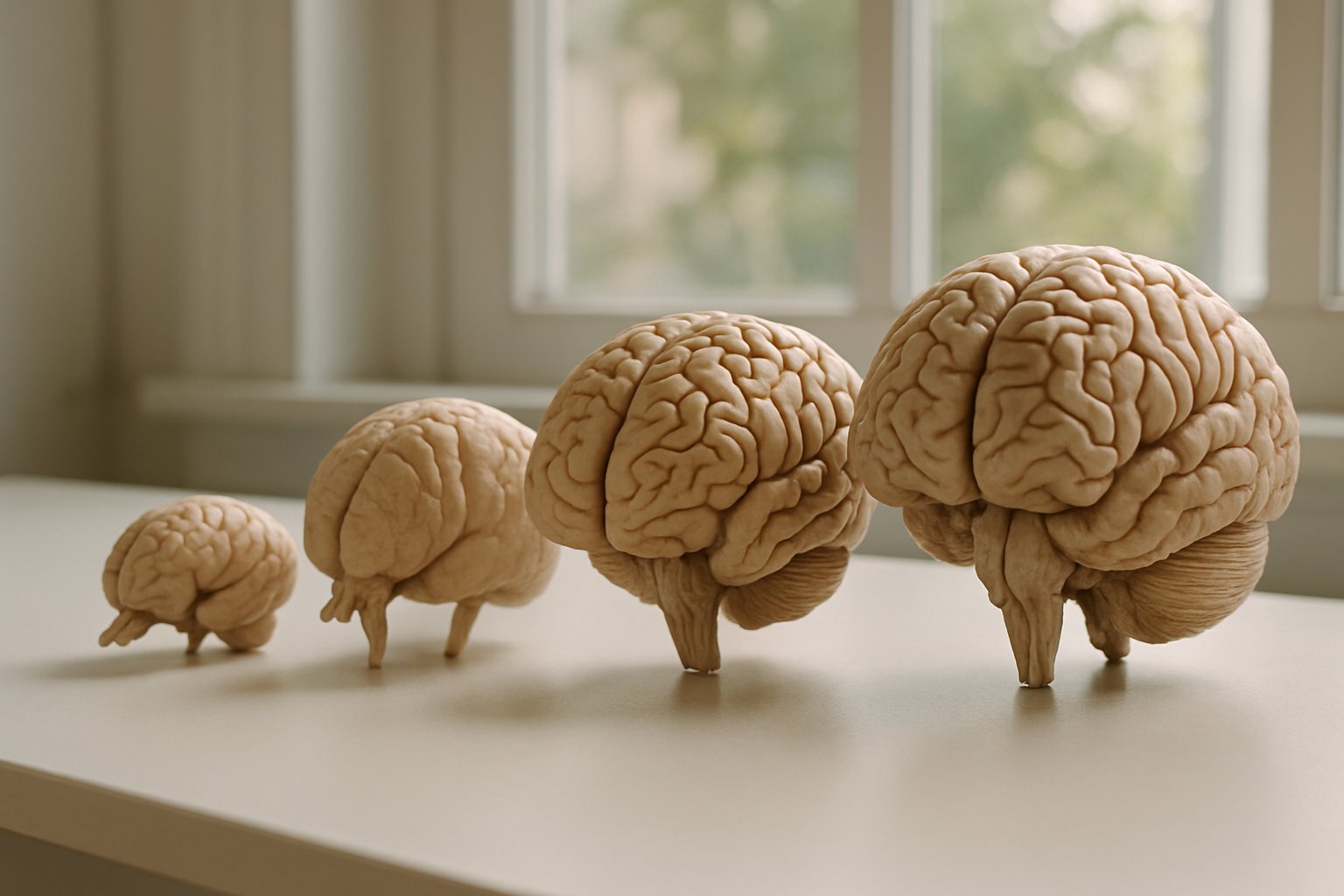
The race to decode Brain Evolution now taps powerful machine-learning pipelines. Moreover, researchers are moving beyond protein-coding comparisons. Instead, they mine regulatory DNA from 240 mammal genomes to predict tissue-specific enhancer activity. Consequently, the field gains unprecedented insight into how genetic switches shape neural complexity. Additionally, new experimental work confirms several predictions, tightening the loop between computation and bench science. This article unpacks key methods, findings, and future directions for Biological Research professionals tracking comparative neurogenomics.
AI Maps Regulatory Shifts
The Tissue-Aware Conservation Inference Toolkit, or TACIT, anchors the recent surge. Developed by the Pfenning group, TACIT trains convolutional networks on open-chromatin data. Subsequently, it predicts enhancer activity across aligned genomes. Therefore, scientists can infer cortex and cerebellum enhancers in species lacking functional assays. TACIT processed more than 400,000 candidate elements across 240 mammals, linking many to relative brain size.
Key Comparative Data Points
Numbers underscore the scale.
- 240 aligned mammal genomes fuel predictions.
- >400,000 enhancer candidates evaluated for activity.
- 3.3% of the human genome shows strong constraint across species.
- Several enhancers correlate with brain-size variation after phylogenetic correction.
These metrics position TACIT as a transformative tool for Brain Evolution studies. Nevertheless, prediction alone cannot prove causality. The next section explores trait association strategies.
These early statistics set a quantitative baseline. However, mapping traits demands deeper analysis.
Linking Enhancers And Traits
TACIT links predicted enhancer activity differences to phenotypes such as social vocalisation and relative cortex expansion. Furthermore, the models incorporate phylogenetic mixed effects to reduce shared-ancestry noise. In contrast, earlier approaches relied on raw conservation scores, missing tissue specificity. Using this refined framework, researchers spotlight enhancers near microcephaly genes. Brain Evolution appears tightly bound to regulatory tweaks rather than coding mutations.
A complementary trend leverages association databases. Consequently, predicted enhancers overlapping disease loci gain immediate translational value. Biological Research groups examining autism or epilepsy variants now cross-reference TACIT outputs. Moreover, conservation metrics help prioritise variants for functional assays.
These correlations illuminate candidate mechanisms. Nevertheless, functional proof remains essential. The next section shows how human accelerated regions deliver that validation.
Validating Human Accelerated Regions
Human Accelerated Regions, or HARs, shifted the narrative from prediction to demonstration. Yin Shen’s team used CRISPR interference and prime editing in human and chimpanzee neurons. Subsequently, they measured neurite growth and transcription factor occupancy. Several HAR variants altered enhancer activity roughly tenfold. Therefore, rapid sequence change translated into tangible developmental effects.
Notably, many validated HARs overlapped TACIT-highlighted enhancers. Consequently, Brain Evolution hypotheses gained empirical reinforcement. Shen summarised the impact succinctly: “These regions may have shaped advanced human neural connectivity yet increased disease risk.”
Functional confirmation narrows uncertainty. However, researchers also crave system-level models. Digital brain twins are emerging to meet that demand.
Building Digital Brain Twins
Stanford’s Andreas Tolias recently unveiled a neural network mirroring mouse visual-cortex responses. Moreover, the model predicts firing patterns to unseen images, matching in vivo recordings. Consequently, simulation offers a sandbox for hypothesis testing. MIT groups followed with a biomimetic architecture learning like animal brains.
These digital twins complement comparative genomics. While TACIT maps regulatory evolution, circuit twins test outcome plausibility. Therefore, integrating both approaches may clarify how enhancer divergence scales to network adaptation. Brain Evolution thus gains a multi-layered analytical stack.
Such integration unlocks training opportunities. Professionals can enhance their expertise with the AI Prompt Engineer™ certification. Equipped practitioners will bridge genomics and modeling workflows.
Platform convergence heralds practical benefits. Nevertheless, researchers must balance excitement with caution.
Opportunities And Caveats Ahead
Advantages appear clear. First, cross-species regulatory inference scales faster than wet-lab screens. Secondly, predicted enhancers often lie near clinically relevant genes. Moreover, endangered species lacking tissue samples still enter analyses.
However, limitations persist. Training data remain cortex-biased, leaving subcortical enhancers underrepresented. Additionally, phylogenetic confounds can still mask causal signals. Consequently, false positives may divert resources. Biological Research teams should plan tiered validation, from in vitro assays to animal models.
Balancing strengths and weaknesses will accelerate robust insights. The final section outlines strategic next steps.
Strategic Steps For Researchers
Research leaders can act immediately:
- Request TACIT datasets to shortlist high-confidence enhancers.
- Cross-link candidates with patient variant repositories.
- Design CRISPR screens focusing on conserved nucleotides.
- Integrate enhancer maps into digital twin training regimes.
- Seek interdisciplinary training through targeted certifications.
These actions tighten the prediction-validation loop. Furthermore, collaborative consortia can share tissue-specific chromatin data, improving model generalisability.
Collective progress depends on open resources and rigorous benchmarking. Consequently, Brain Evolution research will mature into a predictive, testable science.
Conclusion And Outlook
Machine-learning methods like TACIT now illuminate regulatory landscapes across 240 mammals, bringing Brain Evolution into sharp focus. Moreover, HAR experiments validate that enhancer changes can reshape neuronal development. Digital brain twins then translate sequence impacts into circuit behaviour. Nevertheless, careful validation remains imperative, and data gaps still hinder comprehensive coverage. Consequently, success will hinge on interdisciplinary teams combining computation, bench work, and robust certifications. Therefore, explore the linked credential and position your lab at the forefront of comparative neurogenomics.


