

AI CERTs
6 hours ago
AI Memory Market Faces Supercycle Amid Soaring Chip Demand
Memory prices are spiking worldwide. Analysts blame a relentless surge in AI server deployments. Consequently, suppliers and buyers now speak of an unfolding supercycle. The AI Memory Market sits at the center of this storm. TrendForce, Counterpoint, and IDC confirm contract and spot prices jumping 50% within months. Furthermore, Micron just posted record revenue and a 56% gross margin due to strong HBM demand. Meanwhile, hyperscalers have pre-booked capacity, leaving negligible inventory across commodity DRAM channels. Consequently, downstream OEMs fear sharp bill-of-materials hikes during 2026. This article dissects the forces, beneficiaries, and risks shaping this volatile landscape. It also outlines potential responses for procurement, strategy, and career development.
Surging Data Center Appetite
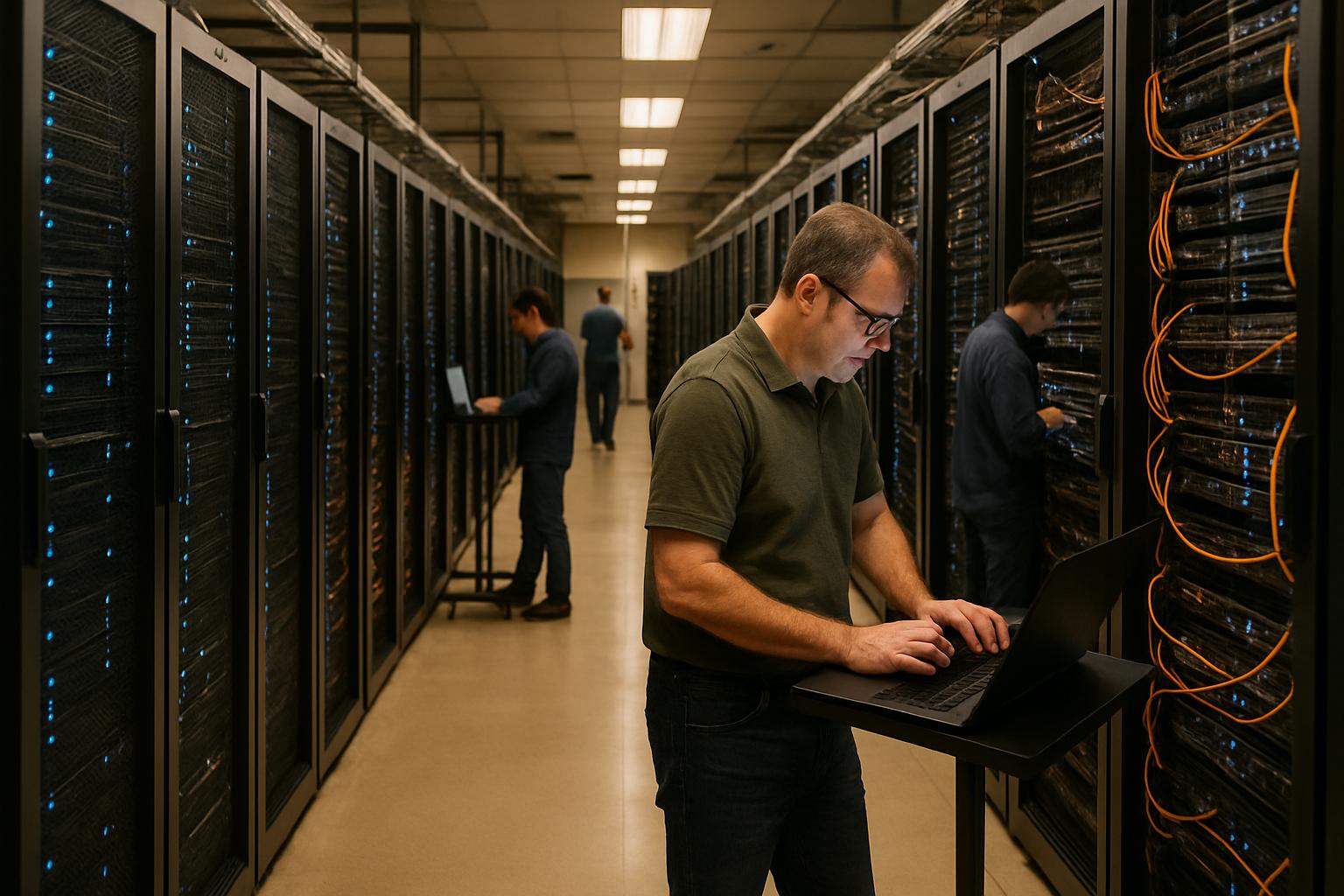
Cloud giants continue scaling generative AI clusters at unprecedented speed. Moreover, each Nvidia H100 node integrates up to 640GB of high-bandwidth DRAM. That footprint dwarfs conventional enterprise servers needing far less memory per socket. Therefore, aggregate DRAM requirements balloon as rack densities rise.
TrendForce estimates HBM demand grew 130% year-over-year in 2025. Additionally, the firm predicts another 70% jump through 2026. Contract prices for server DDR5 modules are tracking similar trajectories. In contrast, consumer DRAM supply is being diverted to lucrative AI allocations.
Micron CEO Sanjay Mehrotra called memory an "essential AI enabler" when announcing fiscal Q1 results. Consequently, suppliers prioritize HBM and server DRAM wafer starts over legacy products. The AI Memory Market thus experiences acute structural tightness early in the cycle.
Demand from hyperscalers has doubled critical HBM shipments within one year. Consequently, suppliers' margins have soared, leading into the next discussion of profits.
Suppliers Enjoy Sky Margins
Micron’s fiscal Q1 2026 revenue hit $13.64 billion within the AI Memory Market, smashing prior records. Furthermore, gross margin guidance for Q2 stands near 68%, up twelve points sequentially. Samsung and SK Hynix have not yet reported, yet analysts expect comparable boosts. Meanwhile, average selling prices for HBM3e exceed commodity DDR5 by double-digit multiples.
Higher margins empower manufacturers to expand capital expenditure aggressively. Consequently, new fab announcements center on advanced packaging lines and through-silicon-via stacking. However, meaningful wafer output will not arrive before 2027, according to TrendForce.
Investors celebrate, yet downstream buyers confront rising Semiconductor Costs and broader Hardware Inflation. The AI Memory Market remains skewed toward suppliers' pricing power until capacity stabilizes.
Suppliers currently convert constrained output into record profitability. Nevertheless, those profits create ripple effects felt by OEMs, our next focus.
Ripple Effects For OEMs
PC, smartphone, and automotive manufacturers already feel the squeeze. Moreover, spot DRAM prices inside the AI Memory Market rose 50% quarter-on-quarter by December 2025. Inventory days for some PC builders slipped below two weeks. Consequently, firms consider delaying refresh cycles or reducing memory configurations.
Counterpoint warns BOM increases could shave several points from consumer device gross margin. Hardware Inflation also risks forcing price hikes that dampen shipment growth. In contrast, premium AI workstations may absorb cost escalation through higher list prices.
- Server vendors negotiate multi-year contracts at elevated baselines.
- Console makers explore older DRAM variants to control Semiconductor Costs.
- Automotive suppliers prioritize safety chips over infotainment memory volumes.
OEMs face trade-offs between pricing, feature sets, and launch timing. Therefore, strategic forecasting is vital, as the following metrics reveal.
AI Memory Market Metrics
TrendForce forecasts Q1 2026 DRAM contract prices rising another 55% versus Q4. Moreover, Counterpoint models project 40% to 50% increases across most server modules. Spot HBM quotes reportedly exceed $400 per gigabyte, triple early 2025 figures.
- HBM YoY demand growth: 130%
- Projected 2026 HBM growth: 70%
- Estimated global DRAM inventory: 2 weeks
These statistics confirm sustained price pressure into 2026. Consequently, stakeholders seek both technical and financial mitigations, explored next.
Forecasts And Mitigation Paths
Market trackers envision the AI Memory Market staying tight for years barring a macro slowdown. Nevertheless, several levers could moderate Semiconductor Costs over time. First, capacity expansion plans by Samsung, SK Hynix, and Micron may add supply by 2027. Second, architectural shifts like Nvidia's LPDDR adoption redistribute wafer demand.
Software efficiency also matters; sparsity and quantization reduce required memory per model. Additionally, traders expect some buyers to delay orders once spot peaks. However, analysts caution supercycle psychology can extend rallies beyond fundamentals.
Professionals can enhance their expertise with the AI Prompt Engineer™ certification. Moreover, certified engineers help enterprises optimize models and memory footprints efficiently. Such skills directly influence AI Memory Market procurement strategies.
Forecasts suggest supply relief no earlier than 2028 for certain segments. Consequently, proactive mitigation remains essential, as the next outlook illustrates.
Investment And Certification Upside
Investors gravitate toward memory equities due to extraordinary operating leverage. Furthermore, vendors channel profits into advanced nodes, benefiting long-term innovation. Meanwhile, talent possessing prompt engineering or packaging expertise commands premium salaries. Therefore, individuals pursuing certifications gain competitive positioning despite Hardware Inflation challenges. The AI Memory Market values cross-disciplinary professionals who understand silicon economics and model optimization.
Capital and skills investment both cushion organizations from volatile component expenses. Nevertheless, extended timelines still demand realistic capacity planning, discussed next.
Long-Term Capacity Timeline View
New megafabs typically require three years from ground-breaking to volume output. Moreover, substrate and advanced packaging plants add further lead-time layers. Consequently, analysts believe meaningful HBM supply expansion arrives during 2028.
Regulatory approvals, equipment lead times, and skilled labor shortages all slow progress. In contrast, demand growth may decelerate if model efficiency gains compound. However, few expect outright contraction given continued AI adoption across industries.
Supply additions therefore trail demand expectations by several years. Consequently, elevated pricing persists, bringing us to final conclusions.
The AI Memory Market stands in a historic supercycle driven by voracious AI workloads. Suppliers enjoy record margins, yet OEMs grapple with Hardware Inflation and mounting Semiconductor Costs. TrendForce and Counterpoint expect 40% to 60% further price gains in early 2026. Therefore, enterprises must blend long-term contracts, architectural efficiency, and talent development. Professionals pursuing certifications like the linked AI Prompt Engineer™ credential can deliver immediate value. Consequently, well-informed strategies today will determine competitiveness as pricing turbulence continues. Act now to hedge exposure, upskill teams, and secure resilient supply chains.


