

AI CERTS
2 hours ago
AI Malware Agents: Disabling Enterprise Antivirus in 2026
Moreover, it highlights how professionals can strengthen defenses and career prospects simultaneously. The following sections keep every sentence concise, actionable, and technically precise. Readers will gain a clear map of attack chains, detection gaps, and remediation priorities. Additionally, all guidance aligns with current Microsoft and vendor advisories. Nevertheless, continuous monitoring remains essential because techniques evolve weekly. Therefore, leadership must invest in skilled staff and proactive tooling.
AI Malware Agents Surge
Public proof-of-concept releases appeared rapidly during 2025. However, enterprise defenders noticed the biggest shift when AI Malware Agents integrated those concepts into turnkey toolkits. Defendnot tricked Windows Security Center into believing another antivirus managed the host. Consequently, Microsoft Defender entered passive mode without user awareness. Meanwhile, EDR-Freeze suspended core EDR processes by abusing the WerFaultSecure error handler. Attackers welcomed a stealthier alternative to noisy process termination. Cybersecurity analysts confirm many incidents begin seconds after such exploits disable monitoring agents. A single Security Breach can then spread laterally using harvested passwords.
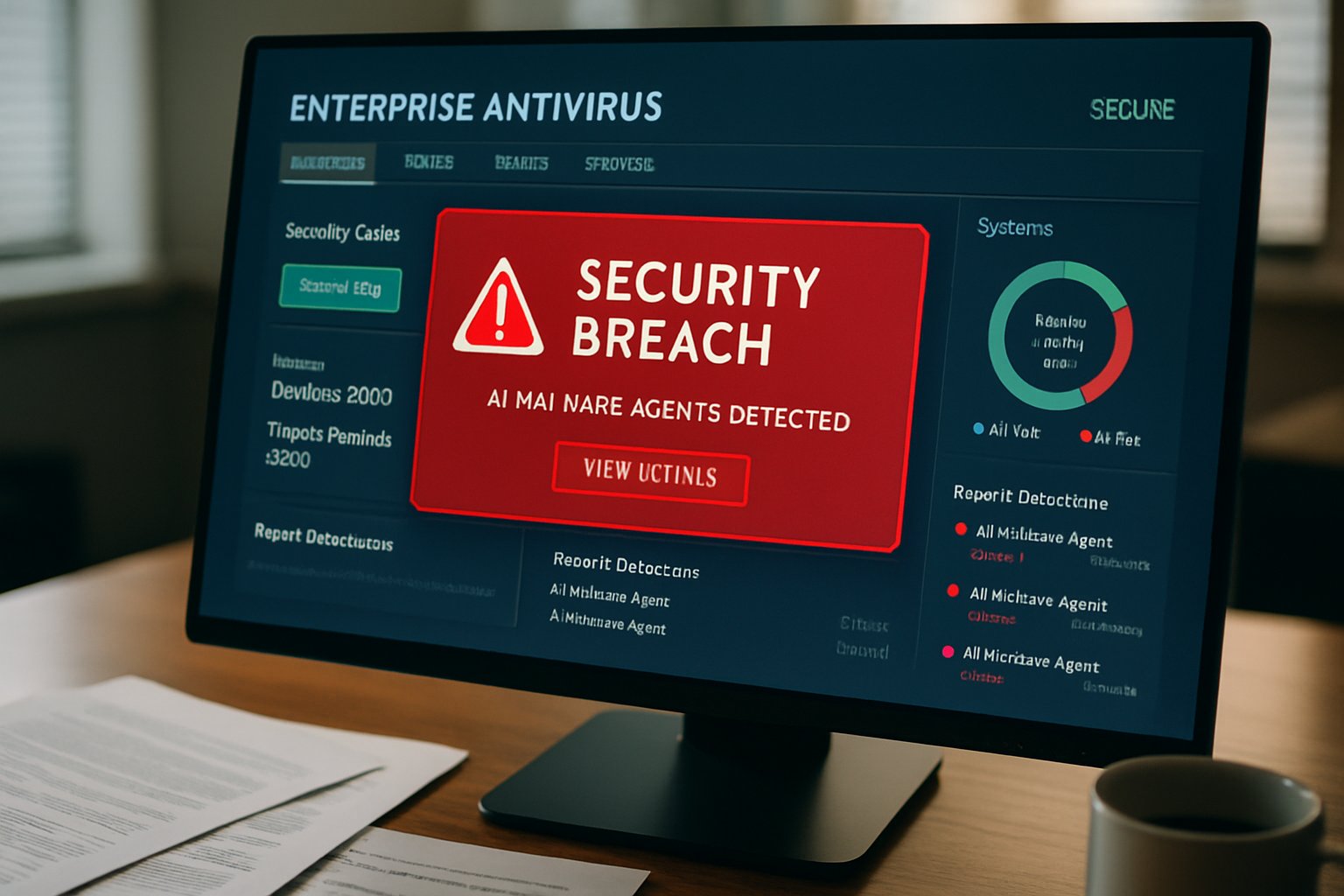
- 70% of 2023 Sophos IR engagements involved ransomware.
- Community Sigma rules emerged within weeks of EDR-Freeze disclosure.
- BYOVD techniques remain in active ransomware playbooks across sectors.
These data points illustrate why endpoint defenses face unrelenting pressure. Therefore, understanding the blind spots created has become essential.
Endpoint Blind Spots Rise
Windows Security Center decides which antivirus product controls real-time protection. In contrast, attackers leverage the same API to register phantom products. Consequently, Defender yields authority and stops scanning memory or files. Protected Process Light intends to shield security processes from tampering. However, EDR-Freeze employs WerFaultSecure to suspend those processes without crashing them. Such exploits run entirely in user mode, avoiding kernel driver requirements.
Moreover, BYOVD attacks load signed yet vulnerable drivers to kill protected services outright. Cybersecurity reports link RansomHub and other crews with multiple BYOVD campaigns. Each Security Breach underscores the urgent need for layered telemetry. Stolen passwords remain the simplest path to local administration. AI Malware Agents exploit those design decisions ruthlessly.
Endpoints can appear healthy while defenders receive no alerts. Subsequently, research findings offer deeper context.
Recent Research Findings Overview
May 2025 saw Defendnot released by researcher es3n1n. Furthermore, September delivered the EDR-Freeze proof of concept from TwoSevenOneThree. Both projects quickly attracted thousands of GitHub stars and widespread replication. Microsoft updated Defender signatures within days to flag Defendnot binaries. Similarly, hunting communities published Sigma rules detecting WerFaultSecure access patterns.
Nevertheless, no universal operating-system patch blocks EDR-Freeze today. Sophos incident reports reveal ransomware comprised 70% of 2023 engagements. Therefore, adversaries invest heavily in techniques that delay detection. Exploits that neutralize sensors directly support that strategic goal. Each disclosed tool spurred at least one reported Security Breach within weeks. Repositories tagging AI Malware Agents grew by 300% within a month.
PoC availability accelerates weaponization across the underground economy. Next, we examine how attackers orchestrate the steps.
Attack Technical Playbook Steps
WSC Spoofing Method Details
Attackers start with local administrator privileges gained through phishing or weak passwords. They register a fake antivirus via undocumented WSC calls. Consequently, Defender transitions into passive mode automatically. Meanwhile, scripts disable update schedules to avoid pattern signature refreshes. The process completes within seconds and leaves minimal forensic traces. However, EDR-Freeze deepens the compromise further. These AI Malware Agents then persist using scheduled tasks.
EDR Freeze Technique Explained
EDR-Freeze leverages MiniDumpWriteDump to pause protected processes without termination. Moreover, the code executes from WerFaultSecure, a trusted Windows component. Security controls interpret the action as legitimate crash reporting. Therefore, watchdog services fail to restart the engines. Subsequently, AI Malware Agents begin network discovery, data exfiltration, and ransomware staging unhindered. Exploits can then deploy BYOVD drivers for persistence and deeper kernel reach. These steps neutralize visibility across host and agent layers. Consequently, defenders need prioritized countermeasures.
Defender Countermeasure Priorities Key
Experts recommend layered actions that blend policy, hardening, and detection.
- Enforce least privilege to block admin execution of AI Malware Agents.
- Enable vendor tamper protection settings across every endpoint.
- Activate HVCI and maintain blocklists for vulnerable drivers.
- Collect detailed process events in a centralized SIEM.
- Identify running AI Malware Agents activity via memory analytics.
- Rotate privileged passwords after every significant change event.
Furthermore, monitor WerFaultSecure calls targeting MsMpEng using community Sigma rules. In contrast, hunt for sudden Defender state changes within Windows logs. Additionally, staff should rehearse incident simulations that include agent disablement scenarios. Cybersecurity maturity improves when playbooks assume partial sensor blindness. These priorities close gaps before attackers exploit them. Nevertheless, long-term planning remains indispensable. Cybersecurity frameworks like NIST emphasize proactive validation of controls.
Certification Upskill Pathways Guide
Skill development empowers defenders to implement and maintain advanced controls. Professionals can enhance expertise with the AI Ethical Hacker™ certification. Moreover, course modules address Windows internals, exploits, and ransomware tradecraft. Consequently, graduates understand both prevention engineering and live response tactics. Strong skills turn guidance into daily operational reality. Subsequently, organizations require strategic roadmaps to maintain momentum.
Strategic Security Roadmap Ahead
Leadership should integrate endpoint, network, and identity telemetry to counter evasion. Therefore, an agent outage will not fully blind the SOC. Additionally, require multi-factor authentication for administrative passwords across management systems. When AI Malware Agents succeed, layered logging must fill gaps. Quarterly tabletop exercises must reflect evolving AI Malware Agents capabilities.
Moreover, vendors should accelerate hardening of undocumented APIs and release transparent advisories. Consequently, customers can patch quickly and reduce dwell time. Roadmaps connect tactical fixes with sustainable governance. Finally, let us recap essential insights. A single unnoticed Security Breach can erase months of compliance effort.
Modern defenders face relentless innovation from AI Malware Agents and human adversaries alike. However, public research and community collaboration are accelerating protective countermeasures. Consequently, organizations deploying least privilege, tamper protection, and continuous hunting reduce breach impact. Moreover, skilled teams armed with adaptive playbooks recover faster after inevitable mistakes.
Professionals should pursue the linked AI Ethical Hacker™ certification to deepen offensive and defensive mastery. Act now, refine controls, and deny attackers the silence they crave. Therefore, your Cybersecurity posture will evolve from reactive cleanup to proactive resilience. Ultimately, constant learning remains the strongest shield in a volatile threat landscape.


