

AI CERTs
5 hours ago
AI Leadership Public Rivalry Peaks at Modi Summit Handshake Snub
Camera flashes froze at Bharat Mandapam on 19 February 2026. The India AI Impact Summit crowd anticipated a unifying photo with global luminaries. However, the scene instead delivered a viral study in corporate tension.
Sam Altman and Dario Amodei, once colleagues, hesitated to touch palms beside Prime Minister Narendra Modi. Their brief awkward gesture fueled online commentary within minutes. Moreover, commentators framed the freeze as shorthand for escalating commercial rivalry between top model labs. This article unpacks that moment, the money behind the stage, and India’s strategic ambitions. Consequently, executives worldwide gained a front-row lesson in perception, politics, and positioning. The analysis navigates facts, numbers, and leadership implications while spotlighting AI Leadership Public Rivalry.
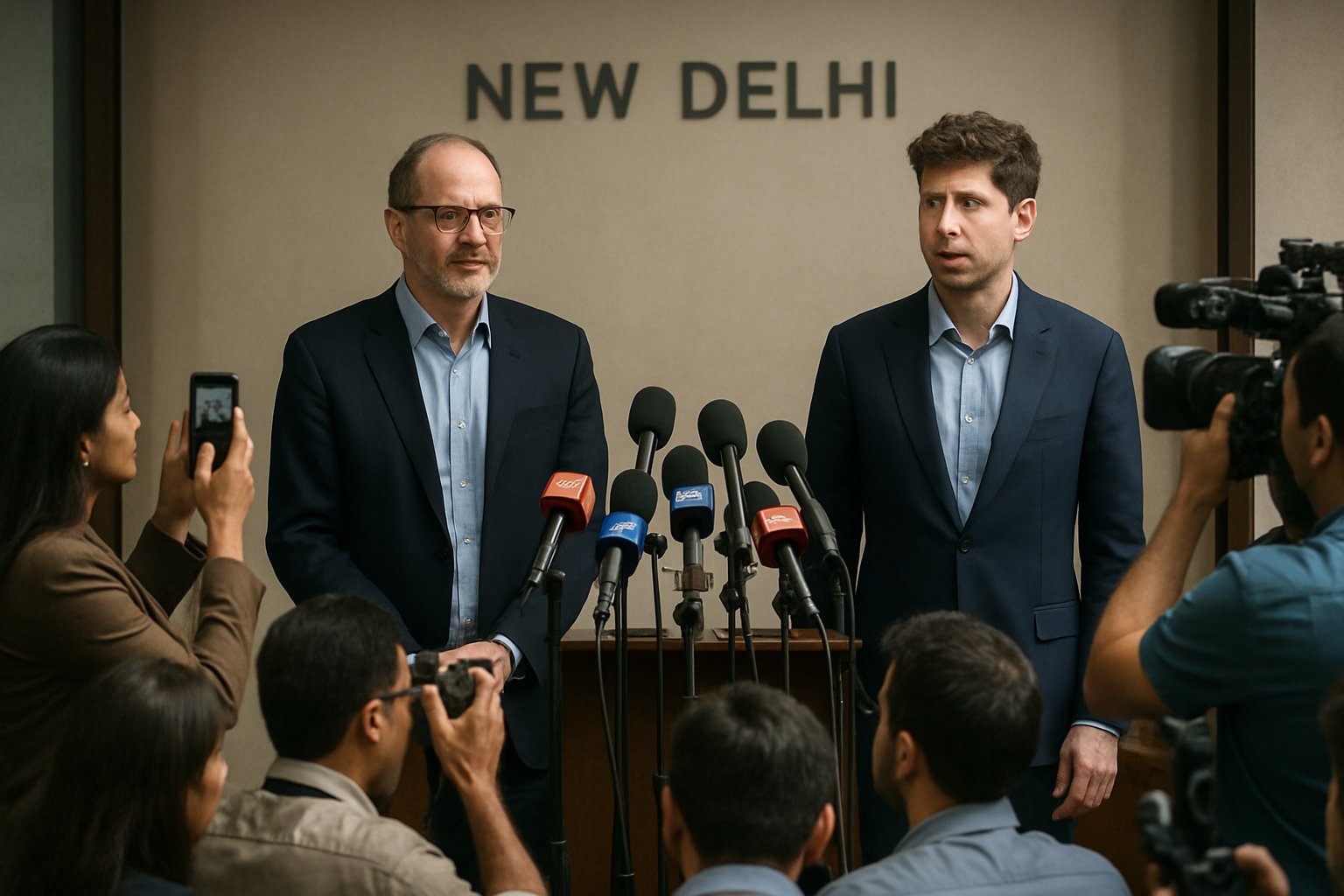
Viral Summit Moment Scene
Eyewitness video shows Modi inviting leaders to clasp hands for a unity pose. However, Altman and Amodei lifted separate fists, avoiding a direct handshake. The unexpected pause illustrated AI Leadership Public Rivalry and echoed across social networks for hours.
In contrast, other executives like Sundar Pichai and Satya Nadella locked fingers without hesitation. Journalists immediately dubbed the freeze a microcosm of larger laboratory hostilities. He later told Associated Press he felt confused about stage directions, not hostile.
Meanwhile, Anthropic declined comment, adding further intrigue. TechCrunch analysts compared the moment to a geopolitical handshake misfire at past summits. Moreover, the clip sharpened public awareness of policy, safety, and monetization debates within generative AI. The lingering image became stock footage for every television recap that evening in New Delhi.
The stage freeze distilled months of competitive strain into a single photo. Observers now read every gesture between the two founders as strategic messaging. Consequently, understanding the rivalry’s origin is essential before judging its latest handshake headline.
Rivalry Origins And Timeline
OpenAI and Anthropic share DNA from earlier research collaborations in San Francisco. However, philosophical disagreements about deployment pace and safety controls split the teams in 2019. Amodei departed OpenAI and co-founded Anthropic with several researchers the following year.
Altman stayed and pursued rapid commercialization, including partnerships with Microsoft. In contrast, Anthropic prioritized alignment research, stressing cautious release cycles. The divergence remained polite until February 2026’s Super Bowl advertising salvo.
Moreover, Anthropic mocked potential ads inside chatbots, positioning Claude as cleaner. Altman publicly labeled the campaign dishonest, escalating marketing warfare. Subsequently, pundits framed the dispute as an AI Leadership Public Rivalry over user trust. The Bharath Mandapam handshake therefore arrived amid freshly reopened wounds.
The origin story reveals ideological and economic factors, not mere personal spite. Each leader now embodies competing philosophies on safety, speed, and revenue. Meanwhile, record investment pledges at the summit amplified the competitive stakes.
Record Investment Pledges Announced
Indian ministers touted over $250 billion in AI infrastructure pledges during the five-day event. Furthermore, Reliance alone floated a $110 billion multi-year data center blueprint. Adani Group followed with reports of a $100 billion commitment spanning chips and subsea cables.
Google and Microsoft promised multibillion-dollar hubs for model training and skilling. Consequently, New Delhi declared the summit a watershed for digital self-reliance. Observers linked the cash surge to the unfolding AI Leadership Public Rivalry between major labs.
- Rs 10 lakh crore plan by Reliance (US$110B)
- Adani Group target of US$100B over decade
- Google pledged US$15B for AI hub
- Microsoft reinforced multi-year skilling and cloud spend
Independent economists advised caution, noting that many figures remain memoranda rather than signed contracts. Nevertheless, the headline totals indicate growing confidence in India’s compute market. The OpenAI chief praised the momentum, calling India a critical frontier for responsible scale.
The pledges promise transformative data center capacity across India’s provinces. Yet actual execution will hinge on GPUs, power, and permits. Therefore, monetization strategies now influence which projects receive near-term funding.
Monetization Strategy Clash Intensifies
Subscription models and advertising models dominate today’s generative AI debate. However, the Super Bowl commercial pushed the discussion into mainstream households. Anthropic claimed ads erode trust, aligning with its safety-first branding.
OpenAI countered that free tiers with optional ads expand access. Consequently, investors gauged which approach secures recurring revenue without alienating regulators. The handshake image reinforced perceptions that money, not technology, drives the latest disagreement.
Moreover, New Delhi entrepreneurs watched closely, hoping clarity guides local product design. Altman signaled openness to limited ads if aligned with user benefit. In contrast, Amodei stuck to pure subscriptions, citing higher safety incentives. The diverging blueprints epitomize AI Leadership Public Rivalry in the business model arena.
Monetization choices intertwine with safety narratives and investment flows. Leaders must evaluate how revenue design shapes model behavior and public perception. Subsequently, India’s sovereign ambitions complicate the rivalry further.
India's Sovereign AI Vision
Prime Minister Modi used the summit to unveil the MANAV framework for trustworthy sovereign models. Furthermore, officials emphasized multilingual data sets and open governance sandboxes. The approach aims to serve the Global South while securing domestic economic gains.
Meanwhile, foreign firms must align with residency rules for sensitive datasets. New Delhi policymakers promised expedited clearances for projects supporting the mission. Experts warned that chip shortages could stall sovereign ambitions despite large checks.
Nevertheless, partnerships with TSMC and domestic fabs appear on the horizon. The certification landscape also evolves to prepare executives for complex governance duties. Professionals can deepen expertise through the AI Executive Essentials™ certification. Consequently, talent readiness becomes as vital as hardware supply.
India’s plan blends policy, capital, and capacity into an ambitious roadmap. Execution success will influence global balances among competing labs. Nevertheless, unresolved risks demand balanced assessment.
Risks And Next Steps
Analysts caution that pledged billions may never materialize without binding contracts. In contrast, skeptics highlight environmental costs of massive data centers. Moreover, supply chains for GPUs remain constrained by geopolitics and export controls.
The high-profile handshake saga risks distracting leaders from these practical hurdles. Consequently, transparent milestones and public dashboards could sustain accountability. Altman hinted at quarterly progress disclosures during closed-door sessions.
Amodei advocated independent audits of safety metrics before scaling user counts. Additionally, Indian regulators promised draft rules on ad labeling inside assistants. The primary lesson for executives remains clear: optics and substance now intertwine.
Therefore, monitoring AI Leadership Public Rivalry offers insight into policy velocity and market shifts. Persistent rivalry will likely accelerate innovation but also amplify scrutiny. Clear governance and certified skillsets become strategic differentiators. Finally, we distill actionable leadership lessons.
The Modi summit spotlighted technology drama, political theater, and unprecedented investment intent. However, behind each headline lies complex execution risk and human ego. The awkward handshake crystallized AI Leadership Public Rivalry yet again for a global audience.
Moreover, record pledges indicate capital’s hunger for transformative compute capacity. Executives must track monetization strategies, safety debates, and sovereign mandates in parallel. Consequently, cultivating accredited knowledge becomes non-negotiable.
Leaders should explore the AI Executive Essentials™ certification to steer informed agendas. The rivalry story continues; stay tuned, stay certified, and stay strategic.


