

AI CERTS
3 hours ago
AI Infrastructure’s Global Reality: Wired Analysis
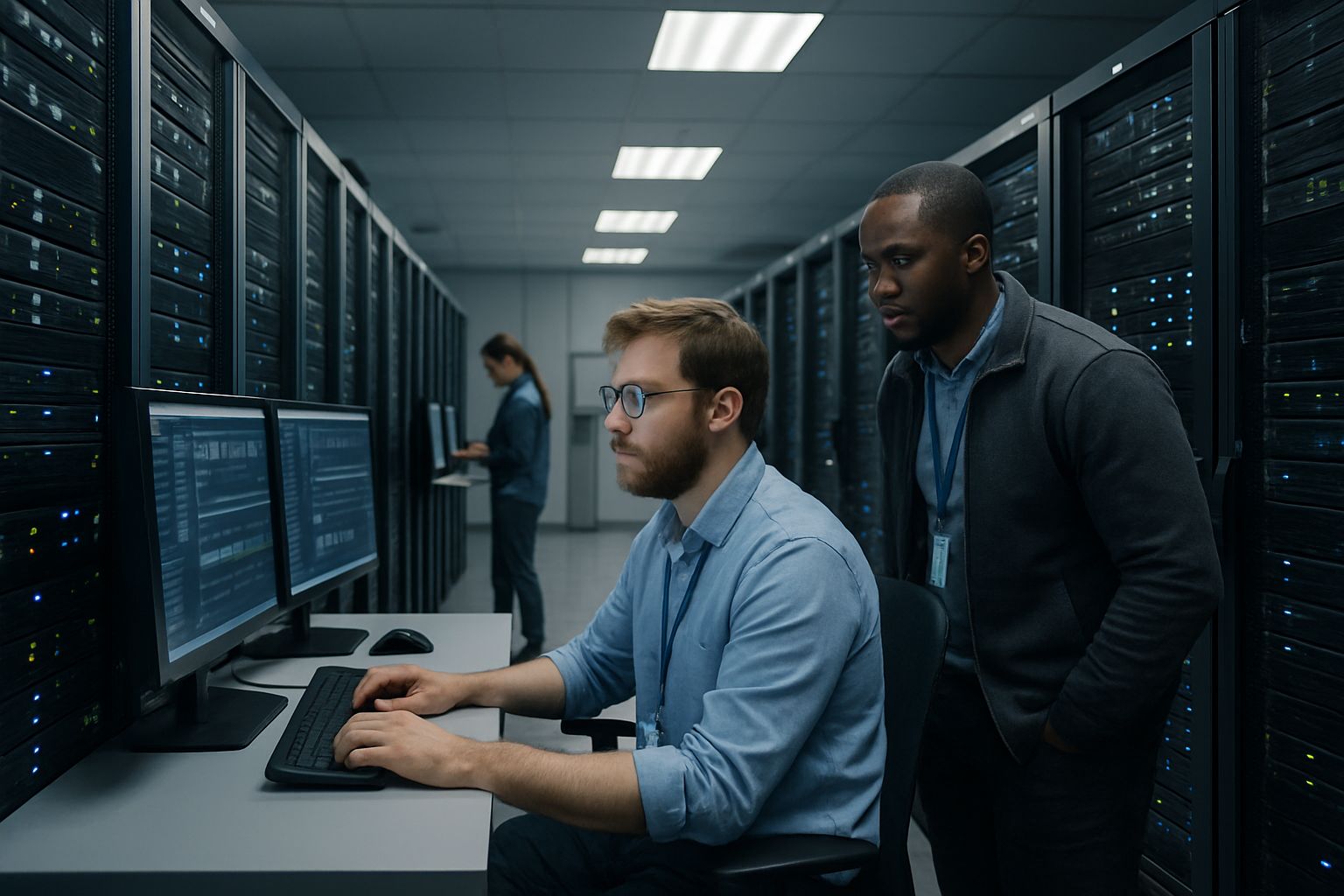
Meanwhile, Wired reporting, academic papers, and market filings reveal contrasting signals.
We synthesize those stories with fresh analysis for technical decision makers.
Moreover, you will see why ballooning demand collides with power, labor, and financing limits.
Therefore, understanding both opportunities and risks is essential before approving another rack or bond issue.
Hyperscale Spending Surge Overview
Wired estimates that Microsoft, Alphabet, Meta, and Amazon will invest about $370 billion in 2025 alone.
Furthermore, that figure represents nearly double combined 2023 capital outlays.
IEA trackers already place installed data-centre capacity near 110 gigawatts.
Consequently, procurement teams report multi-year GPU orders and land grabs near cheap substations.
Sam Altman summarized demand bluntly: “The world needs much more compute.”
Forrest Norrod at AMD echoed that optimism during a recent deep-dive briefing.
These spending surges illustrate the second Global Reality: capital still flows despite macro volatility.
However, limitations discussed next could temper headline momentum.
Accelerated budgets underscore AI’s perceived inevitability.
Nevertheless, hardware deals now dominate competitive narratives.
Now we examine how chip agreements shape that narrative.
Global Chip Deals Intensify
OpenAI shocked suppliers by committing to six gigawatts of AMD accelerators through 2030.
Additionally, the lab negotiated an option for roughly 160 million AMD shares.
Wired framed the arrangement as a watershed bet on prolonged demand.
In contrast, Nvidia counters with end-to-end platform pitches and sovereign AI rhetoric.
Jensen Huang told Wired that AI now resembles power grids and telecom cables.
Consequently, governments jockey for guaranteed chip supply in wider industrial strategies.
This competition represents a third Global Reality where hardware access equals geopolitical leverage.
However, soaring orders pressure manufacturing nodes and mineral chains.
Chip contracts reveal confidence yet magnify procurement exposure.
Moreover, financing structures deserve closer attention.
Therefore, the next section explores emerging capital vehicles.
Financing Models Under Scrutiny
Traditional balance sheets can no longer shoulder every hyperscale build.
Therefore, developers increasingly rely on special-purpose vehicles and private-credit pools.
Financial Times stories calculate more than $120 billion migrating into such channels.
Meanwhile, bond investors debate whether returns justify unfamiliar risk profiles.
In contrast, advocates argue off-balance structures widen participation and accelerate deployments.
Our deep-dive analysis finds higher refinancing pressure once teaser rates expire.
The numbers expose a fourth Global Reality: cheap capital is conditional, not permanent.
Consequently, stalled projects could cascade through credit markets.
This tension underscores the overarching Global Reality linking money markets to machine learning.
Creative finance enables growth yet seeds systemic fragility.
Nevertheless, even funded sites face physical constraints.
Next, we assess energy bottlenecks shaping deployment timetables.
Emerging Energy Limits Surface
Data-centre requests now overwhelm utility interconnection queues across several US states.
Moreover, construction managers cite shortages of high-voltage electricians and chilled-water technicians.
IEA modelling suggests electricity demand from data centres could double before 2030.
Consequently, some counties have paused permitting until water studies conclude.
News stories show Nevada deferring projects after drought projections worsened.
Jonathan Koomey warns that efficiency gains cannot offset unlimited scale.
These frictions highlight a fifth Global Reality where electrons become the ultimate currency.
However, sustainability ambitions complicate quick fixes.
Power and water shortages threaten delivery schedules.
Additionally, community resistance now shapes planning politics.
The sustainability debate intensifies in the following section.
Sustainability Versus Growth Debate
Sustainability debate exposes another Global Reality: growth now faces ecological constraints.
Academic work positions AI infrastructure as an environmental case study in material consumption.
MDPI research equates cooling water footprints with mid-size towns.
Furthermore, Scope-3 emissions from chip fabrication amplify hidden impact.
Industry leaders counter that larger models enable greener inference per query through scale efficiencies.
Nevertheless, critics note absolute energy still rises, diluting relative gains.
Wired deep-dive features document solar and wind procurement gaps.
Balancing these views presents a sixth Global Reality of intertwined technical and ecological imperatives.
Therefore, skill development in energy-aware design becomes essential.
- Current data-centre electricity share: 1.5–1.8% of global load.
- Projected share by 2030: potentially above 3% under aggressive scenarios.
- Average facility PUE target: 1.1 for next-generation liquid cooled halls.
- Water usage per 1 MW site: up to 25 million litres annually.
These statistics quantify the impact challenge confronting architects.
Consequently, talent must integrate environmental metrics into design choices.
The final section outlines strategic paths forward.
Strategic Paths Forward Roadmap
Enterprises cannot influence grid physics, yet they can optimize workloads and siting.
In contrast, policy makers can accelerate substations and renewables through streamlined approvals.
Moreover, collaborative procurement pools reduce stranded capacity risk among mid-tier players.
Professionals can enhance their expertise with the AI+ Quantum Specialist™ certification.
Such credentials foster fluency across finance, energy, and silicon domains.
Furthermore, shared taxonomies speed executive alignment on trade-offs.
Collectively, these measures address the seventh Global Reality of constrained abundance.
Nevertheless, continuous monitoring and flexible contracts remain indispensable.
Roadmaps reveal momentum alongside uncertainty.
Therefore, leaders must balance velocity with diligence.
The conclusion summarizes actionable insights.
Conclusion And Outlook Summary
AI infrastructure expansion is neither unstoppable nor illusory.
Instead, it reflects a layered Global Reality shaped by capital, silicon, and electrons.
However, hyperscalers still plan record spending, while regulators debate sustainability thresholds.
Consequently, professionals must watch financing structures, supply chains, and community resistance.
Environmental impact metrics will decide site approvals.
In contrast, inaction will expose portfolios to stranded assets and reputational damage.
Subsequently, data-informed governance can align fiscal discipline with climate goals.
Therefore, stakeholder collaboration remains vital for durable, responsible growth.
Moreover, continuous learning, including certifications, equips teams to convert risks into advantage.
Act today by reviewing your roadmap and pursuing the linked certification to stay competitive.


