

AI CERTS
2 hours ago
AI Infrastructure Engineering Drives Delta Forge Expansion
However, observers note that scale alone cannot satisfy hyperscalers without rigorous AI Infrastructure Engineering. The discipline merges electrical, mechanical, and software design to convert raw megawatts into usable Compute within months. This article examines how AI Infrastructure Engineering guides Applied Digital’s rapid expansion, highlighted by recent groundbreakings. Moreover, we assess financing tactics, community reactions, and operational risks that will shape future deployments. Industry executives and local officials share insights that illuminate both opportunity and uncertainty. Finally, professionals will gain pointers for upskilling and certification.
Race For AI Power
Energy analysts at the IEA project that global data-center electricity use could double by 2030. Therefore, hyperscalers scramble to pre-lease capacity before transmission queues become clogged. Meanwhile, Applied Digital positions its AI Factory template as a repeatable answer for this surge. AI Infrastructure Engineering disciplines enable tighter power usage effectiveness, targeted at 1.18 for Polaris Forge 2. Such efficiency matters because every percentage point saved frees megawatts for Compute rather than fans and pumps. Cutting-edge AI Infrastructure Engineering will thus dominate site selection debates.
The macro data confirm explosive demand. Consequently, engineering prowess has become a strategic differentiator. Against that backdrop, Delta Forge now takes center stage.
Delta Forge Campus Details
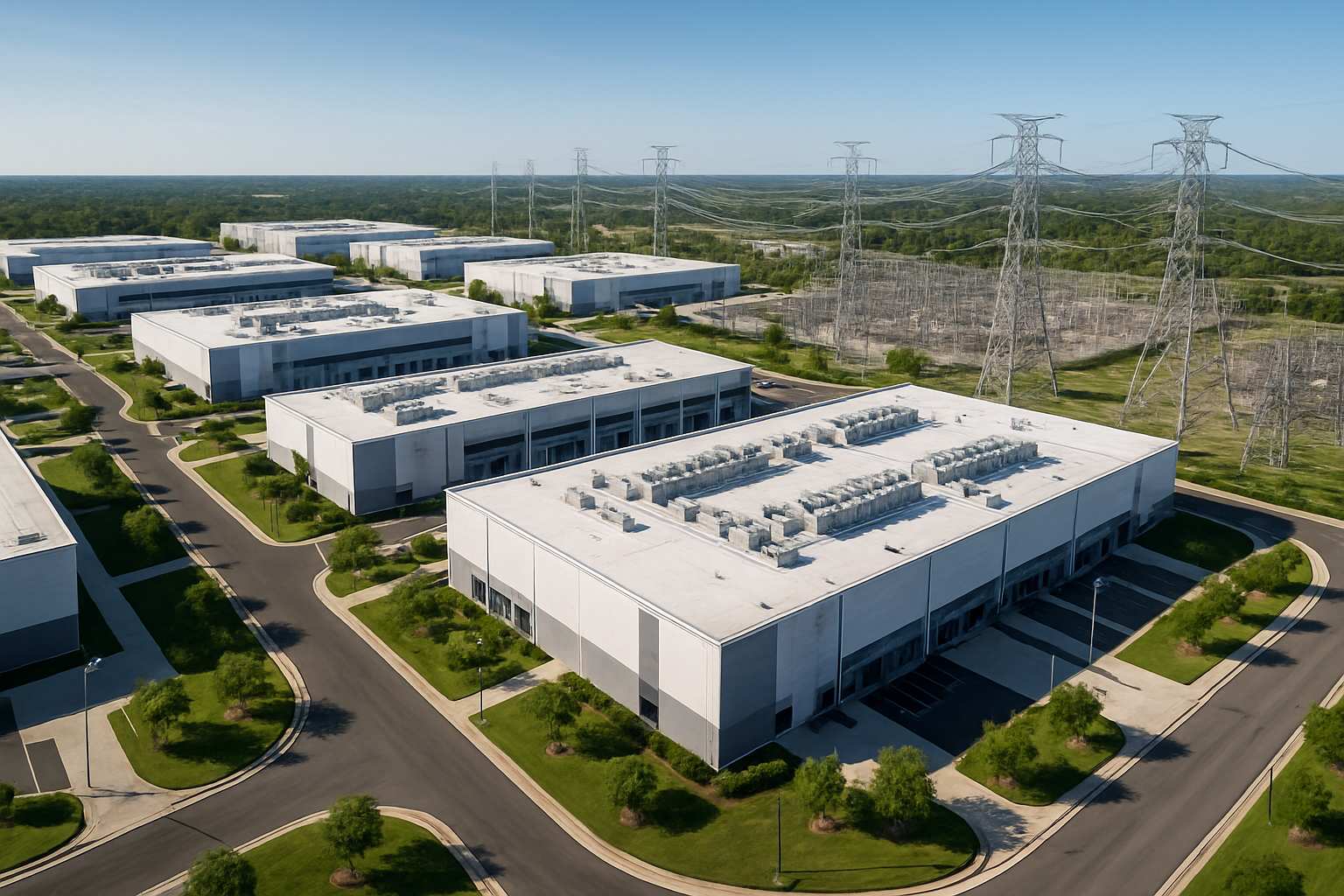
On 22 January 2026 the company broke ground on Delta Forge 1, its largest southern site yet. Initial design calls for 430 MW of utility power feeding two 150 MW buildings. Additionally, the blueprint reserves more than 500 acres for future expansion. Robust AI Infrastructure Engineering principles underpin the waterless cooling approach adopted for the campus. Management targets mid-2027 operations, citing lessons learned from earlier AI Factory rollouts. Nevertheless, construction crews must synchronize substation upgrades, waterless cooling equipment, and modular racks.
Delta Forge 1 could deliver up to 300 MW of critical IT capacity quickly. However, execution timelines remain tight because utility interconnections often slip. Polaris Forge projects illustrate both challenges and momentum.
Polaris Projects Gain Speed
Applied Digital started Polaris Forge 1 in 2022 and energized the first 100 MW building last November. Subsequently, CoreWeave leased an additional 150 MW, pushing contracted revenue expectations past $11 billion. October 2025 brought a 200 MW, 15-year lease at Polaris Forge 2 with an unnamed hyperscaler. Moreover, the lease could generate about $5 billion, underscoring strong tenant appetite. AI Infrastructure Engineering again proved decisive; liquid cooling and prefabricated skids compressed delivery cycles.
Polaris milestones validate Applied Digital’s speed narrative. Consequently, investors reward the company with cheaper capital. Financing merits closer examination.
Financing Model Underpinning Growth
Traditional data-center builds demanded heavy equity, slowing rollouts. In contrast, the company pairs preferred equity with senior debt arranged by Macquarie. Therefore, management retains majority site ownership while outsiders fund construction drawdowns. Sound AI Infrastructure Engineering modeling informs leverage levels and draw schedules.
Preferred Equity Funding Strategy
Preferred tranches carry fixed dividends, aligning with long-term lease cash flows. Furthermore, covenant light structures give flexibility if Compute demand shifts. Quarterly filings show hundreds of millions already deployed, yet billions remain available.
The structure lowers weighted average capital costs significantly. However, leverage still magnifies schedule risk. Community and grid factors amplify those risks.
Grid And Community Balance
IEA data predict rising U.S. electricity strain from AI workloads. Therefore, utilities near Delta and Polaris must reinforce lines and transformers quickly. Effective AI Infrastructure Engineering also addresses acoustic dampening demanded by residents. Nevertheless, residents worry about noise, traffic, and undisclosed environmental studies. Town halls in Harwood and Ellendale feature calls for independent water audits despite near-zero claims. Meanwhile, state officials emphasize 200 anticipated full-time jobs at Delta Forge 1.
- Pros: high wages, improved tax base, workforce training grants
- Cons: grid congestion, environmental scrutiny, tenant concentration
Stakeholders acknowledge both upside and externalities. Consequently, transparent engagement will influence permit timelines. Technical teams must also plan for future uncertainty.
Engineering Outlook And Risks
Future phases will rely on even denser GPU clusters achieving greater Compute per rack. Moreover, AI Infrastructure Engineering must adapt cooling loops to forthcoming 1000-watt chips. Liquid sub-mergence and new dielectric fluids appear promising yet raise maintenance complexity. In contrast, power procurement could become the real bottleneck if regional generation lags. Subsequently, regulators may prioritize renewable integration to offset load growth. Professionals can enhance expertise through the AI Engineer™ certification.
Engineering innovation will decide which operators thrive. However, disciplined execution remains non-negotiable. The story now turns to results.
The accelerated campus pipeline reflects market hunger for optimized AI Infrastructure Engineering. Delta Forge 1 and Polaris sites together promise more than one gigawatt of future Compute. Meanwhile, preferred equity and hyperscaler leases mitigate capital intensity yet amplify schedule exposure. Moreover, community dialogue and grid coordination will shape ultimate success. Professionals watching this space should track construction milestones, utility filings, and cooling breakthroughs. Consequently, now is the moment to deepen skills via industry credentials. Explore the linked AI Engineer™ program and stay ahead of the infrastructure wave.


