

AI CERTS
2 hours ago
AI Infrastructure Cooling: Water Risks and Tech Solutions
However, new research shows future AI Infrastructure could match the household water use of ten million Americans. This article unpacks the numbers, the regulatory headwinds, and the emerging technical fixes. Readers will learn why proactive water strategy is quickly becoming a board-level mandate.
Moreover, municipalities from Tucson to the Great Lakes are tightening large-user rules. Therefore, stakeholders must balance cooling reliability with community expectations. Effective decisions start with reliable data and a clear view of technology trade-offs. In contrast, reactive approaches invite cost overruns and reputational harm. Subsequently, this deep dive offers a concise roadmap for staying ahead.
Sustaining AI Infrastructure Growth
Nature Sustainability projects US AI servers may demand up to 1,125 million cubic metres annually by 2030. That volume equals the annual water consumption of almost ten million households. Furthermore, Global Water Intelligence expects onsite consumption to rise 50% even as efficiency improves. The paradox arises because richer models boost chip densities, intensifying cooling loads.
Consequently, each new AI Infrastructure cluster magnifies local withdrawal stress. Operators historically focused on electricity, yet water now carries equal financial weight. Brad Smith recently warned that communities will not accept resource trade-offs without clear benefits. Moreover, investors have started flagging drought exposure in environmental risk filings.
In summary, sustainable scaling demands accurate water forecasting and basin-level assessments. Failure to plan invites delays, redesigns, and community backlash. Consequently, the next section explores the shifting regulatory landscape.
Growing Municipal Policy Pressure
Local leaders increasingly demand detailed conservation plans from hyperscalers before issuing permits. Tucson now requires users exceeding 7.4 million gallons monthly to disclose reduction strategies. Moreover, similar ordinances emerged in Marana, several Texas counties, and Great Lakes towns. In contrast, earlier projects often secured water contracts with limited public review.
Public sentiment shifted after drought years exposed agricultural and residential shortages. Consequently, some proposed data centers faced lawsuits or significant redesigns. Municipal utilities also tighten volumetric rates, linking tariffs to local scarcity. Developers now submit basin impact studies that include indirect withdrawals from power generation.
Nevertheless, transparency gaps remain, and off-site footprints are rarely discussed in hearings. These developments emphasize that compliance alone no longer ensures social license. Therefore, operators must exceed minimum standards to maintain momentum. The following section reviews cooling technologies that can meet rising expectations.
Key Cooling Technology Choices
Cooling design now sits at the heart of water strategy. Operators historically favored evaporative towers for their energy efficiency. However, towers consume large volumes through evaporation and blowdown. Closed-loop liquid, cold plate, and immersion systems reduce onsite evaporation dramatically.
Life-cycle assessments show immersion can cut blue water 31-52% in typical deployments. Meanwhile, Microsoft plans zero-evaporation liquid cooling for all future campuses. Nevertheless, mechanical chillers in closed loops increase power draw, complicating carbon targets. Therefore, energy procurement and cooling selection must be optimized together.
- Evaporative Towers: Low energy, high water, common in arid sites.
- Closed-Loop Liquid: Moderate energy, low water, suited to high densities.
- Immersion Cooling: Lowest water, potential 15-21% CO2 drop.
- Air Economizer: Zero water, climate limited, often used in cooler regions.
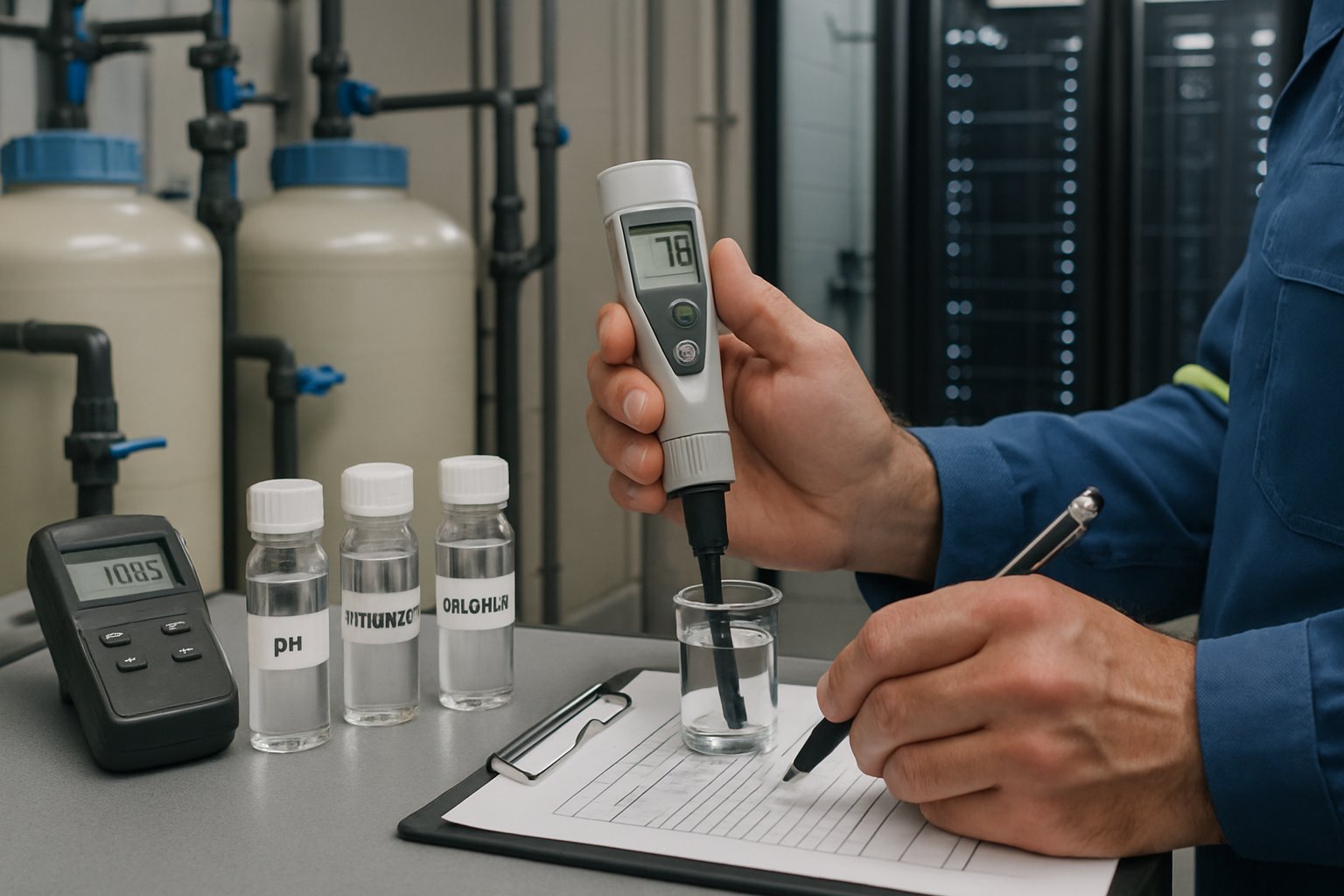
Tekleen automatic screen filters safeguard heat exchangers from particulate fouling in both liquid and immersion systems. Additionally, robust water filtration extends equipment life and reduces chemical blowdown frequency. In summary, technology choice determines the majority of a facility's water footprint. Subsequently, treatment innovations offer further savings beyond primary system selection.
Innovative Water Treatment Tools
Once cooling architecture is set, treatment technology refines efficiency. Tekleen filter skids now integrate IoT sensors, enabling predictive maintenance scheduling. Furthermore, advanced membranes capture silica and hardness, lowering bleed-off volumes. Reverse-osmosis polishing once wasted concentrate, yet new recovery stages reclaim 80% of reject streams.
Consequently, water filtration solutions improve both operating expenditure and sustainability metrics. Some data centers adopt onsite recycling loops that cycle water ten times before discharge. In contrast, facilities limited to potable supply often rely on reclaimed effluent partnerships. Tekleen reports demand spikes from hyperscale builders seeking rapid retrofit packages.
Moreover, chemical-free water filtration reduces environmental reporting burdens in sensitive basins. In summary, modern treatment can slash bleed-off and extend recirculation cycles. These improvements turn water from a consumable into a managed asset. Consequently, transparent reporting must validate the claimed progress.
Persistent Reporting Transparency Gaps
Investors and communities request standardized disclosure beyond onsite WUE. However, many sustainability reports omit source water linked to electricity generation. The gap obscures full AI Infrastructure impacts on stressed basins. Researchers advocate adding WUE_source, which mirrors Scope-2 carbon accounting.
Meanwhile, operators highlight replenishment projects that return water to local watersheds. Nevertheless, critics claim offsets lack robust verification and time alignment. Guardian investigations questioned Amazon's transparency for several high-profile data centers. Tekleen executives support mandatory metering because clear data accelerates adoption of advanced water filtration.
In summary, inconsistent metrics hinder fair benchmarking and undermine community trust. Subsequently, boards are developing holistic action plans that integrate technology, siting, and reporting. The following roadmap outlines practical next steps for decision makers.
Practical Strategic Action Roadmap
Successful leaders align engineering, finance, and public affairs from project inception. Therefore, the roadmap below distills proven tactics.
- Map watershed risk for every planned AI Infrastructure site using peer-reviewed models.
- Select cooling technology that minimizes combined water and carbon footprint.
- Specify Tekleen or equivalent automatic screens to optimize water filtration efficiency.
- Negotiate reclaimed supply agreements before filing construction permits.
- Publish WUE and WUE_source quarterly for all data centers, including indirect withdrawals.
- Upskill teams through the AI Cloud Infrastructure™ certification to manage integrated sustainability.
Moreover, continuous monitoring ensures models reflect seasonal variations and climate shifts. Consequently, procurement teams can adjust operations before shortages escalate. In contrast, reactive retrofits cost multiples and risk regulatory penalties.
In summary, disciplined execution converts water from a liability into a performance differentiator. Therefore, AI Infrastructure growth can proceed without draining local communities. Ultimately, transparent stewardship secures the social license needed to scale AI Infrastructure worldwide.
Conclusion
Water scarcity has moved from background issue to boardroom priority. Moreover, new research quantifies the stakes in unmistakable terms. Municipal crackdowns, technology trade-offs, and transparency demands now converge on every hyperscale build. Nevertheless, effective cooling design, smart treatment, and rigorous reporting can balance growth with stewardship.
Professionals who master these levers will safeguard profitability and public trust. Consequently, now is the moment to deepen expertise and lead decisive action. Professionals can upskill through the AI Cloud Infrastructure™ program.


