

AI CERTS
2 hours ago
AI Hardware Resource Crisis: Rare Earths Shake Supply Chains
This article unpacks the shifting geopolitics, emerging projects, and business implications. Moreover, it outlines concrete steps technology leaders should consider right now. Each insight draws on IEA, USGS, and corporate disclosures verified for accuracy. By reading, executives gain clarity on risks and prospects across the supply chain.
AI Hardware Resource Risks
Permanent magnets sit at the core of AI accelerators, robotics, and sensor arrays. Therefore, rare earth availability directly influences every AI Hardware Resource deployment. IEA data shows 85-91% of global refining remains in China. Meanwhile, the top three suppliers control 86% of key minerals overall. Bloomberg Intelligence warns that any shipment delay can idle billion-dollar data centers. In contrast, diversified producers still lack commercial scale. These facts illustrate why materials security now commands boardroom attention.
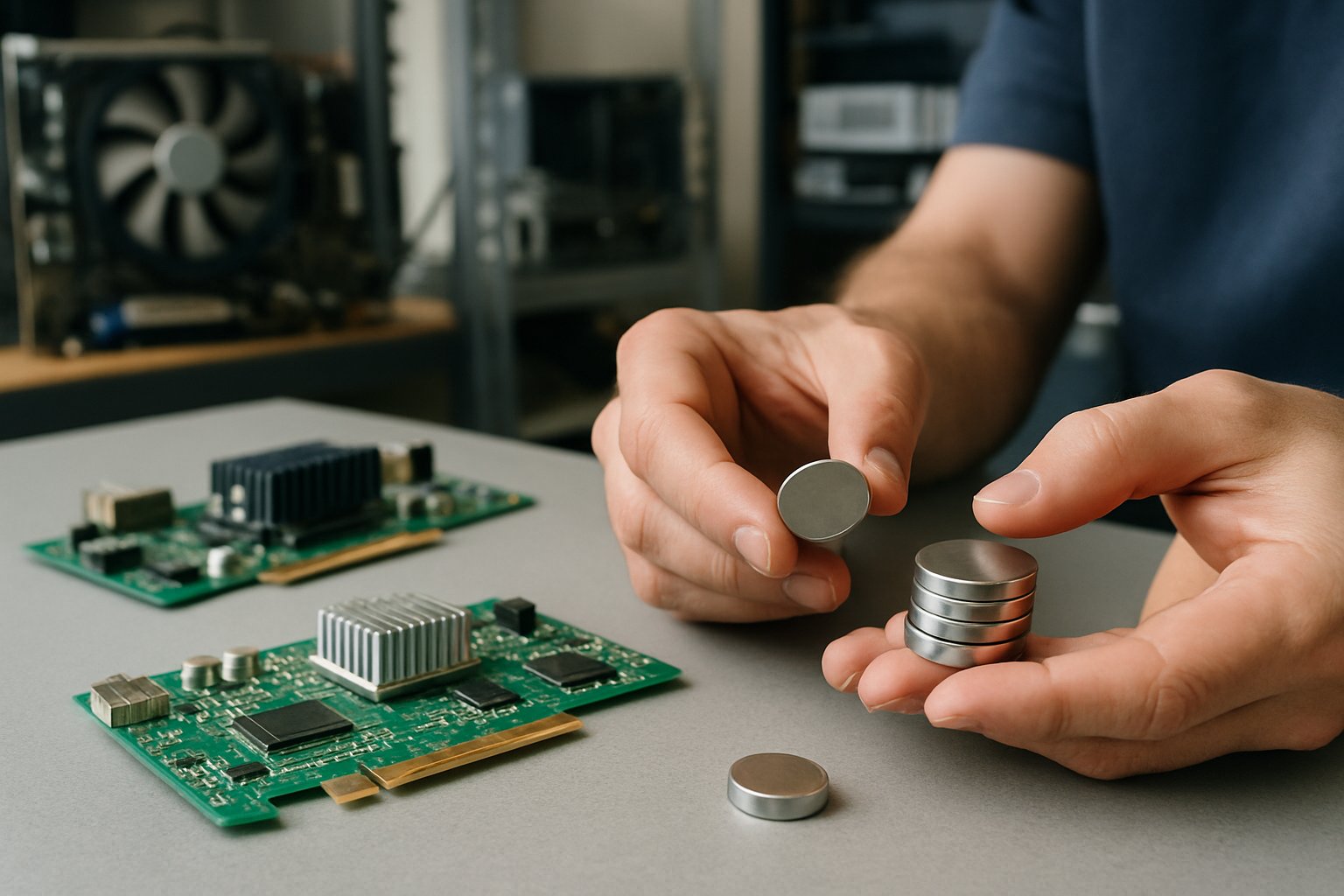
Rare earths underpin modern computation and mobility. However, domination by one nation magnifies strategic exposure. Consequently, recent policy shifts demand closer examination.
Controls Disrupt Global Markets
Beijing introduced tighter export licensing on 4 April 2025 for medium and heavy rare earths. Subsequently, Western automakers, defense primes, and magnet makers feared spot shortages. S&P Global recorded immediate price spikes for dysprosium and terbium. Bloomberg Intelligence estimated inventory coverage at only three weeks for several car platforms. Meanwhile, China customs has yet to publish clear licence approval statistics. This opacity fuels additional hedging across the supply chain. Market analysts expect continued volatility through 2027. Nevertheless, substitute alloys remain technically inferior.
Export controls tightened already narrow margins. Moreover, they accelerated global investment responses discussed next.
Demand Soars For Magnets
The IEA projects magnet rare earth demand will multiply several times by 2030. Electric vehicles alone could require up to sevenfold more NdPr than 2022 levels. Offshore wind adds parallel pressure as each turbine uses hundreds of kilograms. Consequently, AI Hardware Resource builders must compete for the same inputs. Bloomberg Intelligence models show annual server farm expansion hitting five gigawatts. China still adds incremental output at lower cost. Therefore, competition between automotive and computing sectors may intensify.
- EV adoption targets across EU, US, and Japan
- Data center growth supporting generative AI loads
- Defense electrification, including directed-energy platforms
Each driver compounds material stress across the supply chain. Demand curves point steeply upward. However, expanding supply remains slower, prompting new investments ahead.
Western Projects Accelerate Fast
MP Materials produced about 1,300 tons of NdPr oxide in 2024 at Mountain Pass. Furthermore, the firm broke ground on a Texas magnet campus worth over one billion dollars. Lynas upgrades its Malaysian separation circuit and partners with US agencies. EU programs under the Raw Materials Act now fund French and German processors. Additionally, Australia signed long-term supply deals with Japanese magnet makers. Nevertheless, analysts stress that capital intensity remains high. Bloomberg Intelligence calculates Western NdPr output will reach only 25% of demand by 2028. Consequently, AI Hardware Resource stakeholders should monitor ramp schedules closely.
Capacity is moving westward. Yet, scale gaps persist, leading to difficult cost trade-offs next.
Costs Timelines Challenge Diversification
Building a separation plant involves complex solvent extraction circuits and tailings management. Therefore, typical construction plus qualification can take five to seven years. Capital costs often exceed two billion dollars per midstream facility. In contrast, legacy plants in China depreciated long ago, lowering overhead. Environmental permitting in the West also stretches project calendars. Meanwhile, community opposition may trigger redesigns or relocate sites. Supply Chain financing gaps remain, despite government loan guarantees. Professionals can enhance expertise with the AI Supply Chain™ certification. This program teaches risk assessment, vendor evaluation, and strategic sourcing.
High costs slow diversification. However, structured knowledge shortens execution cycles explored in the next section.
Security Imperative For Governments
The IEA frames mineral access as frontline energy security. Fatih Birol stated that concentration now equals vulnerability. Consequently, Washington invokes the Defense Production Act for magnet metals. EU and Japan coordinate joint stockpiles and offtake agreements. Moreover, multi-lateral partnerships aim to improve transparency along the Supply Chain. CSIS warns the United States still trails China in mine-to-magnet integration. Nevertheless, diversified sourcing reduces coercion risk during diplomatic tensions. AI Hardware Resource policy briefings now appear alongside chip export controls in many legislatures.
Governments treat minerals like oil. Consequently, corporate planning must align with strategic directives addressed below.
Action Plan For Firms
Executives should map component exposure across products and regions. Moreover, dual sourcing contracts with non-Chinese refiners reduce disruption probability. Hedge strategies include forward purchases and recycling partnerships. AI Hardware Resource roadmaps should incorporate magnet intensity metrics to avoid blind spots. Bloomberg Intelligence advises embedding critical-mineral clauses into supplier scorecards. Additionally, firms should lobby for accelerated permitting of domestic projects. Establish cross-functional taskforces connecting engineering, finance, and compliance teams.
- Monitor MOFCOM license updates monthly
- Track USGS and IEA data releases
- Attend technical conferences on magnet substitution
AI Hardware Resource managers can further upskill through the AI Supply Chain™ program. Proactive planning minimizes shocks. Nevertheless, continuous education sustains resilience beyond single projects.
Rare earth upheaval has redefined material strategy for technology and mobility sectors. Consequently, boardrooms now rank mineral access alongside capital allocation. The AI Hardware Resource landscape depends on stable magnet supplies during scaling. Governments move, yet private execution remains critical for resilience. Firms must follow data, secure contracts, and train specialised teams. AI Hardware Resource planning should integrate price scenarios, recycling yields, and innovation pipelines. Moreover, managers can deepen insight through the linked certification and peer networks. Acting decisively today will position your AI Hardware Resource portfolio for sustainable growth tomorrow.


