

AI CERTS
2 hours ago
AI Governance Rift: Paris Summit Sparks US Snub Debate
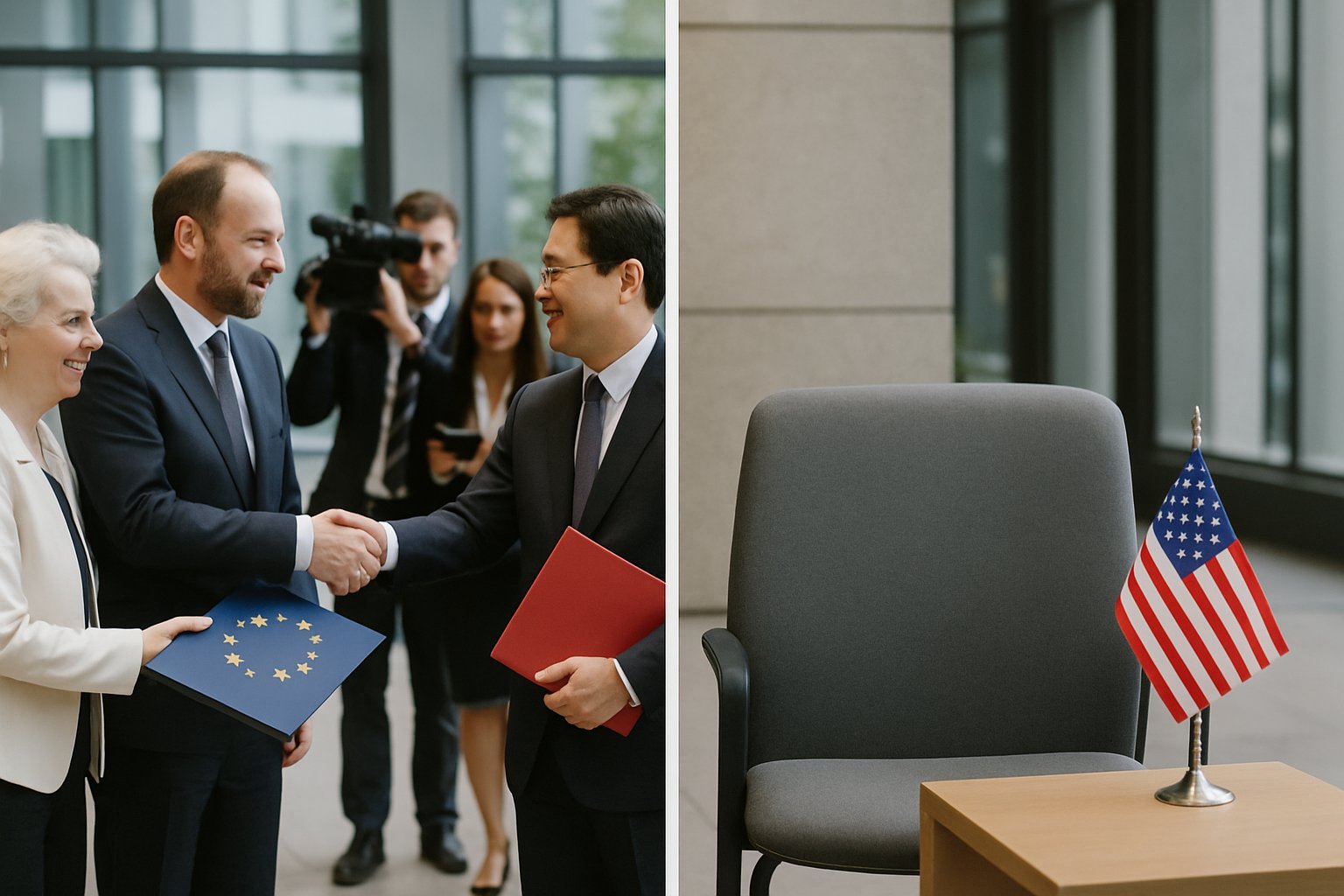
Consequently, many observers labelled the move a dramatic US Snub. Furthermore, U.S. Vice-President J.D. Vance defended the decision by warning against “excessive regulation.” The split spotlighted widening policy gaps between Washington and Brussels. Moreover, European leaders paired strict rules with hefty investment pledges to keep innovation local.
In contrast, China seized the chance to align with European proposals, complicating Western unity. Therefore, industry professionals now face a fragmented rulebook and uncertain market signals. This article unpacks the stakes, numbers, and implications for executives following AI Governance debates.
Summit Context And Stakes
The AI Action Summit combined high symbolism and hard Diplomacy. Meanwhile, leaders convened at the Grand Palais in Paris, representing over sixty jurisdictions. Organisers France and India highlighted a joint commitment to inclusive, sustainable AI Governance principles rooted in UN values. However, negotiations around enforcement mechanisms exposed familiar divides between regulation champions and market advocates. Consequently, the drafting committee settled on a non-binding declaration to maintain broad participation.
The summit’s context underscored rising stakes for developers, investors, and regulators. Next, signatures—or their absence—revealed how those stakes translated into concrete alignments.
Signatures And Notable Absences
The final declaration secured endorsements from the European Union, African Union, and roughly fifty-eight individual states. Moreover, China surprised observers by adding its name, marking a rare convergence with European priorities. Nevertheless, the United States and United Kingdom remained holdouts, instantly drawing headlines about a US Snub. Consequently, several smaller nations delayed decisions, awaiting clarity on potential transatlantic standards. J.D. Vance stated that Washington could not support text implying extraterritorial oversight of American companies. In contrast, France argued the document only outlined voluntary pathways toward transparent AI Governance.
Participation patterns exposed geopolitical rivalries more starkly than previous technology forums. Attention then shifted toward the philosophical gulf shaping those rivalries.
Divergent AI Regulatory Philosophies
Europe champions precautionary regulation through the AI Act, GDPR, and Digital Services Act. Meanwhile, U.S. officials emphasise innovation speed and national security flexibility over prescriptive rules. Additionally, Vance warned that foreign rules could “co-opt” American algorithms and dampen free expression. Ursula von der Leyen countered that public trust is impossible without enforceable safeguards. Therefore, the summit discussion repeatedly toggled between safety rhetoric and competitiveness concerns. Analysts labelled the situation a three-bloc contest among Europe, America, and China for AI Governance influence.
The philosophical divide shapes every subsequent policy choice. Investment announcements illustrated how each camp hopes to operationalise its worldview.
Investment Pledges At Summit
Money followed words throughout the two-day agenda. Moreover, the European Commission unveiled the InvestAI programme, projecting €200 billion in blended financing. France supplemented that figure with a headline €109 billion national commitment over multiple budget cycles. In contrast, the U.S. delegation touted existing Chips and Science Act funds rather than new allocations. Consequently, investors received mixed signals about where frontier laboratories should locate talent.
- €200 billion: aggregate European InvestAI mobilisation
- €109 billion: planned French AI spending
- ~60 signatories: declaration supporters on 11 February 2025
These figures reveal Europe’s determination to combine cash with rules, reinforcing its brand of AI Governance. Yet financial muscle alone cannot resolve diplomatic rifts, which appeared more visible after the summit.
Geopolitical And Diplomatic Fallout
Immediately after adjournment, European envoys pressed Washington for clarification on future cooperation. However, State Department officials offered no concrete timeline for new talks about AI Governance. Subsequently, British ministers echoed U.S. caution, citing data-sharing and security reservations. Meanwhile, India signalled readiness to mediate, leveraging its co-chair status and Global South credibility. Analysts at the European Policy Centre predicted durable fragmentation unless fresh Diplomacy bridges the regulatory chasm. Consequently, companies preparing cross-border deployments must plan for parallel compliance tracks.
Friction has moved from press statements to working groups and trade files. Industry and civil society voices now amplify the debate’s practical dimensions.
Industry And Civil Voices
Tech executives offered cautiously optimistic assessments during closed-door sessions. Moreover, several firms argued that voluntary audits could approximate European goals without strict statutes. Nevertheless, Reporters Without Borders criticised the declaration’s weak enforcement language on information integrity. Additionally, open-source advocates worried that competitive export controls could stifle community research. Relevant skills remain essential for navigating emerging frameworks. Professionals can deepen knowledge through the AI Policy Maker™ certification. These mixed reactions underline how AI Governance debates intersect with market realities and rights protection.
Stakeholder feedback reiterates the demand for credible, balanced oversight mechanisms. Long-term trajectories will determine whether balance or fragmentation prevails.
Long-Term Governance Trajectories Ahead
Policy watchers outline three plausible scenarios.
- Convergence: Incremental negotiations yield hybrid standards aligning safety with innovation.
- Fragmentation: Separate U.S., EU, and Chinese rulebooks harden, raising compliance overhead.
- Dominance: One bloc’s ecosystem attracts most developers, forcing de facto harmonisation.
Furthermore, Europe's investment blitz may strengthen its bid to guide AI Governance norms. However, sustained U.S. lobbying could keep OECD and standards bodies aligned with lighter-touch approaches. Consequently, companies must track multilateral sessions, trade deals, and research funding shifts.
Outcomes will shape competitiveness, safety, and civil rights for decades. The upcoming G20 tech ministerial offers the next clash point for these narratives.
Global AI Governance now sits at a crossroads. Moreover, the Paris summit exposed how regulatory philosophies, investment appetites, and Diplomacy interlock. Nevertheless, the US Snub demonstrated that symbolic unity cannot mask substantive disagreements. Vance’s warning about strangling innovation will echo in Capitol Hill hearings and corporate boardrooms. Meanwhile, Europe will push forward, armed with cash and a mandate for responsible deployment. Consequently, executives must monitor upcoming negotiations and prepare flexible compliance roadmaps. Consider bolstering strategic capabilities through the certified AI Policy Maker™ pathway.


