

AI CERTs
1 week ago
AI-Fake Reviews Spur Consumer Trust Crisis
Five stars no longer guarantee authenticity online. Generative AI now fabricates persuasive product narratives at machine speed. Consequently, regulators, platforms, and vendors scramble to contain synthetic endorsements. At stake lies a widening Consumer Trust Crisis. Shoppers risk bad purchases, while honest sellers lose visibility. Meanwhile, marketers tempted by quick boosts face new legal hazards. This feature unpacks recent rules, platform tactics, and detection limits. Moreover, it maps practical steps for professionals navigating this volatile landscape. Throughout, we measure the unfolding Consumer Trust Crisis in hard numbers. Data from Google, Yelp, and academic labs provide our evidence base. Therefore, prepare for concise analysis grounded in verified filings and primary datasets. We also spotlight certification paths that sharpen ethical AI Marketing skills. Such credentials help rebuild eroded confidence across E-commerce channels. Consequently, readers gain actionable insights and career leverage. Let us examine how synthetic praise became systemic risk.
AI Drives Review Deluge
Generative language models craft convincing customer stories from a single prompt. Furthermore, automated scripts can seed thousands of Reviews across multiple storefronts within minutes. Originality.ai reports a 209% spike in synthetic Airbnb feedback between 2020 and 2024. Experts warn volume growth will accelerate as models cheapen further. Therefore, barrier to entry for deception has collapsed.
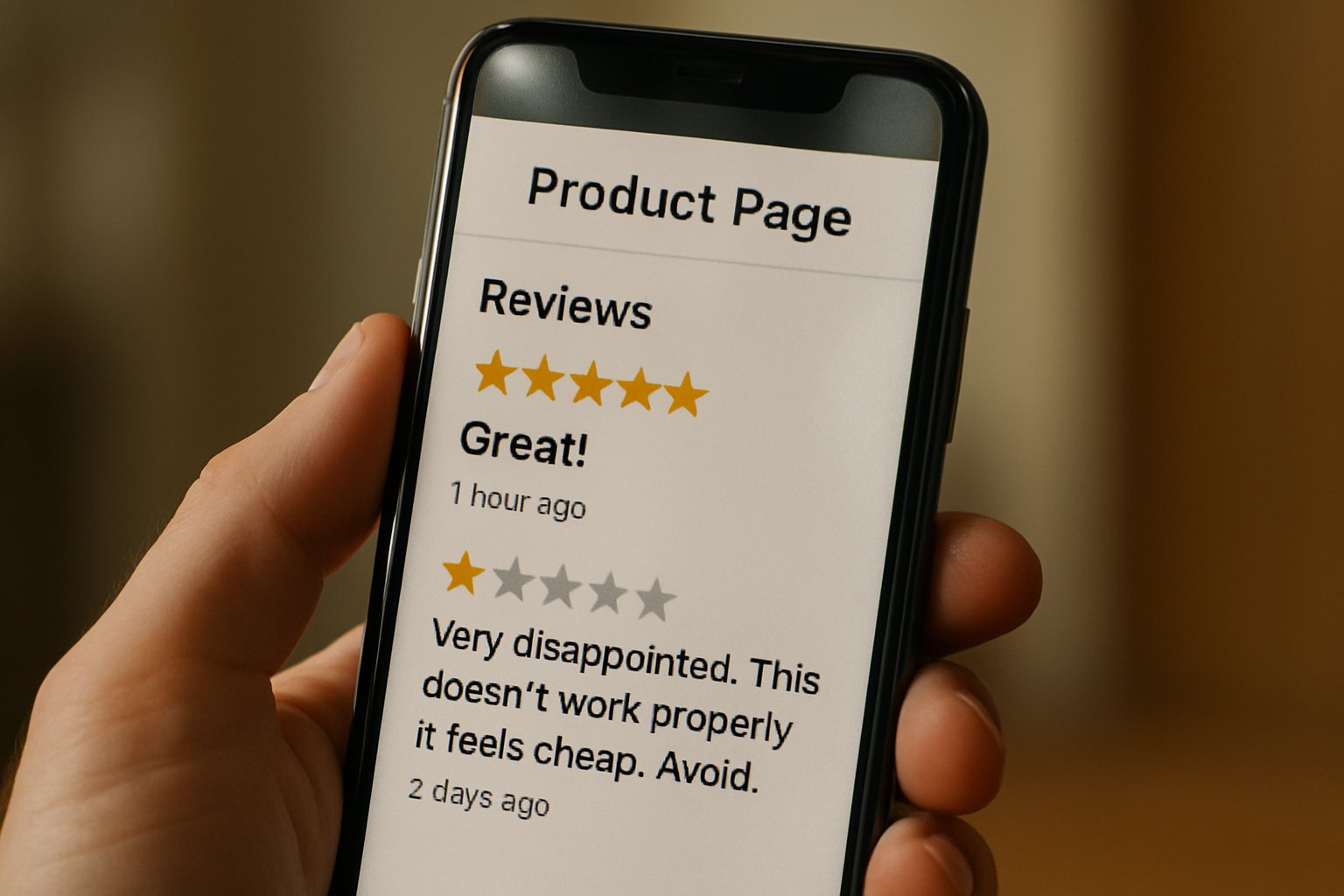
DoubleVerify analyst Gilit Saporta observes that AI scales deception faster than past manual schemes. In contrast, human moderators cannot match that production velocity. Consequently, the early warning window has narrowed. Community guidelines alone cannot deter well financed botnets.
These dynamics deepen the ongoing Consumer Trust Crisis. However, regulators are no longer passive. The next section explores their decisive interventions.
AI output volume is overwhelming legacy gatekeepers. However, regulatory teeth are starting to bite, as the following segment details.
Regulators Tighten Enforcement Net
The United States FTC finalized a sweeping rule in August 2024. Moreover, the text explicitly bans AI fabricated endorsements. Violators now face civil penalties, disgorgement, and compulsory compliance programs. FTC Chair warned that fake praise diverts revenue from honest competitors. Penalty ceilings now reach tens of millions per incident.
National regulators in Europe and Asia mirror the move, citing identical consumer harms. Consequently, global compliance pressure intensifies for cross-border E-commerce operators. Legal counsel advise proactive audit trails documenting any outsourced Marketing content.
Despite tougher statutes, enforcement still depends on proof. Therefore, platforms serve as essential evidence pipelines. Their response merits separate scrutiny. Court dockets already list early cases under the new framework.
Regulation now attacks the spreading Consumer Trust Crisis by criminalizing synthetic testimonials. Nevertheless, impact hinges on platform cooperation, examined next.
Platforms Wage Scale War
Google claims it blocked 240 million policy-violating posts during 2024. Additionally, Yelp filtered nearly 500,000 suspected AI entries in 2025. Amazon and TripAdvisor share similar cleanup statistics, though smaller in scale. These headline numbers impress, yet context matters.
Detection stacks blend language models, behavioral signals, and purchase verification flags. Meanwhile, fraudsters adapt by mixing human edits and rotating accounts. Shadow networks also recycle aged accounts to mask activity. Consequently, tainted Reviews still slip through, and false positives and negatives persist.
Academic work shows humans judge authenticity at coin-flip accuracy. Large models fare no better when deprived of metadata. Therefore, platform claims warrant independent validation.
Platforms fight with ever larger detection engines. However, technology parity lets attackers survive, intensifying the Consumer Trust Crisis.
Detection Tools Face Limits
Pure text classifiers flag typical repetition patterns within suspect Reviews and sentiment patterns. In contrast, refined prompts now inject idiosyncratic details that bypass those heuristics. Moreover, adversaries randomize punctuation and emojis to scramble statistical fingerprints.
Combining content analysis with device, IP, and timing metadata boosts recall. However, privacy laws restrict cross-site signal sharing among E-commerce rivals. Consequently, coverage gaps remain. Collaboration between competitors could close blind spots, yet antitrust fears slow cooperation.
Vendors advertise impressive detection percentages, yet methodologies vary and include biases. Therefore, enterprises should request confusion matrices and sample error analyses before purchase. Such diligence mitigates downstream Fraud exposure.
Tool maturity helps, yet the Consumer Trust Crisis still lingers. Next, we assess fallout for honest market participants.
Impacts On Honest Sellers
Small businesses suffer when forged praise inflates competitor rankings. Meanwhile, orchestrated one-star barrages can tank reputations overnight. These attacks produce direct revenue loss and customer churn. Repair costs, including crisis consultants, strain already thin margins.
Consumers also waste money on subpar goods, deepening the Consumer Trust Crisis. Moreover, survey data show rising skepticism toward any online rating. Marketing chiefs therefore allocate more budget to owned channels they control. Legitimate customers also doubt genuine praise, reducing referral momentum.
Key 2024-2025 impact metrics include:
- Google removed 240 million fake posts, reflecting ecosystem scale.
- Yelp filtered 500,000 AI entries, a record annual high.
- Academic tests show humans spot fake Reviews only 50% of the time.
Consequently, insurance products for reputation management have emerged. However, certifications offer proactive resilience, discussed next.
False chatter widens the Consumer Trust Crisis and erodes margins. Subsequently, skill development becomes a defensive shield.
Certification Upskilling For Marketers
Professionals need verifiable expertise in ethical AI deployment. Furthermore, clients and regulators increasingly request proof of competence. Practitioners can validate mastery through the AI Marketing Strategist™ certification. Coursework covers disclosure standards, bias testing, and anti-Fraud controls.
Moreover, credential holders signal commitment to rebuilding trust across E-commerce ecosystems. Recruiters cite certificates as differentiators in competitive Marketing job markets. Consequently, personal brand equity increases alongside organizational compliance capacity. Boards expect quarterly training metrics to demonstrate governance maturity.
Targeted learning empowers teams against the Consumer Trust Crisis. Final reflections now follow.
Looking Forward Together
AI will continue reshaping digital persuasion. Nevertheless, coordinated governance, advanced tooling, and certified talent can curb misuse. Key actors must share signals, audit impacts, and litigate egregious Fraud. Meanwhile, shoppers should favor verified purchase labels and diverse information sources. Emerging watermarking proposals may help identify machine output at scale.
This article traced drivers, rules, platform battles, and skills responses. Consequently, readers now hold a roadmap to navigate the Consumer Trust Crisis. Act today by exploring the linked certification and by auditing your content workflows. Collective vigilance will restore confidence and fair competition.


