

AI CERTs
2 hours ago
AI Erodes Capital Market Trust Worldwide
Financial decisions rely on shared evidence. However, generative AI now fabricates convincing evidence rapidly. Consequently, Capital Market Trust erodes when traders doubt authenticity. Deepfake texts, voices, and videos spread faster than manual checks.
Moreover, NewsGuard found false answers from top chatbots doubled within one year. World Economic Forum ranked misinformation the second highest short-term global risk in 2026. Investors face a new scarcity: verified credibility. Therefore, markets confront an economic “lemons” problem where uncertainty discounts every claim.
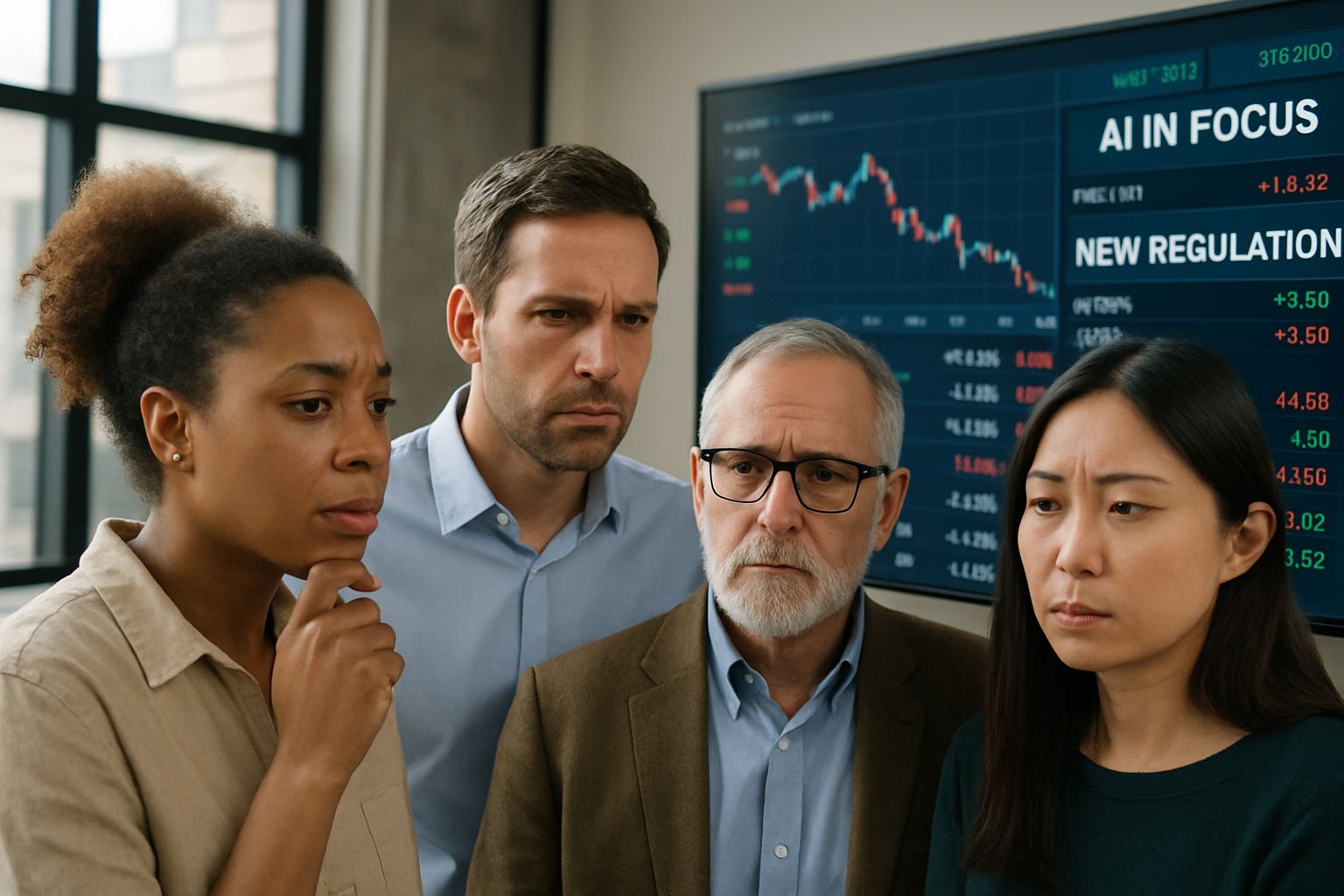
This feature explores the crisis, regulatory moves, and tools that hope to restore Capital Market Trust. Readers will gain actionable steps and certification paths for stronger governance.
Credibility Market Shockwave Unfolds
Generative models slash content production costs near zero. Meanwhile, attackers exploit this efficiency to craft targeted hoaxes at scale. NewsGuard tracked over 1,200 AI-generated news sites by mid-2025, many monetizing programmatic ads.
Additionally, deepfake fraud reached boardrooms. A Hong Kong company lost US$25.6 million after scammers simulated executives during a video meeting. Such headlines travel quickly, amplifying fear across trading desks.
Scholars compare the situation to Akerlof’s classic market-for-lemons model. When buyers cannot verify quality, they pay less for everything. Consequently, honest firms see their reputational capital evaporate alongside Capital Market Trust.
The supply shock destabilizes baseline confidence. However, understanding concrete risks guides effective countermeasures. Next, we examine the direct economic stakes facing issuers and intermediaries.
Economic Stakes And Fraud
Capital Market Trust underpins global capital flows. Furthermore, mispriced securities emerge when Reporting relies on manipulated data.
- NewsGuard false answer rate: 18% in 2024, 35% in 2025.
- Deepfake detection market projected to hit US$5.2B by 2034.
- HK deepfake fraud loss: US$25.6M in a single incident.
Analysts estimate deepfake detection spending could reach US$5.2 billion by 2034. Meanwhile, brands assign new budget lines for Verification services that audit multimedia evidence.
Nevertheless, direct fraud remains the loudest wake-up call. Finance teams now perform out-of-band voice Verification before approving large transfers. Gartner predicts half of enterprises will run dedicated disinformation security units by 2027.
These numbers confirm material exposure for global markets. Therefore, regulators race to formalize Disclosure requirements. The following section outlines those legislative moves.
Regulators Draft New Disclosure
Lawmakers treat provenance as a public good. Consequently, the EU AI Act requires clear Disclosure of synthetic content under Article 50.
Additionally, a draft Code of Practice promotes machine-readable provenance and visual labels by August 2026. In contrast, U.S. proposals remain fragmented across states with limited enforcement teeth. Nevertheless, bipartisan bills seek baseline watermarks for campaign ads before 2028 elections.
Robust market confidence demands harmonized global rules. Compliance will demand fresh Reporting pipelines and independent Audit checkpoints.
Regulatory clarity reduces ambiguity but imposes cost. However, industry standards can spread burden fairly. We now explore those technical standards and tools.
Industry Tools For Verification
Tech vendors champion open provenance metadata. Adobe and partners released the C2PA Content Credentials framework in 2024.
Moreover, Google, Microsoft, and Truepic now embed signed manifests during media export. Browser plugins display an icon that confirms origin through cryptographic Verification within milliseconds.
Signal-level watermarks complement metadata by resisting format changes and re-uploads. Detection startups like Sensity and Reality Defender chase new diffusion models weekly. Yet, academic tests show detectors degrade when faced with unseen generators.
Technical layers strengthen evidence trails. Nevertheless, human oversight remains crucial for Capital Market Trust. Consequently, organizations reevaluate internal Audit and Reporting practices.
Audit And Reporting Strategies
Boards ask whether existing controls address synthetic risks. External auditors increasingly demand Disclosure of AI content used in filings.
Additionally, some firms mandate dual-channel Verification for every material announcement. Internal teams catalog evidence sources and attach Content Credentials hashes to each report.
Professionals can enhance their expertise with the AI Developer™ certification. Moreover, finance teams integrate real-time anomaly detection dashboards into core Reporting suites.
Structured controls rebuild process confidence. Therefore, strategic governance directly supports Capital Market Trust. Finally, we consider future scenarios and investor guidance.
Future Path For Capital
The credibility market crisis will persist through model advances. However, coordinated standards, smart regulation, and continuous Verification can limit damage.
Mixed reality devices may blur evidence lines further, raising the stakes for Disclosure integrity. Yet, improved media literacy campaigns help audiences spot manipulations faster.
Investors monitoring provenance signals will price assets more accurately, preserving Capital Market Trust. Meanwhile, companies adopting rigorous Audit frameworks will secure cheaper capital thanks to restored confidence.
The outlook remains challenging but manageable. Consequently, proactive stakeholders can still thrive. The conclusion distills practical next steps.
Conclusion And Next Steps
Capital Market Trust can still rebound despite synthetic turbulence. However, leaders must treat provenance as a core control, not a cosmetic add-on.
Organizations should align Detection, Verification, Audit, and Reporting into one resilient workflow. Moreover, adopting C2PA standards and meeting new Disclosure laws will reassure regulators and investors.
Professionals who upskill through the linked AI Developer™ certification gain competitive governance capabilities. Therefore, act now: assess gaps, adopt tools, and champion transparent content lifecycles enterprise-wide.


