

AI CERTS
3 months ago
AI Energy Shock Reshapes Data-Center Infrastructure
Meanwhile, Gartner signals looming grid shortfalls that threaten expansion timetables. Therefore, executives must redesign power, cooling, and site strategies simultaneously. This article explores the numbers, risks, and emerging solutions shaping the next generation of facilities. Each section ends with actionable insights that prepare leaders for continuous disruption.
AI Demand Redefines Infrastructure
GenAI training racks draw 70–100 kW, dwarfing yesterday’s 5 kW averages. Moreover, rack density growth multiplies cable, breaker, and floor load requirements. Coquio estimates 80% of French sites cannot adapt without radical rebuilds. Consequently, brownfield upgrades often cost more than greenfield megacampuses.
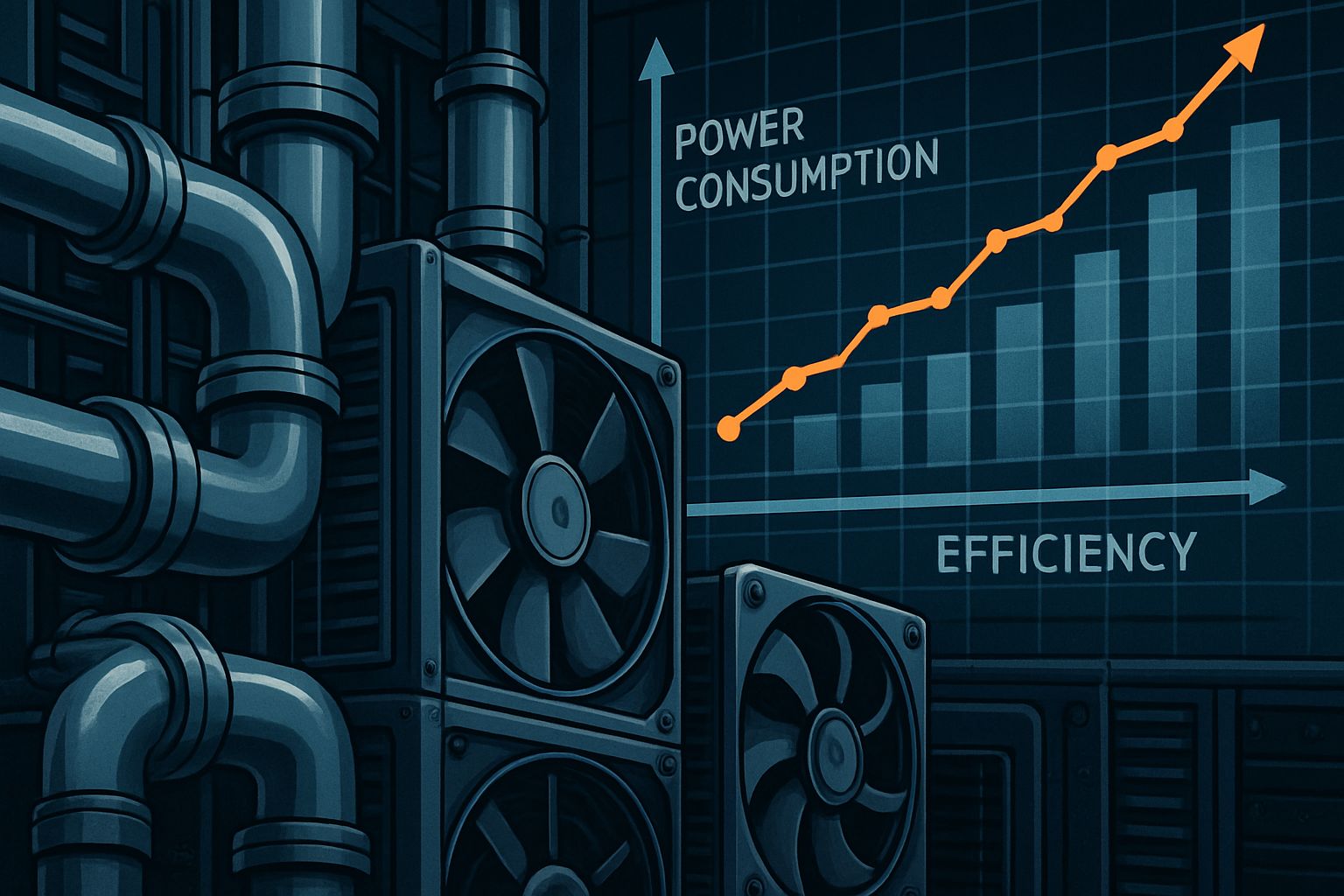
Bank of America data shows US$40 billion annualized construction as of June 2025. Hyperscalers capture most capacity, yet enterprises chase residual megawatts for burst training. In contrast, financing models struggle to match volatile demand curves. Therefore, Infrastructure design now starts with power-purchase contracts instead of floor layouts.
Additionally, the Infrastructure question expands beyond walls; grid interconnection queues stretch years. Utilities cannot reinforce substations quickly despite headline megawatt deals. Nevertheless, early engagement with regulators shortens approval cycles. These realities redefine CPA metrics.
High-density racks upend legacy economics. However, rising costs encourage fresh technical partnerships covered next.
Record Construction Spending Rise
Construction indicators highlight market momentum despite macro uncertainty. Reuters cites a 30% year-over-year increase in US builds fueled by AI orders. Moreover, Equinix and Digital Realty report multi-hundred-megawatt pipelines worldwide. Consequently, steel, generator, and transformer suppliers face stretched lead times.
- US$40B annualized US construction in June 2025 (Bank of America).
- 70–100 kW typical AI rack density (Digital Realty).
- 500 TWh projected incremental power by 2027 (Gartner).
- 31% of APAC firms already running GenAI in production (IDC).
These metrics confirm sector scale yet mask profit uncertainty. Furthermore, financiers warn that stranded assets become likely if efficiency gains accelerate. Therefore, rigorous scenario modeling underpins capital approvals.
Spending records show confidence. Nevertheless, cost discipline remains vital as we examine power constraints next.
Power Grid Warning Signs
Gartner warns 40% of AI data centers may lack sufficient power by 2027. Additionally, grid upgrades can trail demand by five to ten years. In contrast, hardware refresh cycles average three years. This mismatch threatens schedule commitments.
Bob Johnson states utilities cannot expand capacity quickly enough. Consequently, hyperscalers partner directly with renewable developers and sometimes consider onsite turbines. Moreover, several operators explore small modular reactors for steady baseload. Infrastructure strategists now treat energy procurement as core intellectual property.
However, community resistance grows when large sites gobble water or transmission allowances. Time magazine documented Memphis protests against a proposed AI campus. Therefore, transparent engagement has become an operational requirement, not optional PR.
Power constraints represent existential risk. Subsequently, operators invest heavily in cooling innovations addressed below.
Cooling And Thermal Constraints
High rack densities create severe Thermal Constraints on airflow systems. Consequently, operators shift toward Direct Liquid Cooling to remove concentrated heat. Coquio notes large-scale DLC retrofits underway in Marseille campuses. Moreover, DLC improves PUE by reducing chiller workload.
However, liquid loops demand new safety protocols and floor layouts. Additionally, facility staff need fluid-handling skills previously unnecessary. Professionals can enhance expertise through the AI Prompt Engineer™ certification. Such upskilling accelerates safe, efficient Infrastructure operations.
In contrast, air-cooled retrofits struggle beyond 30 kW racks due to Thermal Constraints. Consequently, some operators deploy immersion cooling for small, specialized clusters. Nevertheless, immersion complicates server maintenance and supply chains.
Cooling choices define capacity limits. Consequently, attention shifts to architectural distribution explored next.
Edge Strategies Gain Traction
IDC finds 31% of APAC enterprises already run GenAI in production. Moreover, 64% test workloads, planning edge rollouts by 2027. Latency, data sovereignty, and cost concerns push inference closer to users. Consequently, Infrastructure planning now spans core, regional, and micro sites.
Akamai positions its CDN footprint as low-latency AI inference fabric. Digital Realty markets connect-near-edge campuses that offer cloud on-ramps and DLC pods. Furthermore, telecom towers host containerized GPU clusters for burst capacity. In contrast, training remains centralized due to synchronization overheads.
These hybrid topologies mitigate Thermal Constraints by distributing heat loads geographically. However, they complicate observability and workload orchestration. Therefore, companies invest in AI-aware automation platforms.
Edge adoption balances performance and risk. Subsequently, we consolidate lessons for executives in the final section.
Executive Takeaways And Actions
Leaders should embrace a phased Infrastructure roadmap anchored in realistic power scenarios. Additionally, early grid negotiations reduce permit surprises. Moreover, continuous cooling innovation hedges against Thermal Constraints overruns. Digital Realty demonstrates proactive retrofits that preserve customer trust.
Build multidisciplinary teams spanning facilities, finance, and sustainability. Consequently, decisions reflect both Energy Shock impacts and shareholder expectations. Professionals should monitor supply concentrations to avoid sudden GPU shortages. Nevertheless, collaboration with hyperscalers secures early component allocations.
Finally, cultivate staff capabilities through certified programs and peer knowledge exchanges. Furthermore, integrating the AI Prompt Engineer™ curriculum supports operational excellence. Adopting these steps positions firms to capitalize on the Energy Shock-induced demand. Consequently, sustainable Infrastructure growth becomes achievable despite external uncertainties.
Strategic discipline counters volatility. However, vigilance must continue as market conditions evolve monthly.
Generative AI has triggered a multidimensional Energy Shock that challenges power, cooling, and capital plans globally. Yet, operators redesigning Infrastructure around high-density and flexible energy contracts already gain advantage. Moreover, direct liquid cooling and edge nodes reduce Thermal Constraints while maintaining latency targets. Consequently, executives must pair record spending with strict scenario testing and agile staffing plans. Professionals ready to lead can validate skills through the AI Prompt Engineer™ certification linked above. Act now, review facility roadmaps, and foster collaborative partnerships to convert disruption into competitive momentum.


