

AI CERTs
1 month ago
AI Design Displacement: What Data Really Shows
A new flashpoint has ignited inside design departments worldwide. Generative tools promise lightning speed, yet seasoned professionals fear silent replacement. This tension defines the debate labeled AI Design Displacement. However, recent data reveal a nuanced reality beneath sensational headlines. Tool vendors, analysts, and affected workers describe efficiency gains alongside targeted cuts. Consequently, executives must decide whether saved hours justify downsizing or strategic reinvestment. Meanwhile, designers weigh reskilling paths to remain indispensable. This article examines automation statistics, labor impacts, ethical risks, and practical adaptation strategies. Furthermore, it highlights certifications and upskilling options that future-proof competitive advantage. Read on for a fact-checked investigation into automation’s real effect on senior UX talent. In contrast, hype cycles often obscure where automation truly excels and where humans still outperform. Therefore, balanced insight is essential for boards, managers, and practitioners navigating volatile Creative careers.
Automation Trend Overview 2026
Figma, Adobe, and Google released AI co-pilot features at record pace during 2024-2026. Moreover, Figma reports 78% of designers claim the tools boost efficiency across UI asset generation and iteration. Google’s Stitch turns prompts into production-ready front-end code, compressing days of manual markup. Consequently, employers recognise faster cycles and demand smaller, multidisciplinary squads.
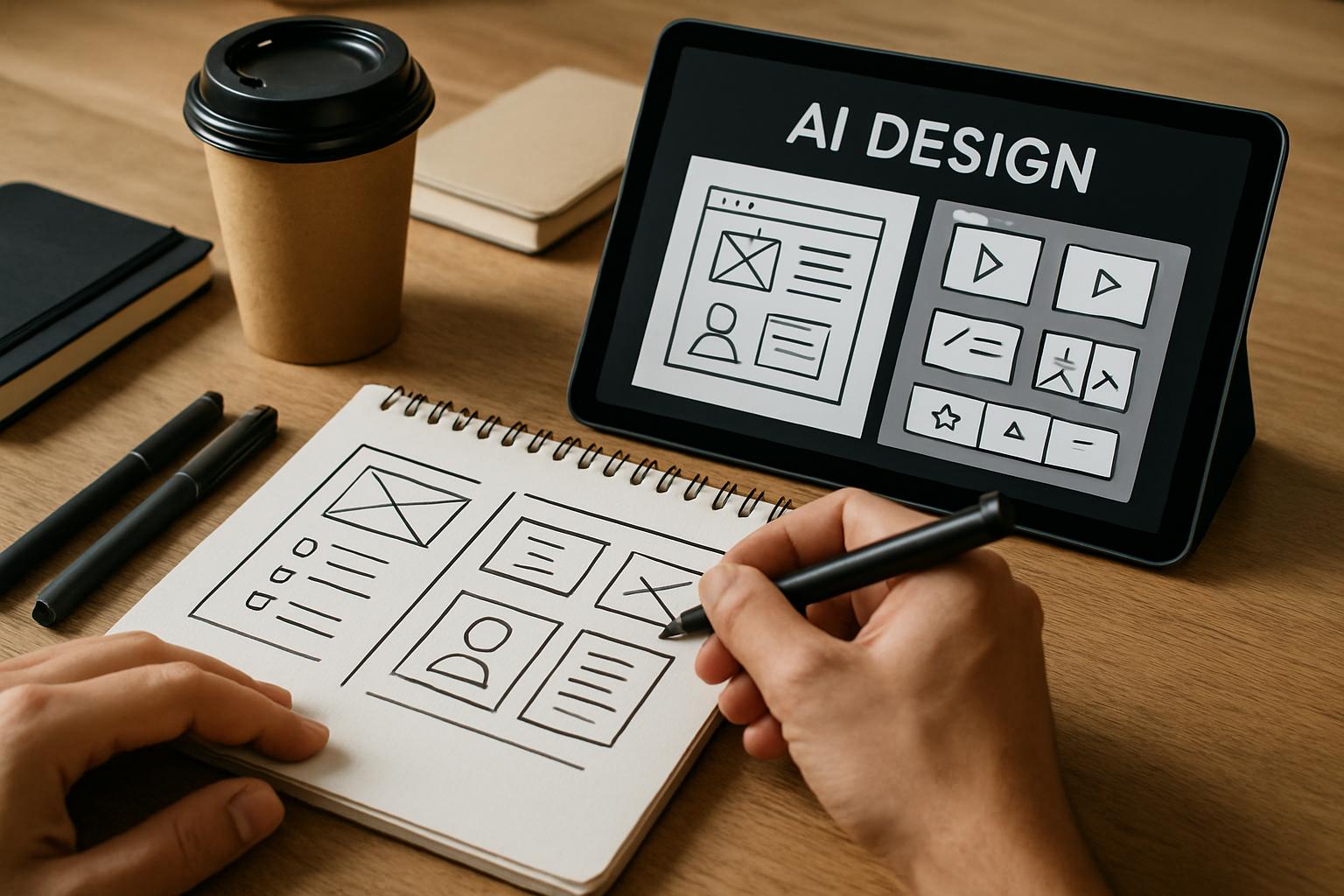
McKinsey estimates generative agents could automate 30-50% of routine design hours within five years. Nevertheless, adoption remains uneven across industries and company sizes. Gaming studios lead because agentic playtest pipelines deliver measurable return on investment. Therefore, trend lines show acceleration, yet total role elimination still lacks solid evidence.
Automation clearly accelerates routine workflows and compresses timelines, fueling early AI Design Displacement concerns. However, the headcount story requires closer examination, which the next section provides.
Impact On Design Teams
Layoff trackers recorded multiple design contractions during 2025, often attributed to cost savings enabled by AI. In contrast, interviews reveal senior strategists usually stayed while junior producers faced redundancy. Figma executives argue that AI frees seniors for research, stakeholder negotiation, and vision setting. Consequently, team shapes flatten, with more strategic leads directing fewer execution specialists.
AI Design Displacement surfaces mainly in operational tasks like QA, asset resizing, and A/B variant creation. Additionally, Google’s Stitch reduces front-end dependencies, nudging companies to merge design and engineering roles. Nevertheless, experts stress that discovery workshops and UX Research still demand human empathy and context. Therefore, displacement so far appears task specific rather than wholesale. Careers sites already list hybrid roles blending design, data, and prompt engineering.
Teams evolve toward leaner structures guided by senior judgment. Next, we probe whether seniors themselves stand in jeopardy.
AI Design Displacement Debate
Commentators often claim AI Design Displacement is inevitable as models mature. However, Don Norman counters that algorithms still lack holistic understanding, ethics, and stakeholder alignment. McKinsey similarly highlights that judgement, persuasion, and narrative framing remain difficult to automate. Consequently, senior roles anchored in UX Research and product strategy exhibit resilience.
Evidence supports this cautious view. King’s 2025 layoffs targeted level designers and testers, not principal Creative directors. Moreover, follow-up filings showed human leads reviewing every AI generated build before release. Therefore, even flagship automation projects still require seasoned oversight, blunting complete AI Design Displacement.
Debate reveals hype outpaces verifiable evidence. Subsequently, discussions turn to skill transformation rather than surrender.
Skill Shifts And Upskilling
Surveyed designers rank prompt engineering and model evaluation among top emerging competencies. Additionally, cross-functional literacy in data pipelines now differentiates senior candidates. Creative thinkers who master AI workflows command premium salaries despite automation. Consequently, many professionals pursue micro-credentials to validate abilities.
Professionals can enhance their expertise with the AI Ethical Hacker certification. While security focused, the coursework strengthens systemic thinking valuable to UI architects and strategists. Moreover, universities expand bootcamps integrating UX Research, psychology, and generative tooling. Therefore, structured learning pathways equip staff against future AI Design Displacement waves.
Upskilling raises individual leverage and strengthens Careers longevity. Next, we analyze attendant risks and ethical questions.
Risks And Ethical Concerns
Automated layouts sometimes perpetuate bias baked into training datasets. In contrast, human reviewers can interrogate outputs for inclusivity and accessibility compliance. Additionally, derivative imagery risks brand dilution when Creative identity matters most. Consequently, governance frameworks become mandatory before deploying agentic pipelines at scale.
Quality drift also threatens user trust if unchecked models push flawed UI elements live. Therefore, senior oversight remains critical, undermining simplistic AI Design Displacement narratives. Moreover, transparent audit logs help regulators and stakeholders evaluate compliance. Consequently, ethics considerations reinforce the market value of deep UX Research expertise.
Risks emphasize why mature judgement stays indispensable. Real life examples illustrate these lessons next.
Real Industry Case Studies
Candy Crush maker King cut 200 staff after internal AI playtest tools improved throughput by 30%. However, leaked memos showed principal designers reassigned rather than dismissed. Meanwhile, a fintech startup replaced manual UI QA with bots but retained senior product owners. Subsequently, those owners translated insights into strategic roadmaps beyond current model capability.
Key findings across documented cases include:
- Junior production cuts outnumber senior exits three to one.
- Automation targets repetitive UI and copy tasks first.
- Human reviews remain mandatory for compliance and brand fit.
Case studies corroborate earlier data on targeted, not total, displacement. Consequently, designers still control narrative through proactive adaptation.
Practical Roadmap For Designers
Designers seeking secure Careers must act deliberately. Firstly, inventory tasks vulnerable to automation and delegate them to co-pilot tools. Secondly, double down on strategic discovery, stakeholder persuasion, and UX Research storytelling. Finally, establish measurable governance to defend quality and ethics.
A three-step action plan follows:
- Map skill gaps and enroll in certified courses.
- Integrate AI dashboards for transparent workflow metrics.
- Negotiate new KPIs aligned with hybrid Creative outputs.
Moreover, mentors advise documenting impact metrics to strengthen negotiation leverage. Therefore, an evidence-based roadmap counters premature AI Design Displacement.
Action plans convert anxiety into opportunity. Next, the article closes with overarching insights.
Automation is reshaping delivery timelines, tooling, and headcount assumptions across global design studios. Nevertheless, evidence shows senior expertise tied to discovery, ethics, and persuasion remains resilient. Consequently, professionals who integrate AI co-pilots while deepening strategic capabilities will thrive. Creative leadership and rigorous UX Research still anchor successful experiences and brand credibility. Meanwhile, Careers prospects improve for hybrid architects who can audit, interpret, and direct model outputs. Therefore, AI Design Displacement should motivate, not paralyze, forward-thinking practitioners. Explore emerging courses and certifications to future-proof your value today. Start with the linked credential and lead the next generation of adaptive design.


