

AI CERTs
13 hours ago
AI Department Funding Spurs Rural AI Education
Funding announcements usually centre on metropolitan campuses. However, December 2025 shifted focus to rural Sattur. BPL Medical Technologies pledged CSR capital to establish a dedicated AI department at Sri S. Ramasamy Naidu Memorial College in Sattur. This AI Department Funding answers growing calls for inclusive technology education. Moreover, the announcement coincided with the college’s Innovation Centre and Health Club launch. Consequently, students may soon access advanced coursework, research support, and industry mentorship. Nationwide CSR spending already exceeds INR 34,900 crore, and education remains its largest beneficiary. Furthermore, NASSCOM projects Indian AI services to grow around 30 percent annually. Against this backdrop, the partnership deserves detailed scrutiny from technology strategists. In contrast, many tier-II institutions lack sustained innovation capital. Therefore, observers see this model as a potential blueprint for similar colleges.
AI Department Funding Overview
BPL Medical confirmed the initiative during a campus ceremony at Veluchamy Auditorium. The company declined to disclose the exact outlay. However, executives pledged multi-year classroom, lab, and support commitments starting academic year 2026. This third appearance of AI Department Funding in public notes cements corporate accountability.
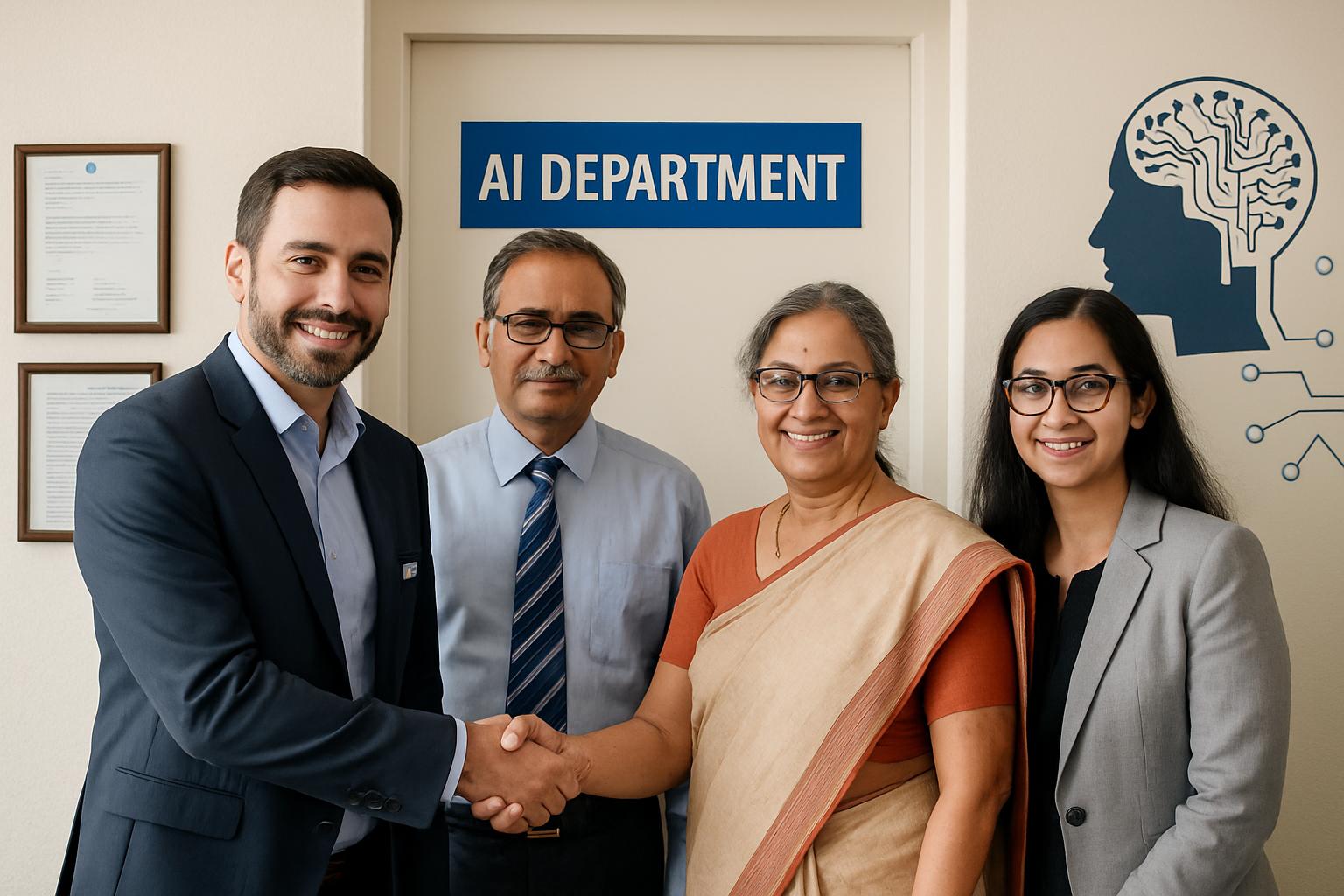
Additionally, representatives signed a memorandum signaling long-term industry mentoring. Media outlets including Indian Pharma Post, APN News, and PharmaBiz reported identical quotes. Nevertheless, journalists still await the official MoU upload for verification. Consequently, transparent disclosure remains the next milestone.
College AI Vision Alignment
Sri S. Ramasamy Naidu Memorial College serves nearly 2,000 students from Virudhunagar district. Principal Dr. K. Krishnaveni highlighted the project’s role in modernising the science curriculum. Moreover, Secretary T. R. Kannan framed the collaboration as pivotal for entrepreneurship and Academic AI Research. The college has submitted affiliation paperwork to Madurai Kamaraj University for course approval.
Meanwhile, faculty committees are mapping elective pathways in machine learning, data ethics, and healthcare analytics. Consequently, administrators expect first-year intake of 60 students in July 2026. AI Department Funding will finance initial GPU rigs and cloud subscriptions for labs. Furthermore, visiting engineers from BPL will co-supervise capstone projects, strengthening Institutional Tech Grants leverage.
Curriculum And Resource Commitments
Curriculum design follows global IEEE guidelines and NASSCOM occupational standards. In contrast, rural colleges often lack budget for advanced lab hardware. Therefore, BPL’s donation includes 20 high-performance workstations and subscription credits for leading platforms. Academic AI Research will benefit from shared datasets on diagnostic imaging and public health.
Additionally, BPL promised internship stipends worth INR 10,000 per student. Such incentives complement Institutional Tech Grants that federal agencies may deliver later. AI Department Funding also covers faculty development seminars with external researchers. Moreover, the college plans quarterly hackathons to showcase prototypes for rural healthcare challenges.
- INR 34,900 crore national CSR spend in FY24.
- Education received over INR 12,100 crore share.
- AI market CAGR projected between 25% and 35%.
- Healthcare AI value may reach USD 109 billion.
These figures illustrate strong funding momentum. Consequently, colleges with clear plans attract faster corporate support.
Broader Industry Talent Context
India’s AI workforce remains short by nearly 51 percent according to NASSCOM estimates. McKinsey meanwhile predicts healthcare AI could unlock USD 109 billion globally. Consequently, corporates increasingly view technology grants as strategic rather than philanthropic. Academic AI Research partnerships also accelerate product validation and regulatory readiness.
Furthermore, tier-II colleges provide access to diverse, untapped talent pools. AI Department Funding therefore functions as workforce pipeline insurance for BPL Medical Technologies. Nevertheless, experts caution that market demand can outpace academic reform. Regular curriculum reviews will be essential for relevance.
Ensuring Governance And Ethics
Healthcare datasets raise privacy, consent, and bias issues. Therefore, the college will constitute an independent ethics board before project kickoff. Moreover, compliance will follow national biomedical guidelines and ISO security standards. Institutional Tech Grants can include funding for legal audits, ensuring adherence beyond the first cohort.
AI Department Funding will underwrite staff training on responsible model deployment. In contrast, many existing programmes treat ethics as an optional module. Consequently, stakeholders expect stronger public trust and smoother regulatory approvals. These safeguards may also attract additional research collaborations.
Projected Regional Student Impact
Virudhunagar district reports graduate unemployment above 18 percent. Consequently, local stakeholders anticipate measurable socioeconomic benefits. AI Department Funding may catalyse new startups in telemedicine, agri-analytics, and logistics optimisation. Moreover, internships with BPL could convert into full-time roles, reducing migration to metros.
Academic AI Research output will likely rise as students publish datasets unique to rural health. Furthermore, successful prototypes may win additional Institutional Tech Grants from government incubators. Nevertheless, sustained mentoring and seed capital remain critical for scale-up. Local chambers of commerce plan to convene quarterly demo days.
Certification Driven Upskilling Pathways
Students often supplement degrees with targeted micro-credentials. Professionals can enhance their expertise with the AI Product Manager™ certification. Additionally, faculty plan to embed such courses within elective credit baskets. AI Department Funding will subsidise examination fees for top performers.
Government innovation units may recognise these certifications during funding evaluations. Moreover, global recruiters increasingly validate projects through badge repositories. Consequently, graduates can showcase verifiable skills alongside academic transcripts. This dual recognition strengthens employability within competitive AI markets.
BPL Medical’s pledge signals widening corporate belief in shared value creation. Meanwhile, Sri S. Ramasamy Naidu Memorial College gains essential resources to modernise STEM education. However, transparent reporting and continuous curriculum renewal will determine lasting success. AI Department Funding, Academic AI Research collaborations, and Institutional Tech Grants must align toward equitable, ethical outcomes. Moreover, certification pathways can bridge remaining skill gaps for both students and faculty. Consequently, the Sattur model could inspire similar partnerships across India’s diverse higher-education landscape. Stakeholders should monitor forthcoming programme metrics and explore aligned certification opportunities today.


