

AI CERTS
3 months ago
AI Data Centers Test Grid Stability Across U.S.
The Berkeley Lab estimates 176 TWh of data-center consumption in 2023. Furthermore, projections hit 325-580 TWh by 2028, driven mainly by GPU server farms. Manu Asthana of PJM warned FERC that 30 GW of new demand sits in one region alone. Therefore, concerns about Grid Stability are no longer theoretical.
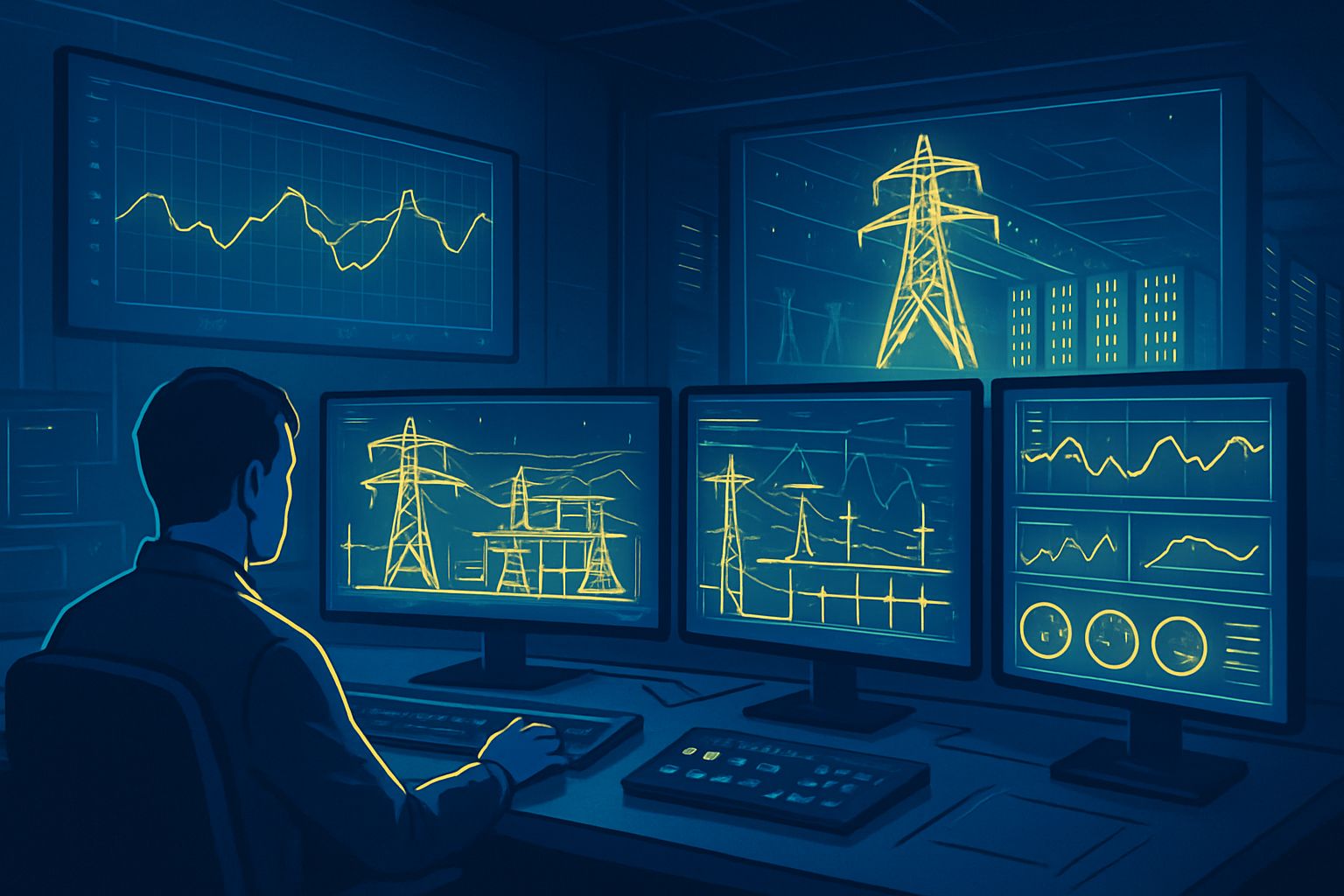
AI Power Demand Surge
AI models scale faster than Moore’s Law now. Consequently, each new frontier model launches another wave of siting requests. The Load from a single complex can exceed 300 MW, rivaling steel mills. Berkeley Lab notes that 45 percent of global data-center power already sits within the US Grid. Meanwhile, the International Energy Agency foresees worldwide data-center use doubling by 2030.
In Texas, ERCOT interconnection filings show clusters requesting gigawatt-level hookups. Additionally, Northern Virginia’s “Data Center Alley” strains substations built for suburban loads. Grid Stability faces new stress because these megaprojects often group on limited transmission spur lines. These facts underline why resource adequacy margins are tightening nationwide.
These demand spikes clarify the urgency. Nevertheless, understanding regional dynamics provides sharper insight into immediate pinch points.
Regional Stress Signals Rising
PJM executives see demand curves steepening. Moreover, SPP and MISO share similar alarms, though on smaller bases. FERC testimony shows 32 GW of additive requirements in PJM, with 30 GW tied to AI data centers. In contrast, Texas grid managers expect comparable growth but with fewer reserve margins.
Localized generation retirements worsen matters. Consequently, Reliability risks peak during extreme weather when cooling loads compound data-center demand. US Grid planners monitor Northern Virginia, Central Ohio, and West Texas most closely.
Severe congestion appears first inside constrained areas. However, transmission queues reveal a broader national issue that must be addressed next.
Interconnection Queue Bottlenecks Expand
Roughly 2.6 TW of projects wait in U.S. interconnection lines. Furthermore, median delays exceed five years. Developers frequently withdraw when financing windows close, reducing completion rates.
PJM queue reforms now follow FERC Order 2023, yet floodgates remain crowded. Texas shows similar patterns despite ERCOT’s energy-only market. Consequently, new generation cannot match near-term Load increases, pressuring Grid Stability.
Duke researchers calculate that small flexible-load agreements could unlock 76-126 GW of latent capacity. These findings pivot the conversation toward demand-side solutions.
Queue congestion signals structural lag. Nevertheless, flexibility offers an immediately deployable countermeasure.
Flexibility Offers Quick Relief
Modern AI clusters contain thousands of GPUs orchestrated by software. Consequently, operators can ramp jobs down within minutes without data loss. Duke modeling shows curtailing operations for one percent of yearly hours safeguards Reliability equal to dozens of new gas plants.
Google already tests workload shifting across time zones. Meanwhile, Texas legislation considers incentive tariffs rewarding curtailable megawatt contracts. In practice, Load shedding agreements allow Grid Stability to improve faster than concrete cures.
Key benefits include:
- Reduced peak capacity costs within PJM and ERCOT regions
- Lower greenhouse emissions compared with emergency diesel generation
- Faster regulatory approval for compliant data-center campuses
These quick wins matter today. However, hyperscalers also pursue longer-term firm supply contracts.
Firm Clean Power Deals
Microsoft signed a twenty-year PPA to restart Three Mile Island Unit 1. Consequently, 835 MW of nuclear output will back future AI expansions. Google explores small-modular reactor projects in Texas and the Midwest.
Such deals create baseload resources that bolster Grid Stability while meeting corporate carbon targets. Additionally, merchants like Constellation secure predictable revenue streams. Analysts expect similar transactions across the US Grid during 2025-2027.
Professionals can enhance their expertise with the AI Architect certification. Certified leaders help align procurement, technical design, and Reliability compliance.
Firm power contracts build resilience. Nevertheless, coordinated policy shifts remain essential for systemic results.
Policy And Market Levers
Regulators debate clustered interconnection processing to accelerate shovel-ready projects. Moreover, several states weigh mandatory curtailment clauses for new hyperscale campuses. In contrast, others prefer market incentives linked to locational capacity credits.
PJM proposes refined accreditation metrics that reward hybrid solar-plus-storage only when proven dependable. Consequently, Reliability metrics become technology-agnostic yet performance-driven.
Federal transmission permitting reforms also move forward. Furthermore, DOE grants now fund advanced phasor monitoring, offering real-time visibility into AI-driven transients affecting Grid Stability.
These instruments establish a governance toolkit. However, operators still need clear day-to-day roadmaps.
Operator Action Plan Roadmap
Grid staffs can adopt a phased strategy:
- Identify substation clusters threatened by AI demand within the US Grid.
- Secure voluntary curtailment contracts covering 0.5 percent of annual hours.
- Prioritize transmission projects that unlock at least 500 MW per corridor.
- Align with corporate PPAs to firm regional reserves, especially in Texas and PJM.
- Deploy digital twins to model transient voltage impacts on Reliability.
Moreover, sharing predictive data quarterly builds stakeholder trust. Consequently, Grid Stability conversations shift from crisis to collaboration.
These coordinated moves address today’s inflection point. Nevertheless, continual learning remains vital as AI architectures evolve.


