

AI CERTS
3 months ago
AI Climate Impact: Energy, Water, and Emissions Crunch
This article examines the AI climate impact from rising power demand to scarce water and mounting carbon emissions. Moreover, it outlines mitigation strategies and evolving policy responses. Professionals will gain a balanced view backed by recent data and expert quotes. Ultimately, informed decisions today can steer AI toward a net-positive trajectory. Meanwhile, debates intensify as Google and Microsoft acknowledge short-term footprint growth despite clean-energy purchases. In contrast, environmental groups demand moratoria on new hyperscale facilities in water-stressed regions.
AI Climate Impact Debate
Consequently, public discourse around the AI climate impact has shifted from abstract models to real infrastructure. Investors now size risks by megawatts, not marketing slides.
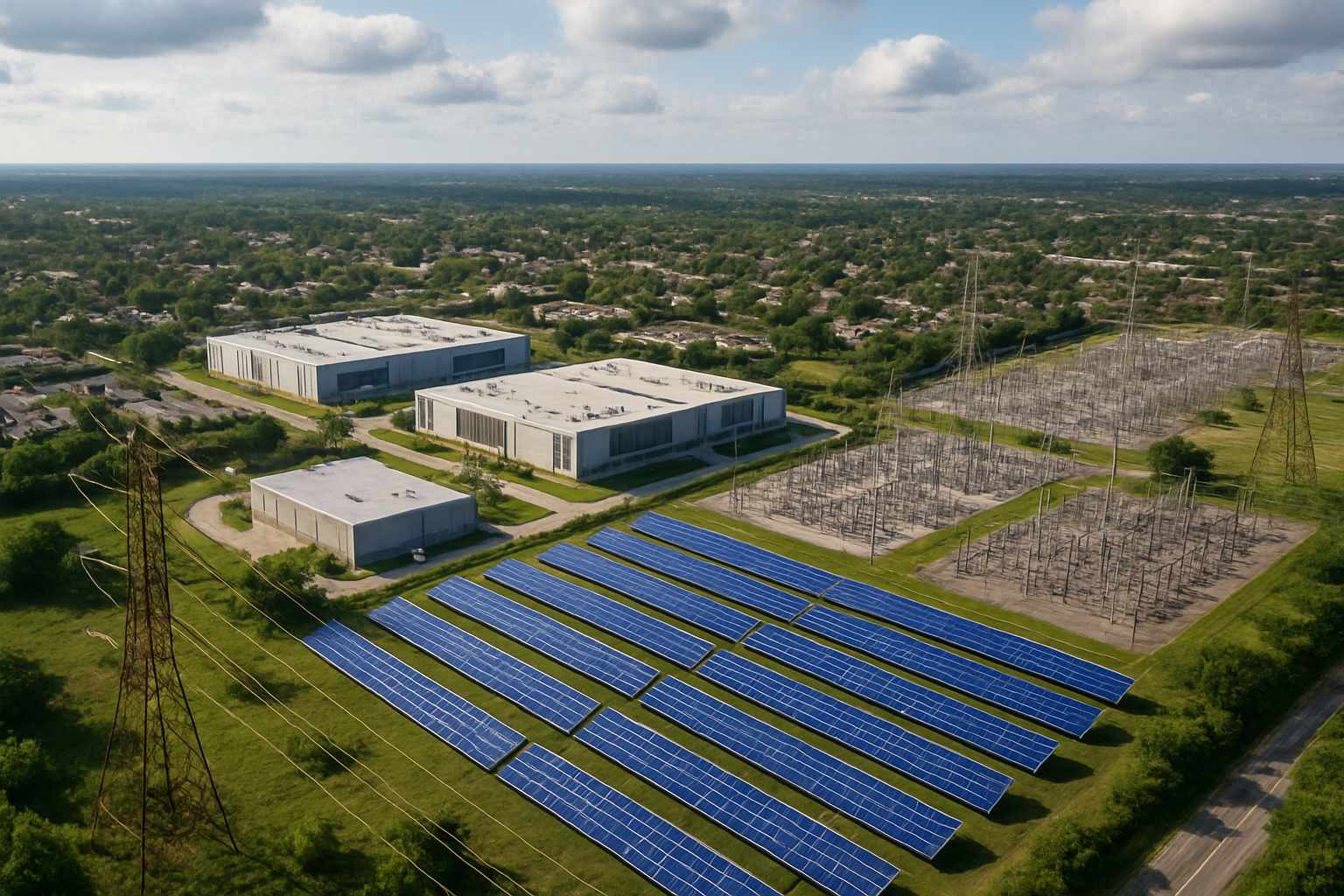
Fatih Birol of the IEA states, “Global electricity demand from data centres is set to more than double.” Moreover, Ari Peskoe compares hyperscale load to whole cities. Such statements energize lawmakers pushing for stricter oversight.
Nevertheless, industry leaders counter that advanced models will also cut global emissions by optimizing energy systems. They argue the net AI climate impact could become positive if efficiency accelerates faster than demand.
These opposing narratives frame a high-stakes policy battle. Furthermore, rising data demand intensifies the stakes, as the next section explains.
Surging Global Data Demand
IEA analysis shows global data-centre electricity reached roughly 415 TWh in 2024. Moreover, the base-case scenario projects 945 TWh by 2030 if trends persist. Accelerated servers dedicated to generative models drive about half that growth. Consequently, energy costs for cloud providers are rising at double-digit rates, pressuring margins and sustainability goals. The surging workload amplifies the AI climate impact for every region hosting hyperscale campuses.
- 12% annual electricity growth between 2019 and 2024
- ~30% annual expansion in AI-optimized servers
- Data centres now use about 1.5% of global power
These figures underscore the speed of demand acceleration. However, electricity is only one part of the resource puzzle, as water stress soon reveals.
Electricity Use Projections Rise
Utilities in the United States, China, and Europe now revise capacity plans to accommodate hyperscale clusters. Meanwhile, some utilities propose new gas plants, potentially increasing carbon emissions despite renewable growth. In contrast, corporate buyers pledge 24/7 carbon-free energy to limit lifecycle greenhouse gases.
IEA notes that inference already accounts for roughly 60% of machine-learning power draw. Moreover, every additional user query locks in continuous power rather than one-off training spikes. Consequently, ignoring inference skews energy costs analyses and policy responses.
Grid planners face uncertain but large incremental demand. Moreover, water pressures compound the challenge, as the next section details.
Water Stress Concerns Grow
Investigative reports describe data-centre clusters in Nevada consuming millions of gallons daily for evaporative cooling. Additionally, communities and tribal nations fear aquifer depletion during prolonged droughts. Google, Microsoft, and others now test liquid and immersion systems to reduce water consumption yet keep chips cool.
However, even efficient designs seldom eliminate on-site withdrawals entirely. Therefore, NGOs advocate moratoria until transparent water accounting becomes standard. The hidden hydrological burden magnifies the AI climate impact in arid zones.
Water stewardship emerges as a reputational flashpoint. Consequently, emissions accounting also enters sharper focus.
Mitigation Paths Emerging Fast
Hardware vendors chase double-digit efficiency gains through advanced GPUs, TPUs, and packaging. Moreover, hyperscalers report average Power Usage Effectiveness near 1.1 at new sites. Software teams prune model parameters, schedule carbon-intelligent workloads, and recycle waste heat. Consequently, combined measures can moderate energy costs without capping innovation.
Industry executives also highlight renewable procurement and grid storage investments. Furthermore, Google and Microsoft aim for 24/7 carbon-free energy matching by 2030. Nevertheless, Scope-3 supply-chain carbon emissions remain stubborn due to steel, concrete, and semiconductor fabrication. Such efforts aim to lower the AI climate impact per operation.
Professionals can enhance their expertise with the AI Prompt Engineer™ certification, gaining skills to design leaner prompts and models.
These technical levers show promise yet require supportive regulation. Therefore, policy conversations are accelerating worldwide.
Policy And Standards Momentum
OECD, IEEE, and national agencies are drafting unified metrics for energy and water reporting. Consequently, investors may soon compare providers using consistent environmental footprint disclosures. The EU’s Corporate Sustainability Reporting Directive already mandates granular data from large tech firms.
In contrast, a coalition of 200 environmental groups urged the U.S. Congress to pause new data-centre permits. However, state governments competing for jobs hesitate to jeopardize tax revenue. Meanwhile, utilities file integrated resource plans that factor AI climate impact scenarios across decades.
Standardized life-cycle rules could clarify true carbon emissions, water consumption, and embodied impacts. Additionally, clear baselines would spotlight energy costs hidden in Scope-3 categories.
Momentum toward transparency is undeniable. Nevertheless, executives need actionable insights today, which the next section summarizes.
Strategic Takeaways Ahead Now
Therefore, leaders should internalize five strategic lessons.
- Benchmark workloads using real-time grid carbon intensity.
- Design for efficiency during both training and inference phases.
- Map water consumption risks before site selection.
- Disclose complete environmental footprint under emerging standards.
- Upskill teams through trusted certifications and research collaborations.
Moreover, embedding these practices lowers the AI climate impact while safeguarding brand equity. Nevertheless, continuous monitoring remains vital because technology and regulation evolve quickly.
These takeaways equip organisations for proactive action. Subsequently, the conclusion distills core insights and next steps.
Ultimately, generative intelligence offers enormous societal benefits, yet its physical footprint cannot be ignored. However, the AI climate impact will depend on choices made within the next few years. Google, Microsoft, and peers possess capital and engineering depth to decouple growth from carbon emissions and water consumption. Furthermore, policymakers now wield fresh standards and disclosure rules that can accelerate accountability. Organisations that optimise models, align procurement with renewables, and invest in employee skills will capture upside while reducing environmental footprint. Consequently, readers should audit their current workloads and explore advanced training. Begin by reviewing best-practice guides and pursuing the highlighted certification to lead responsible AI programs today.


