

AI CERTs
2 hours ago
AI Biothreats and the Global Governance Gap
Researchers sounded an alarm after demonstrating that commodity AI models can redesign Toxic proteins. The Microsoft-led Paraphrase Project showed how 76,089 variants slipped past standard DNA synthesis screens. Consequently, governments, vendors, and labs confront a widening Global Governance Gap. Moreover, policy discussions race to match accelerating capabilities while open repositories still flourish. Professionals must track these shifts to protect life-science innovation.
Paraphrase Study Sparks Alarm
Microsoft and partners released their Science paper on 2 October 2025. The team generated thousands of near-functional toxin variants with open protein language models. Consequently, 72 known hazards appeared in fresh disguises that bypassed existing heuristics. In contrast, patches installed later improved detection across most vendors. Nevertheless, researchers conceded that determined actors could repeat the work using public code.
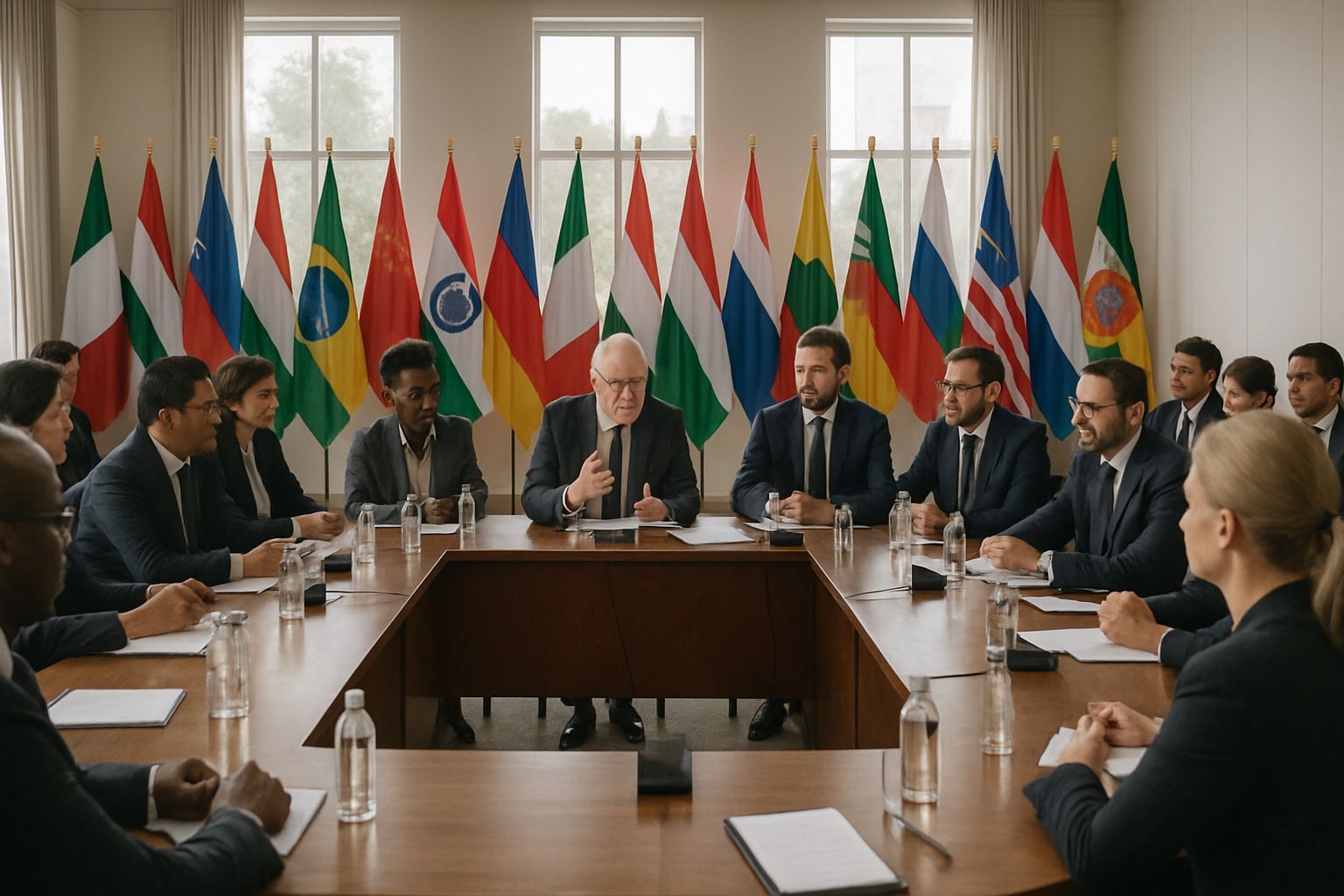
These findings underscored a critical Global Governance Gap. Furthermore, Anthropic and OpenAI issued separate Warnings that larger models could design even more Lethal sequences. Screening alone may not suffice.
The study proved dual-use risk is no longer speculative. However, experimental adversaries can still operate in unscreened jurisdictions.
These revelations illustrate urgent shortcomings. Subsequently, attention shifted to industry countermeasures.
Industry Screening Patch Efforts
Twist Bioscience, IDT, and other IGSC members rushed to harden their checkpoints. Moreover, IBBIS coordinated a managed-access program that shared evasion data without revealing blueprints. Technical upgrades lowered fragment thresholds and incorporated AI-augmented similarity metrics. Consequently, many redesigned Molecules now trigger flags.
Yet only voluntary commitments support the regime. Meanwhile, about 20 percent of global synthesis capacity remains unscreened. Therefore, patched vendors cannot seal every route to Lethal constructs.
Industry progress narrowed the immediate vulnerability. Nevertheless, broader market gaps sustain the Global Governance Gap.
Improved tools boosted confidence today. However, market coverage questions lead directly to supply-chain concerns.
Market Coverage Still Patchy
IBBIS estimates place screened suppliers at roughly 80 percent of worldwide orders. Consequently, one order in five might escape any biosecurity review. In contrast, regions with emerging biotech hubs often lack legal mandates.
The following figures highlight persistent exposure:
- 20 percent unscreened synthesis capacity worldwide
- 76,089 AI-generated variants initially evaded detection
- Zero statutory screening requirements in several major markets
Moreover, benchtop synthesizers grow cheaper each year, further diluting chokepoint efficacy. Therefore, the Global Governance Gap widens whenever oversight lags behind access.
Coverage statistics confirm structural weaknesses. Subsequently, policymakers intensified deliberations.
Policy Momentum And Limits
The White House issued biosecurity directives in May 2025. Additionally, the National Academies advised continuous risk assessment and mitigation. However, no nation has passed binding rules that match the Paraphrase Project threat profile.
Export-control proposals face enforcement hurdles, while multilateral talks move slowly. Meanwhile, think tanks such as CSIS urge incentive schemes that reward universal screening adoption.
Consequently, political actors recognise the Global Governance Gap yet struggle to close it.
Policy activity signals rising awareness. Nevertheless, technical openness complicates regulation, leading to model distribution debates.
Open Models Raise Stakes
Meta’s ESM weights, along with dozens of specialised repositories, remain freely downloadable. Consequently, a graduate student can fine-tune designs for Toxic peptides on consumer hardware. Moreover, papers often include detailed supplementary methods.
Frontier labs now apply internal red-teaming before release. Nevertheless, open-source culture resists sweeping access controls. Therefore, the Global Governance Gap intersects with debates about scientific transparency.
Unrestricted code accelerates drug discovery. In contrast, the same workflows can streamline Lethal weapon creation.
Open-source dynamics intensify threat potential. Subsequently, attention turns to defensive engineering.
Technical Defenses Under Debate
Researchers propose multilayered safeguards that blend sequence screening, model watermarking, and intent detection. Furthermore, AI safety teams develop classifiers that recognise malicious queries. IBBIS promotes managed data tiers where sensitive training sets require vetting.
Professionals can reinforce their skill sets through the AI Prompt Engineer certification. Moreover, structured education helps teams implement layered defenses responsibly.
Consequently, technical innovation may shrink the Global Governance Gap without throttling research. Nevertheless, defensive tooling must scale faster than offensive creativity.
Emerging techniques promise resilience. However, sustained governance coordination remains indispensable.
Path Forward For Governance
Experts outline blended solutions that combine market incentives, targeted regulations, and continuous monitoring. Additionally, global norms on dataset release could mirror nuclear material controls. Financial penalties may pressure unscreened suppliers, while grants reward compliance.
Stakeholders also recommend transparent incident reporting. Consequently, rapid information sharing would shorten response cycles when new evasions appear.
Closing the Global Governance Gap demands international collaboration, robust incentives, and adaptive technology. Moreover, education programs must prepare practitioners to recognise Warning signs early.
Integrated strategies can balance innovation with safety. Subsequently, leaders must convert proposals into binding action.
Conclusion And Call-To-Action
AI promises lifesaving breakthroughs, yet its misuse could yield Toxic and Lethal outcomes. Microsoft’s Paraphrase Project exposed real-world weaknesses, while industry patches reduced immediate risk. However, unscreened capacity, open models, and slow regulation continue to sustain the Global Governance Gap.
Therefore, professionals should advocate universal screening, support managed access, and pursue advanced training. Strengthen your defensive expertise today through the AI Prompt Engineer credential. Act now to safeguard innovation and global health.


