

AI CERTS
2 hours ago
AI Billionaire Gains Surge Past $100B in January
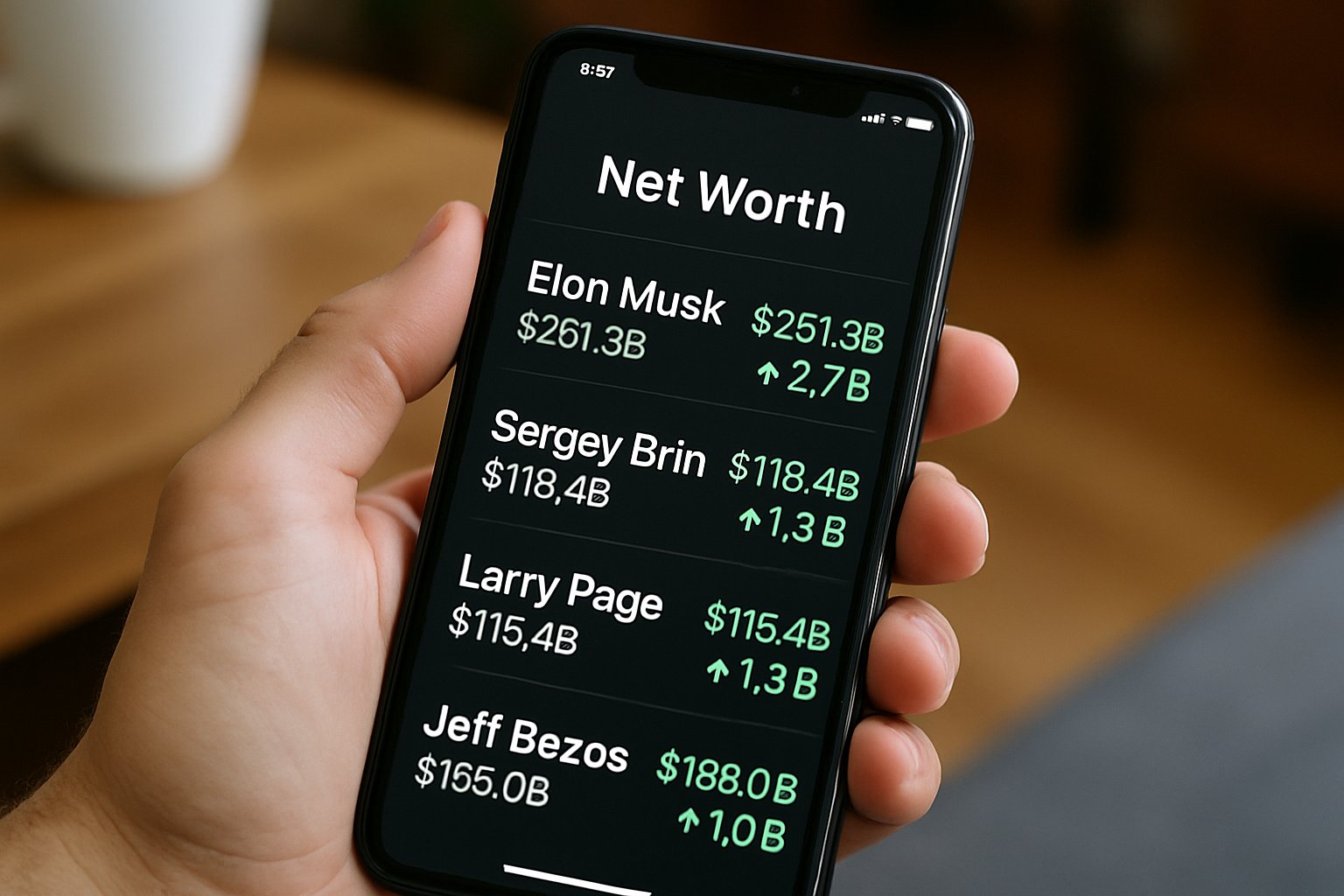
Business Insider, citing Bloomberg data, attributed roughly $70 billion of the surge to Elon Musk alone. Meanwhile, Alphabet cofounders Larry Page and Sergey Brin each added about $13 billion as Alphabet shares rallied. Jeff Bezos rounded out the quartet with a more modest $3 billion bump driven by Amazon’s stable performance. However, the numbers vary across trackers, underscoring methodological nuances that often escape headlines.
This report explores the catalysts, measurements, and broader implications of these AI Billionaire Gains. Additionally, it provides balanced context from both market optimists and inequality critics. Every figure quoted is timestamped and sourced for precision.
January Billionaire Wealth Surge
Bloomberg’s Billionaires Index recorded the group’s collective net worth at $1.92 trillion on 23 January. Consequently, the index showed a year-to-date increase of almost $100 billion. Business Insider highlighted the same numbers and stressed Elon Musk’s dominant contribution. Forbes, meanwhile, pegged Musk near an unprecedented $788 billion after xAI’s private round. That round reportedly raised $20 billion at a $250 billion Valuation. Alphabet’s rally added double-digit billions to Page and Brin as Gemini hype intensified.
Amazon’s steady Stock performance nudged Bezos upward, although at a slower pace. Overall, the episode illustrates how tightly billionaire wealth tracks high-growth tech narratives. These figures capture only a snapshot, yet they define early-year sentiment. Together, they frame the scale behind current AI Billionaire Gains. Investors rewarded perceived AI leadership with enormous paper profits for the sector’s biggest founders. Nevertheless, understanding the mechanics behind those jumps remains essential. Therefore, the next section dissects the primary drivers propelling such dramatic valuations.
Drivers Behind Rapid Gains
Several proximate factors converged to inflate fortunes at record speed. Foremost, xAI’s blockbuster round re-priced Musk’s private stake overnight. Forbes calculated the single event created about $62 billion in additional paper wealth for him. Moreover, secondary transactions lifted SpaceX’s implied Valuation, reinforcing the upward momentum. Public equities moved in tandem. Alphabet shares climbed 9% in January on strong Gemini integration announcements. Consequently, Page and Brin enjoyed substantial capital appreciation. Tesla Stock also spiked after fresh robotaxi teasers and Optimus robotics demonstrations. Even modest percentage moves translate into multibillion-dollar shifts when holdings exceed hundreds of billions. Additionally, low interest expectations pushed risk appetite higher across growth assets.
- Private AI fundraising momentum
- Public Stock rallies in mega-caps
- Repriced private Valuation benchmarks
- Speculative flows toward frontier tech
Together, these elements composed the backbone of January’s AI Billionaire Gains. Strategists note similar patterns during past speculative waves, yet the velocity now appears unmatched. The confluence of private rounds and public rallies amplified founder fortunes beyond historical norms. Nevertheless, those values depend on distinct measurement approaches. Subsequently, we examine how trackers calculate and compare billionaire wealth.
xAI Funding Impact Analysis
xAI blended its research arm with social platform X in late 2025. Investors sought exposure to generative AI chatbots competing with OpenAI and Anthropic. Therefore, the January Series B round valued the entity at $250 billion, sources said. Musk reportedly retained a 75% stake, leveraging earlier internal funding. That ownership translated into a $62 billion gain on Forbes’ real-time board. Bloomberg applied different liquidity discounts, yet still posted double-digit billions in uplift. Such divergences showcase methodological sensitivity to private Valuation assumptions.
Consequently, any future down-round could erase much of the headline wealth overnight. Professionals can enhance their expertise with the AI Executive Essentials™ certification. Understanding valuation mechanics remains vital for anyone advising founders or institutional investors. xAI’s round exemplifies how private pricing can dominate AI Billionaire Gains narratives. However, Alphabet’s public rally offers a contrasting dynamic worth exploring. Consequently, the next subsection turns to Alphabet’s momentum in public markets.
Alphabet Stock Momentum Explained
Alphabet began 2026 trading near a $4 trillion market capitalization. Gemini rollouts across Workspace and Android impressed both enterprise clients and retail traders. Subsequently, the Stock climbed almost 9% within three weeks. Page controls roughly 6% of shares, while Brin holds about 5%. Small percentage moves thus delivered multibillion-dollar increases for each cofounder. Meanwhile, options-related awards issued during Alphabet’s 2024 restructuring amplified paper gains. Investors framed the jump as a rational repricing of strong AI distribution channels.
Critics warned exuberance could reverse if regulatory probes intensify. Nevertheless, the episode contributed materially to cumulative AI Billionaire Gains. Alphabet’s surge highlights how liquid markets broadcast sentiment immediately. Private valuations respond slower but can move more dramatically. Therefore, a methodological overview clarifies why reported fortunes rarely align perfectly.
Methodology And Caveats
Forbes and Bloomberg agree on underlying share data but diverge on discounts and liability treatment. Bloomberg updates after every trading day, whereas Forbes refreshes continuously. Moreover, Bloomberg excludes pledged shares, while Forbes reports gross numbers. When private holdings like xAI or SpaceX change Valuation, each outlet applies unique haircuts. Consequently, same-day net-worth figures can vary by tens of billions. Readers should always check time stamps and footnotes before citing headline rankings. In contrast, academic studies often average multiple trackers to smooth volatility. AI Billionaire Gains stories can mislead if methodology remains opaque. Methodological clarity ensures stakeholders interpret numbers responsibly. Nevertheless, deeper social implications spark even fiercer debate. Subsequently, we explore the inequality discussion surrounding sudden wealth spikes.
Equity Versus Inequality Debate
Oxfam’s January report denounced the billionaire boom as democratic risk. It calculated billionaire wealth grew three times faster than wider economic output during 2025. Meanwhile, more than 400 wealthy individuals at Davos demanded higher taxes on themselves. Critics argue concentrated wealth fuels lobbying power and policy capture. However, defenders counter that founder capital funds bold projects like satellite internet and lunar exploration. Musk’s Mars agenda and Brin’s airship research often illustrate that argument.
Furthermore, sustained Stock appreciation reflects investor belief in productivity gains from AI. Yet fragility remains; valuations can collapse if sentiment sours or regulation tightens. Thus, both sides share concern over volatility, albeit for different reasons. These contrasting views contextualize AI Billionaire Gains within broader socioeconomic discourse. Public policy outcomes may ultimately reshape wealth trajectories and market expectations. However, tech leaders can act proactively to navigate shifting landscapes. Consequently, our next section outlines pragmatic implications for executives and investors.
Implications For Tech Leaders
Enterprise strategists tracking founder wealth should watch funding rounds as early sentiment indicators. Furthermore, monitoring secondary transactions supplies clues on forthcoming IPO pricing. Boards may use private pricing benchmarks to negotiate equity compensation packages. Investors should diversify because concentrated Stock positions magnify volatility, even for celebrated founders.
Moreover, PR teams must prepare inequality narratives as wealth trackers update real-time dashboards. Executives can deepen insight through the AI Executive Essentials™ certification program. Such preparation helps organizations capitalize on AI Billionaire Gains without reputational backlash. Actionable intelligence empowers firms while guarding against hype cycles. Nevertheless, continuous monitoring remains indispensable. Finally, a concise recap cements the critical lessons learned.
Conclusion And Next Steps
AI Billionaire Gains have framed 2026’s market narrative within mere weeks. Private fundraising, public rallies, and divergent methodologies combined to deliver headline-grabbing numbers. However, the same forces could reverse just as quickly, exposing pricing fragility. Investors, boards, and policymakers should therefore anchor decisions in transparent measurements. Meanwhile, inequality advocates will keep pressuring legislators for redistributive action. Tech leaders must balance bold innovation against growing scrutiny. Consequently, continuous education, such as the linked certification, offers pragmatic risk mitigation. Embrace data discipline, question every tracker, and stay adaptive amid relentless volatility. Explore our resource hub now and fortify your strategy today.


